
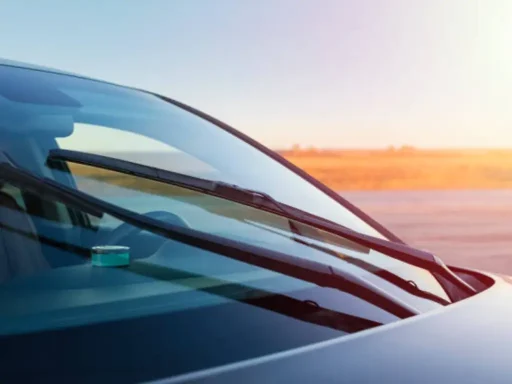
The heat can be intolerable when the summer sun is shining on the dashboard of your car window. You might notice your steering wheel is too hot to touch, or your leather seats feel like a furnace. Naturally, many drivers ask the same question: “Can I tint my front windshield?“
Although it is a normal practice to tint the side windows and back side windows, the front windshield is another case. It is the most controlled object of glass on your car since it is your main window of sight. We are going to explore the legal window tint guidelines, the technical issues of the modern safety sensors, and the high-tech automotive window tinting film technologies that are in the market today in this comprehensive guide to enable you to keep cool without breaking the law.
Understanding the AS-1 Line and Federal Tinting Standards
To answer whether you can tint your windshield, you first need to look for a small, etched mark near the top corners of the glass. This is the AS-1 line. AS-1 is an abbreviation of “American Standard 1.” This line is the boundary of the area of the glass which is regarded as primary vision according to federal motor vehicle safety standards.
For the vast majority of passenger vehicles in the United States, including those following Kansas window tint laws, the state law is clear: you are permitted to apply non-reflective tint only above the AS-1 line. Typically, the AS-1 line is located about 4 to 6 inches from the top of the windshield. This “brow” or strip of tint is intended to prevent the blinding glare reduction of the sun when it is low on the horizon, and is really a pair of permanent sunglasses on your car.
Applying a front windshield tint or any illegal tint—even a clear one—below this line is technically illegal in most jurisdictions unless you have a specific medical exemption or a medical certificate. The rationale for such strict state regulations is two-fold: the first is the visibility of the driver and road users, particularly in the morning, evening, or in the rain to ensure road safety. Second is the safety of the officers; law enforcement officers must be in a position to observe the hands and movements of the driver during a traffic stop. Understanding where your AS-1 line sits is the first step in ensuring your vehicle remains street-legal.
Total VLT Math: Why 70% Tint Might Be Illegal
The window tint levels or the “Visible Light Transmission” (VLT) is one of the largest myths in the automotive industry. You might see a film advertised as “70% VLT” and think, “My state allows 70% VLT on the front, so I’m safe.” This is where unfortunately many drivers receive illegal window tint “fix-it” tickets.
Automotive glass is rarely 100% clear. Most factory tint windshields already have a slight tint to them for UV protection and structural integrity, usually hovering between 75% and 85% VLT. When you apply a secondary film onto that glass, the percentages multiply; they do not add up.
The Calculation Formula:
Total VLT = Factory Glass VLT × Tint Film VLT
For example, if your factory windshield is 80% clear and you apply a “legal” 70% tint:
0.80 (Glass) x 0.70 (Film) = 0.56 or 56% Total VLT.
Quick Tip on the Math: When calculating visibility, remember that percentages are treated as decimals (e.g., 70% becomes 0.70). Even if a film is labeled “legal,” it must be multiplied by the existing tint of your factory glass. In the example above, the resulting 56% would fail a roadside inspection in states that require a minimum of 70% Total VLT.
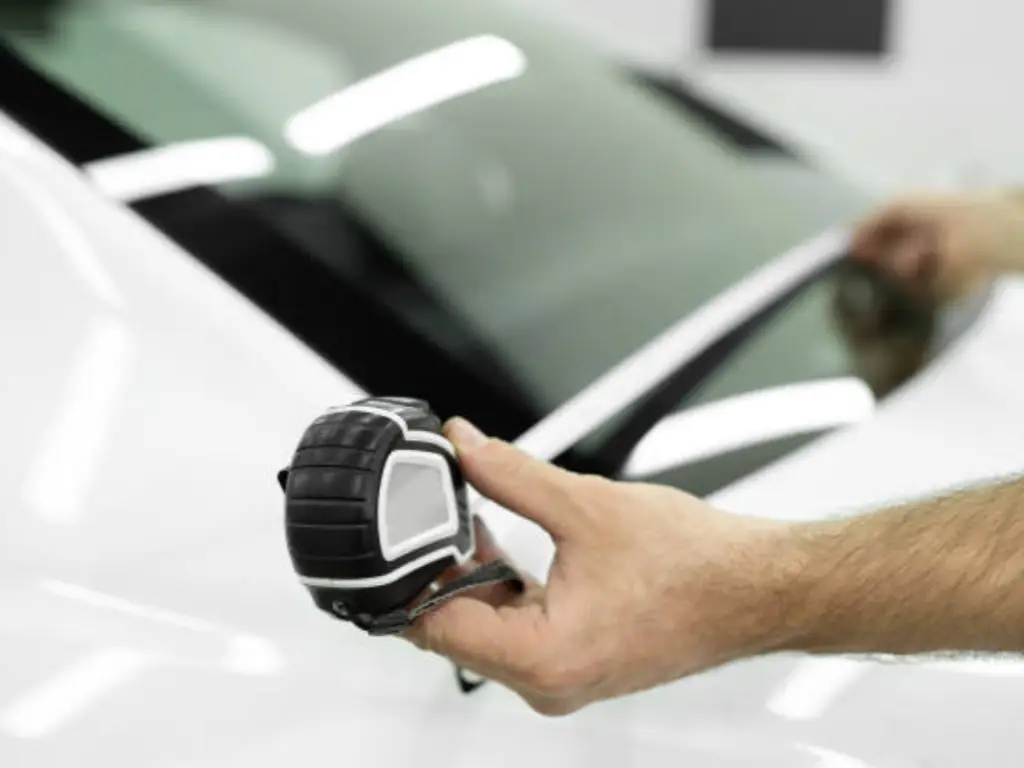
In this scenario, your windshield is now significantly darker than the 70% limit required by law. The majority of law enforcement and Kansas Highway Patrol officers have a “tint meter” that slides along the edge of the glass in order to measure the total light transmission. When such a meter is less than the legal window tint limits, you are subject to a fine. To be on the safe side, you need to select a film with a high VLT (usually 80% or 90%), such that the resultant value remains above 70%.
Impact on ADAS: How Tint Affects Cameras and Sensors
The cars of today are not metal and glass anymore, they are computers on wheels. Advanced Driver Assistance Systems (ADAS) are fitted in most of the vehicles produced within the past five years. This includes features like:
- Adaptive Cruise Control
- Lane Keeping Assist
- Emergency Braking
- Collision Warning Systems
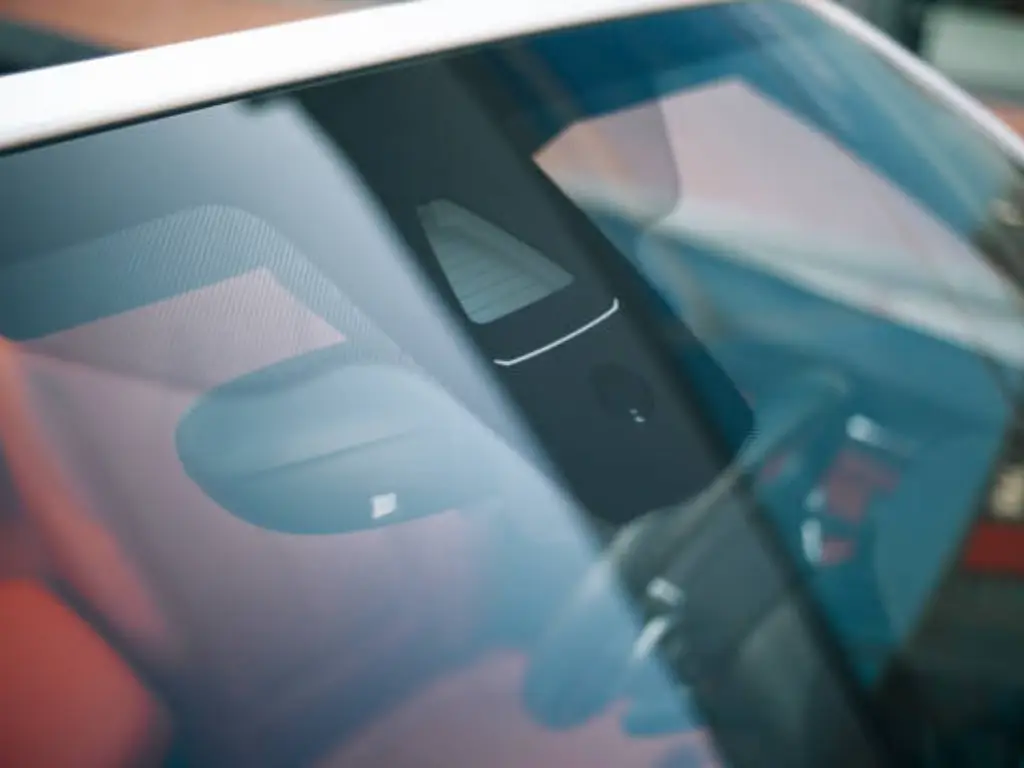
Autopilot systems such as Tesla, EyeSight by Subaru, or Sensing by Honda are based on cameras that are directly placed behind the upper part of the windshield. These cameras view the road through the glass. When you apply a tint film, you are introducing a new layer of material that can cause refraction (the bending of light) or distortion.
If a tint film is too thick, contains metallic particles, or has poor optical clarity, it can “trick” the ADAS cameras. A lane marker might appear shifted by a few inches, or a distant object might look blurred. In extreme cases, the system may disable itself entirely and throw an error code on your dashboard. This is the reason why the selection of a film that has an “optical grade” clarity is no longer a luxury but a safety measure to the modern car owner.
Ceramic vs. Carbon: Choosing the Best Heat Rejection Film
If you decide to proceed with a legal tint (above the AS-1 line or a high-VLT clear ceramic), you must choose the right material for heat reduction.
Carbon Tint is a substance that is used to block infrared rays by using carbon particles. It is a giant leap over the cheaply made “dyed” films since it does not turn purple as time passes and offers a good amount of heat protection. Nevertheless, the particles of carbon are rather large and this may occasionally give it a slightly hazy appearance.
Ceramic Tint is the undisputed king of the industry. It employs non-conductive and non-metallic nano-ceramic particles. Since the particles are so minute, they absorb a huge volume of infrared heat and 99% of UV rays without necessarily having high window tint darkness. A 70% or 80% ceramic film can even do better than a 5 percent “limo tint” dyed film in terms of keeping the cabin cool.
Spotting Fakes: How to Identify Genuine Ceramic Film
With the high demand for ceramic tint, counterfeit products have also increased. Local shops that are unscrupulous can sell you “Ceramic prices,” but put a low-quality dyed or carbon film in place. These fakes will eventually bubble, peel or turn purple, particularly on the front windshield where the sun is the most intense.
The red flags to look out to in order to detect a fake include:
- The Price is Too Good to Be True: Ceramic raw materials are costly. When a store in Kansas City or Overland Park sells a complete windshield tint at a price of $50, it is probably a dyed film.
- The Heat Lamp Test: A reputable expert installer should be able to place a piece of their film in front of a high-powered BTU heat lamp. You should feel an immediate reduction in heat.
- Haze and Clarity: Inexpensive films usually have “orange peel” textures or low angle haze that causes the road to appear slightly blurry.
FlexiPPF Nano-Ceramic: Engineering the Ultimate Optical Clarity
FlexiPPF has designed a product that meets the needs of the front windshield of drivers who do not want to compromise on safety and performance. Our Nano-Ceramic Tint utilizes a proprietary arrangement of nano-particles that ensures 99% UV protection (UV400) while maintaining a crystal-clear view.
FlexiPPF is made of a German-engineered BASF polyester base, unlike regular films that have a problem with “low-angle haze,” the milky white glare that appears in the sky during sunrise or sunset. This offers consistent optical visibility that is critical to ADAS-equipped vehicles. FlexiPPF blocks up to 98% of the harmful UV rays and rejects more than 70% of the infrared heat without darkening the glass, which means that your smart sensors and cameras will work flawlessly as you stay cool. It is the premium option of the people who desire to have the invisible protection with visible outcomes, supported by a 10-year industry-leading warranty.
Navigating Medical Exemptions and State-Specific Window Tint Laws
The AS-1 line rules are strict and might not apply to you in the event that you have specific medical conditions. Conditions such as Lupus, Sun Allergy (Photosensitivity), Melanoma, or Xeroderma Pigmentosum may make driving a regular car hazardous.
Most states, including those under Kansas law or Kansas tint laws, have a medical exceptions process. As an example, although Kansas window laws typically demand a minimum of 35% VLT on all windows, a medical exemption may permit darker window tint. Here is how you typically navigate it:
- Consult a Physician: You need a signed statement from a licensed physician or dermatologist stating that you require a lower VLT tint for health reasons.
- Apply via DMV/DOT: You submit this form to your local department of motor vehicles.
- Carry the Certificate: If approved, you must keep this in your glove box at all times. If a police officer pulls you over, showing this proof of compliance prevents a citation.
Keep in mind that state regulations vary wildly. An example is California, which is notoriously strict, with 70% VLT on the front side windows with some films, but such sunny states as Florida permit 28% VLT on the front side and even lower on the back side windows. Always check your local state statutes or consult the Kansas Highway Patrol before booking an automotive window tinting appointment.
Disclaimer: Window tint laws vary by location and are subject to change. This guide is for informational purposes only. Please consult your local DMV or legal professional to ensure compliance with current regulations.
Night Driving Safety: Balancing Heat Rejection and Visual Clarity
The largest danger of tinting the windshield is not a ticket, but an accident. When it is dark or a heavy thunderstorm is occurring, your eyes require as much light as possible to determine any threat such as pedestrians or cyclists who are not illuminated.
As soon as you select a darker shade of window tint (e.g. 35% or 50% VLT) on your windshield, your visual range is crippled. It is driving with your Headlights down. This is why the industry standard of front windshields is nearly always 70% to 80% Nano-Ceramic film. At this level, the film is practically not seen by the naked eye at night, but still offers the huge infrared heat rejection that you want during the day.
| Tint Type | VLT % | Heat Rejection (IR) | Night Visibility | Legal Status |
| Dyed Film | 5% – 50% | Low | Poor | Illegal (below AS-1) |
| Carbon Film | 35% – 70% | Moderate | Good | Depends on State |
| Nano-Ceramic | 70% – 80% | Extreme | Excellent | Commonly Allowed |
Hidden Risks: Traffic Fines, Insurance Issues, and Professional Removal
There are the unseen expenses of an illegal window tint installation, and you ought to consider them before you tint.
- The “Fix-it” Ticket: Tint violation may lead to increased fines of between $50 and $500. You will be forced to remove the tint and give evidence of correction to the court, in other words, you will lose the money you spent installing it as well.
- Insurance Liability: It is the risk that nobody speaks about. In case you have an accident at night and the color on your windshield is illegal, 35% an insurance adjuster might say that you could not see well and that is why you were involved in the accident. This can result in rejection of your claim or legal consequences.
- Professional Removal: Never try to “DIY” remove a windshield tint. You risk scratching the glass or damaging the side mirrors and sensors. The adhesive is safely melted by using steam in professional car window tinting shops.
Pre-Tint Checklist: Professional Tips Before You Buy
To be sure that you will receive the best possible result and that you will not waste your money on nothing, consult this list before giving your keys to any shop:
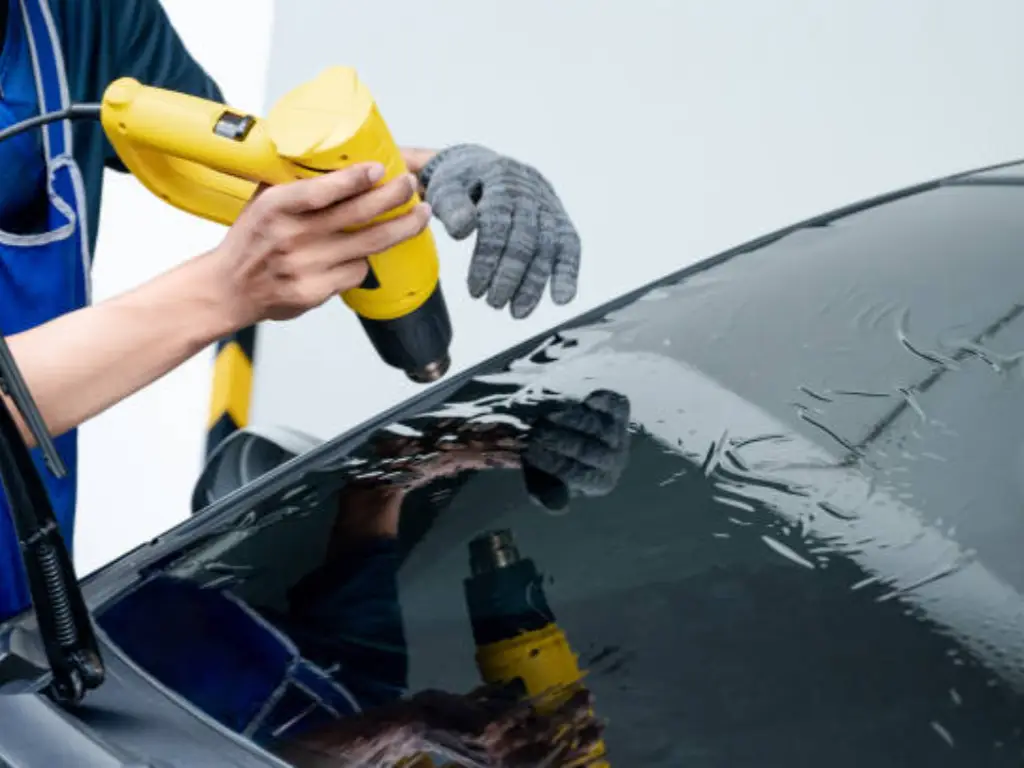
- Check Shop Credentials: Does the facility have a dust-free, climate-controlled installation bay? Since the windshield is right in front of your eyes, even the smallest dust particles caught under the film will be very noticeable and distracting.
- Verify the Film Technology: Don’t just ask for “ceramic.” Ask to see the specification of the manufacturer of Infrared Rejection (IRR) and Total Solar Energy Rejection (TSER). A good store should be in a position to provide a spec sheet of the roll they are working with.
- Test ADAS Functionality: After the tint is installed and fully cured (which can take 3–5 days depending on the climate), take a cautious drive to ensure your Lane Keep Assist, Adaptive Cruise Control, and Collision Warnings are still calibrating correctly.
- Inspect the Edges: A professional installation should feature a near-perfect “micro-edge” at the top or follow the AS-1 line with laser-cut precision. There should be no jagged edges or light gaps.
- Request a Digital Warranty: Have your warranty registered with the film manufacturer digitally. This will come to your rescue in case the local installation shop moves or closes down in future.
Ready to Upgrade Your Drive?
Do not tolerate poor quality films that threaten your health and vision. We provide one-stop solutions of high performance between premium window films and paint protection at FlexiPPF. You are a car owner who desires to have the ultimate clarity or a dealer who desires to have reliable products with 10 years warranty, we are there to help you.
Explore the FlexiPPF Window Film Collection for a personalized recommendation based on your climate and vehicle model!
 English
  Spanish
  Dutch
Dutch  Japanese
  Russian
  Arabic