
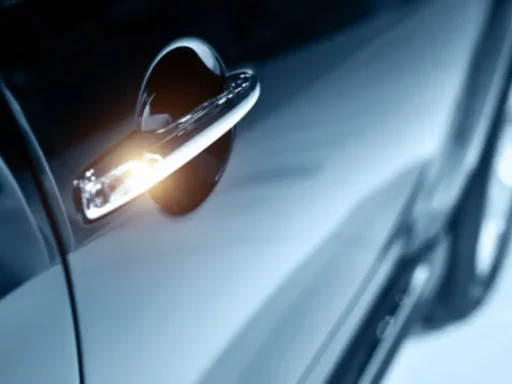
For any true car enthusiast, the sight of a mirror-like, glossy surface is the ultimate reward of ownership. However, the reality of daily driving inevitably takes a toll on your vehicle’s appearance. Under direct sunlight, most cars reveal a depressing spiderweb of surface imperfections that dull the paint color and diminish the overall aesthetic. This is where automotive paint correction becomes an absolute necessity.
Paint correction is not a regular valet service or even a visit to the local car wash, but rather a surgical procedure that is aimed at restoring the surface of the car to a level of clarity that is usually even better than the way it was shown in the showroom. Here we shall discuss the science of the leveling of paint, the tools that are necessary, the new technologies that are coming up in 2026 and the protection that is essential to keep that perfected finish lasting.
What Is Car Paint Correction vs. Regular Polishing?
To truly understand what is paint correction, one must first grasp the anatomy of a modern automotive paint job. Most contemporary vehicles utilize a three-stage finish:
- The Primer: This is the coating on the bare metal or plastic body panels.
- The Base Coat: The actual pigment or original color of the vehicle.
- The Clear Coat: This is a clear, protective topcoat which covers the pigment to protect it against the elements and give the vehicle its glossy look.
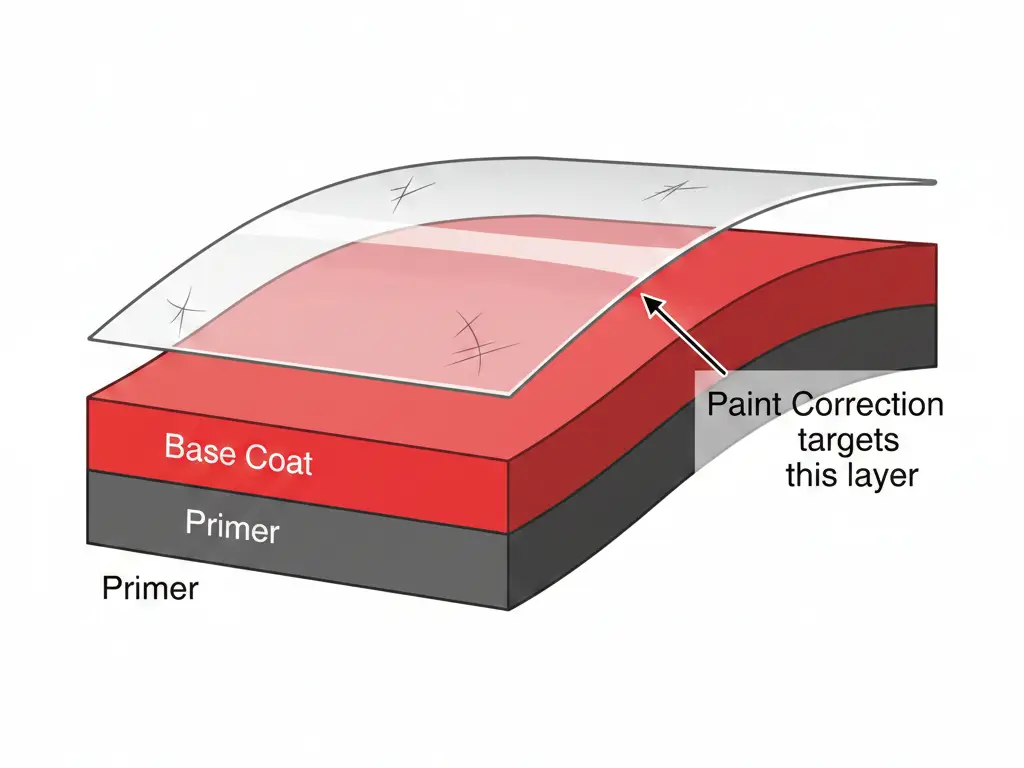
When the professionals refer to “surface defects,” they are nearly referring to the damage in that upper clear coat layer.
There is a massive and fundamental difference between traditional “waxing” (or regular polishing) and true paint correction. Common products like carnauba waxes or glazes are designed simply to “fill and cover.” They contain oils, resins, and silicone-based fillers that seep into minor scratches, temporarily masking them from the naked eye. Once you wash the car a few times or expose it to heavy rain, these fillers wash away, and the flaws instantly reappear.
Paint correction, by contrast, is the physical removal of these defects. By using a machine polisher and specialized abrasive compounds, a professional actually shaves down the vehicle’s clear coat by a microscopic amount (measured in microns). This process levels the uneven edges of a scratch until the surface is perfectly flat. Because light reflects uniformly off a completely flat surface, this physical abrasion “erases” surface imperfections permanently, unlocking a deep, wet-looking gloss that no wax could ever replicate.
Identifying Common Paint Defects and Clear Coat Hardness
A comprehensive diagnosis of the surface of the vehicle is obligatory before a polishing pad can touch the paint. Not all scratches are created equal, and more importantly, not all paint systems react the same way to abrasion.
Common Surface Defects:
- Swirl Marks: Often resembling spider webs under direct sunlight, these are circular, fine scratches usually caused by improper washing techniques, dirty towels, or automated “slap-brush” car washes.
- Water Spots: When hard water evaporates on the surface, it leaves behind mineral deposits. When unattended, these minerals may chemically etch or “bite” through the clear coat forming crater like depressions.
- Acid Rain & Bird Droppings: This is a highly acidic material that literally burns holes through the clear coat leaving dull, scratched areas.
The Concept of Paint Hardness:
The chemical composition of the clear coat of the vehicle is critical in determining the level of correction that is needed. Detailers categorize paint as “Hard” or “Soft,” which entirely dictates the correction strategy.
| Vehicle Type / Origin | Typical Paint Hardness | Correction Strategy & Characteristics |
| German (BMW, Mercedes, Audi) | Hard | Highly resistant to daily micro-scratches, but extremely stubborn to correct once damaged. Requires heavy-cutting compounds, stiff pads, and high-torque polishing machines to level the surface. |
| Japanese (Honda, Mazda, Toyota) | Soft | Very easy to correct and level out deep scratches. However, it is incredibly fragile; using an aggressive pad can leave massive hazing. Requires ultra-fine finishing polishes to perfect. |
| Tesla | Extremely Soft & Inconsistent | Notorious in the detailing world for having very soft and uneven clear coat thickness. Requires extreme caution, frequent temperature monitoring, and continuous thickness measuring to avoid damage. |
Mastering the Environment: Lighting Arrays and Color Temperature
In the world of professional detailing, there is a golden rule: “If you cannot see the scratch, you cannot fix it.” Normal overhead fluorescents or ambient garage lighting cannot be used at all to correct the paint. Your car might appear perfect in the shade, but a professional quality of lighting will show the ugly reality.
Professionals master their environment by manipulating Color Temperature:
- 4000K (Warm Yellow Light): This spectrum mimics the golden hour of the sun. The warmer light wave is very efficient in penetrating the clear coat visually and so it is the best tool to use in spotting deep scratches, heavy acid etching and sanding marks, which are located at a lower level in the paint structure.
- 6500K (Cool White Light): This temperature is necessary to imitate the bright and overcast daylight, and it is necessary in the final finishing stages. It shows superficial flaws such as fine swirl marks, micro-marring and the dull “polishing haze” which may be deposited after heavy compounding.
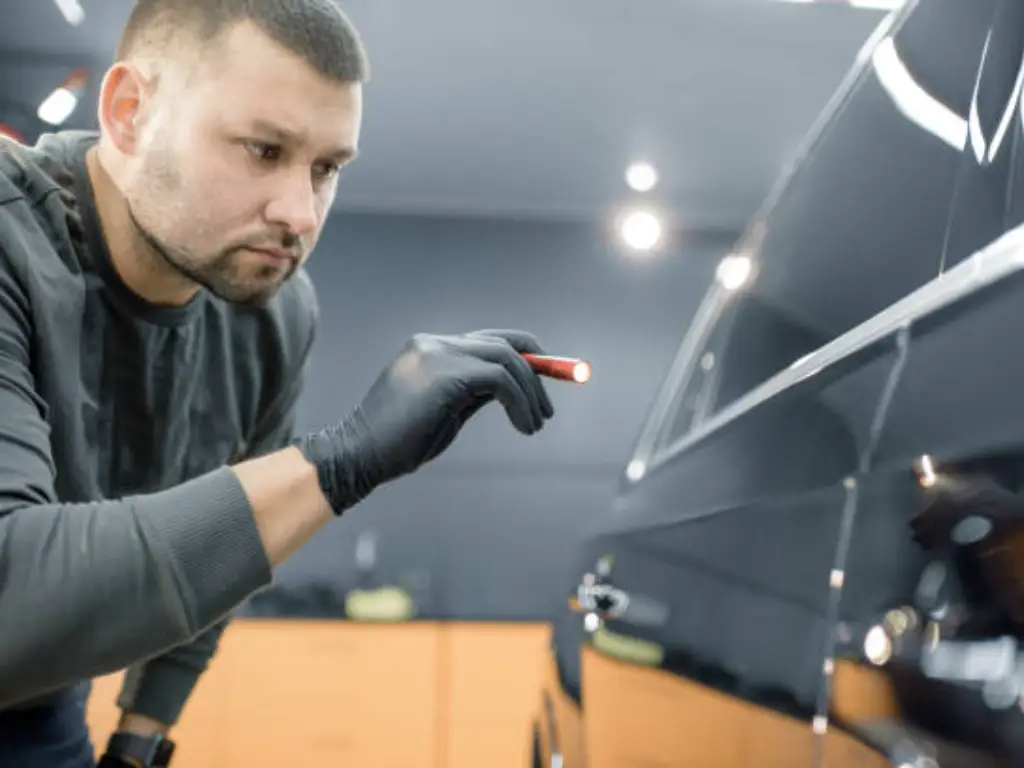
Furthermore, environmental factors such as humidity and ambient temperature are crucial. Humidity directly affects the drying speed (flash time) of abrasive compounds. If the air is too dry, the compound’s lubricants evaporate too quickly, causing the abrasives to dust up and potentially inflict new scratches. If it is too humid, the compound becomes a greasy mess that won’t wipe off cleanly. A climate-controlled bay ensures the chemicals perform exactly as engineered.
DIY vs. Professional Correction: Costs and Risks Analyzed
Due to the emergence of internet tutorials, a lot of car owners are tempted to do paint correction in their own driveways. Although DIY may help save money in the short term, the risks are high.
The Professional Investment:
When evaluating the paint correction cost, professional services typically range from several hundred to several thousand dollars. This pricing accounts for intense labor (often 10 to 30 hours per vehicle) and the use of highly specialized diagnostic equipment. A professional detailer will utilize expensive Paint Thickness Gauges (PTG). These ultrasonic tools measure the exact micron depth of the clear coat down to the metal or carbon fiber. Without knowing exactly how much clear coat you have left, you are essentially flying blind.
The DIY Risk:
While a beginner DIY polisher kit might only cost a few hundred dollars, the ultimate danger is “burning through the clear coat.” If an amateur uses an overly aggressive compound, applies too much downward pressure, or holds the machine in one spot for too long, the friction will rapidly heat the paint. Within seconds, the clear coat can completely disintegrate, exposing the dull base color coat underneath. At this point, no amount of polishing can fix it; the only remedy is an expensive, full-panel respray at a body shop, which will severely impact the vehicle’s value.
The Complete Step-by-Step Paint Correction Process
The perfect mirror-like finish is never done without taking the steps. A professional follows a rigorous, multi-stage Standard Operating Procedure (SOP):
- Deep Wash (De-waxing): Removal of all the old waxes and stubborn road film with the help of High-pH strip wash. This special high-alkaline solution is not to be confused with a regular pH-neutral soap that is used to maintain the surface, but is instead a chemical stripper of the surface of prior sealants and oils so that the polishing pad is in direct contact with the bare clear coat.
- Decontamination (Chemical & Mechanical): Spraying an iron remover to chemically dissolve embedded brake dust particles, followed by mechanically rubbing the paint with a detailing clay bar (or synthetic clay mitt) to pull out bonded tree sap and industrial fallout. The paint must feel smooth as glass before polishing begins.
- Paint Thickness Measurement: Mapping the vehicle with a PTG to identify dangerously thin areas of clear coat that require a delicate touch.
- Compounding (The Heavy Cut): The first stage of machine polishing. Using a coarse abrasive and a cutting pad to aggressively level out deeper scratches and heavy oxidation. This step removes the defects but leaves the paint looking slightly cloudy or hazy.
- Polishing (The Refinement): The second stage. Switching to a much finer abrasive and a softer pad to gently smooth out the microscopic haze left by the compounding stage. This restores the paint to a crystal-clear, smooth finish.
- Panel Wipe (Degreasing): Wiping all the panels with an Isopropyl Alcohol (IPA) solution. Oils in polishes have the ability to conceal any micro-scratches left behind; the IPA wipe leaves the paint naked and the surface is actually what it is, unaltered and uncovered.
Essential Tools: DA Polishers, Compounds, and Pads Explained
The difference between an amateur error and a professional masterpiece is the use of the right tools. To DIYers and the amateur level professionals, the knowledge of the gear is the most important thing.
- Dual Action (DA) Polishers: A DA polisher is a safe tool by design since the backing plate is able to do two things at once: it turns in a circle, and it wiggles (oscillates) on a spindle. This dual motion drastically reduces friction and heat buildup. If you press too hard or hit an extreme angle, the pad simply stops spinning, practically eliminating the risk of burning through the clear coat.
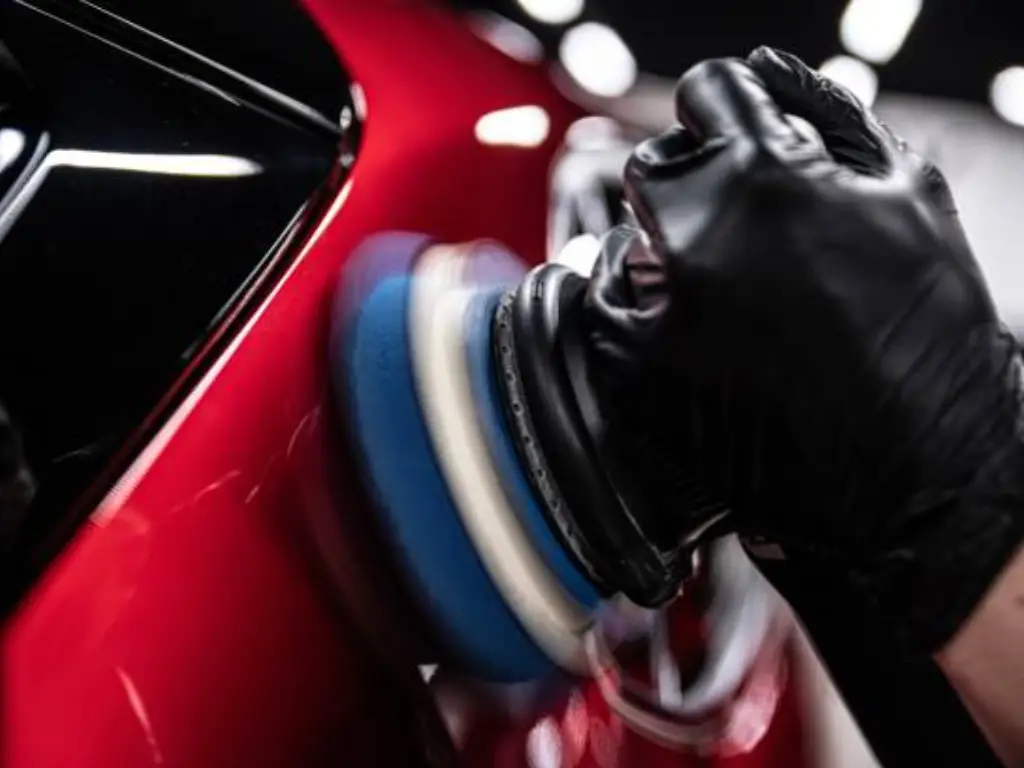
- Rotary (RO) Polishers: These machines spin on a single, direct axis, similar to an angle grinder. They produce huge volumes of heat and cutting power immediately. Although they are great at smoothing out deep scars in a short time, they will eat edges and contours within seconds when left in the hands of an amateur.
- Pads and Compounds: Polishing is a balancing act of aggression. Wool or Microfiber pads are paired with heavy-cut compounds to “dig” into hard clear coats and remove deep defects. Foam pads come in various densities; dense foams are used for medium correction, while ultra-soft foams are paired with fine finishing polishes to jewel the paint to a perfect shine.
2026 Innovations: AI Diagnosis and Nano-Filling Technologies
With the automotive detailing industry entering the depths of 2026, the technological renaissance is geared towards “Minimal Intervention.”
AI Surface Scanning:
Visual scanners that are AI-powered are now being used in high-end studios. These robotic arrays pass over the vehicle, instantly mapping millions of data points to quantify the exact depth and severity of every scratch. The AI creates a topographical map of the paint in 3D, which enables the detailers to program the precise amount of clear coat to be removed, removing the element of guesswork altogether.
Nano-Filling Technology:
Traditionally, if you had a 5-micron deep scratch, you had to shave off 5 microns of the surrounding clear coat to level it. We are now in a “Hybrid Approach” in 2026. With Nano-Filling Technology and precision mechanical polishing, detailers will no longer have to waste too much factory paint.
This hybrid method uses high-tech, graphene-infused nano-fillers to bridge the gaps in deeper scratches after a light refining polish. It is a strategic “micro-level protective repair” rather than a temporary fix. This will enable the professional to have a 100% defect-free appearance and still maintain the structural integrity of the clear coat- particularly in places where additional physical abrasion would be considered unsafe by AI diagnostic equipment.
Why Paint Protection is Mandatory After Correction
You have spent days (or thousands of dollars) achieving the perfect finish. The paint looks breathtaking, but it harbors a dark secret: it is now incredibly vulnerable. By physically abrading the surface, you have permanently removed a thin layer of clear coat. Furthermore, the topmost layer of clear coat contains the highest concentration of UV inhibitors.
When you drive the vehicle out of the shop without protection, the paint will start to oxidize at a high rate. After several weeks of daily commuting and washing, the feared swirl marks will come back, and all the efforts will be completely wasted.
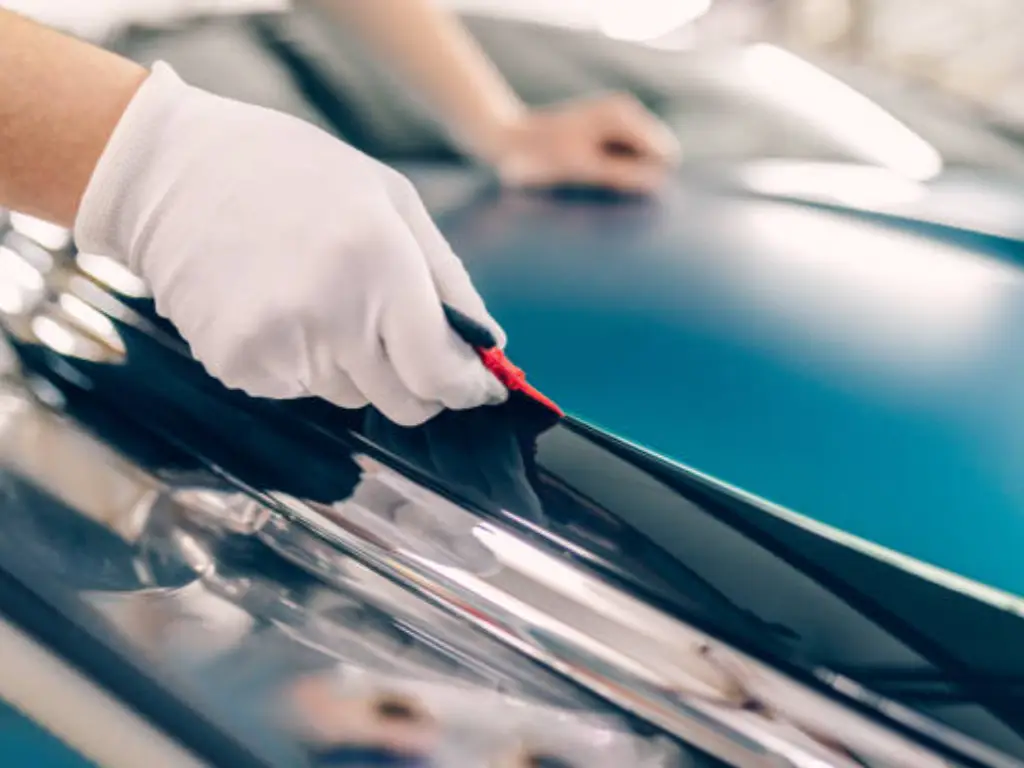
Lock in Perfection with FlexiPPF Paint Protection Film
You have spent days (or thousands of dollars) achieving the perfect finish. The paint looks breathtaking, but it harbors a technical reality: to reach this level of clarity, you have strategically sacrificed a thin layer of clear coat to level out the imperfections. Although this is the only method of attaining perfect optical finish, it implies that your car now has a little less of “sacrificial” material to protect against environmental pollution and UV rays.
The paint surface in its corrected condition is the most beautiful, but the most susceptible. The uppermost layer of factory clear coat, which has the highest concentration of UV inhibitors, has been flattened to replace texture with smooth finish. A weak barrier will cause the luster of your car to fade away quickly in the sunlight, and new small scratches will become far easier to notice than they used to be.
The FlexiPPF Advantage:
- Unmatched Raw Materials: FlexiPPF is made using a high-quality BASF Polyester Base of Germany and Ashland Adhesive of the USA, which is known worldwide to be of high quality and produces a stable optical clarity, no yellowing, and no adhesive failure.
- Advanced Self-Healing Technology: FlexiPPF is composed of high quality TPU (Thermoplastic Polyurethane), and it has amazing self-healing capabilities when heated. Should you inadvertently add some small scratches or wash swirls to the film, all you need to do is to park the car in the hot sun or pour warm water over the panel and the TPU molecules will re-align themselves, and the scratches will disappear immediately. The stress of washing your car every day is eliminated.
- Extreme UV & Weather Resistance: The high-grade ceramic coating layer on FlexiPPF prevents more than 99% of the harmful UV rays (UV400) and has been tested to be vibrant even after 5,000 hours of high UV exposure. It is able to resist temperatures up to 80°C and not to degrade.
- Flawless Installation: With the use of the newest technology in 3D scanning, FlexiPPF provides extremely accurate pre-cut film designs that fit perfectly on your particular car, without the use of blades that are close to your fresh paint.
- Industry-Leading Confidence: Being a high-end supplier with state-of-the-art German magnetron sputtering production lines, each roll of FlexiPPF paint protection film is supported by a huge 10-year warranty, which guarantees your repaired paint to be a perfect masterpiece in 10 years.
How to Maintain Your Flawless Finish Long-Term
After making sure that your car has been properly fixed and well-guarded, you need to change your maintenance routine to maintain the outcomes. Even the finest protection needs to be taken care of.
- Adopt the Two-Bucket Method: Never use a single bucket to wash your car. Take a bucket of soapy water and another one of clean water to run your wash mitt. Put “Grit Guards” in the bottom of both buckets so that the dirt is trapped and you do not rub the abrasive sand back on the paint.
- Invest in High-Quality Microfiber: Discard old rags, bath towels, and cheap auto-parts-store towels. Wipe your car only with plush microfiber towels of high GSM (Grams per Square Meter). Their thick pile traps dirt particles, and they are out of the clear coat.
- Avoid Automated Car Washes: The huge spinning brushes of the automated washes are little more than giant whips coated with abrasive road grime of the hundreds of cars that preceded yours. Always use a touchless car wash, or better still, a hand wash.
- Use Lubrication While Drying: To further reduce friction, spray a dedicated drying aid or a quick detailer spray onto the wet surface before wiping it down with your microfiber towel.
With the respect of the science of the clear coat and the ultimate physical protection, your car will continue to be the breathtaking mirror-like perfection in the years to come.
 English
  Spanish
  Dutch
Dutch  Japanese
  Russian
  Arabic