
Navigating window tint laws in the United States requires precise, up-to-date information. Automotive window tinting offers the much-needed advantages, such as ultraviolet (UV) protection, solar heat reduction, and interior privacy. Nonetheless, the legal environment of these changes is very disjointed. The 50 states have different laws on the extent to which dark window film, how reflective it can be, and what color it can be placed on passenger vehicles.
Failure to comply is not without consequences. Owners of vehicles that have illegal tints are subjected to traffic fines, vehicle safety checks, and may have problems with liability when making insurance claims. In the case of automotive professionals, the installation of non-compliant film may lead to fines and reputation losses in business.
This comprehensive guide breaks down the technical metrics of window tinting, details the exact window tint percentages by state for 2026, explains the critical differences in vehicle classifications, and outlines the standard procedures for medical exemptions and law enforcement interactions.
What is VLT? Understanding Window Tint Percentages
In order to comprehend window tint legislation, you need to comprehend the main measure of law enforcement and manufacturers Visible Light Transmission (VLT).
VLT is the percentage of visible light that goes through the glass and the film applied on the vehicle. The VLT system is an inverse scale system. The lower the percentage of VLT, the darker the tint since it permits less light to pass through. A higher VLT percentage indicates a lighter, more transparent tint.
- 5% VLT (Limo Tint): This is a very dark private film. It blocks 95% of visible light. So, is 5 tint legal? In nearly all states, it is strictly forbidden on the front side windows of passenger cars because of extreme limitations to visibility.
- 20% VLT (Dark Tint): This is usually applied on the back windows of SUVs and trucks. It offers a high degree of privacy and a minimal degree of exterior visibility in the daytime.
- 35% VLT (Standard Tint): This is a moderate, popular standard. It balances glare reduction and privacy with safe outward visibility. Many states adopt 35% as the legal limit for front-side windows.
- 50% VLT (Light Tint): A subtle tint that reduces glare and blocks UV rays without significantly altering the aesthetic darkness of the glass.
- 70% to 90% VLT (Clear Film): The films are virtually transparent and are utilized in UV and infrared (IR) heat rejection and not privacy.
The “Net VLT” Trap: Factory Tint Superposition
One of the most serious mistakes of consumers and amateur installers is the inability to consider the so-called “Factory Tint.” The glass used in modern vehicles is not often completely transparent. Almost all new vehicles roll off the assembly line with a slight, manufacturer-applied tint embedded within the glass itself, typically measuring between 70% and 80% VLT.
State laws govern the Net VLT—the combined light transmission of both the glass and the aftermarket film.
When you put a legal 35% VLT aftermarket film on a factory window that already has a 70% VLT, the Net VLT is obtained by multiplication:
Net VLT = Factory VLT x Film VLT
Net VLT = 0.70 x 0.35 = 0.245
The last transmission of light is 24.5%. When your state law has a minimum of 35% VLT, then your vehicle is now illegal, even though you have bought a film that is marked “35%” VLT. In order to obtain a legal 35% Net VLT on 70% factory glass, an installer needs to install a much lighter film, usually about 50% VLT (0.70 x 0.50 = 0.35). The VLT meters used in law enforcement are directly measured through the glass, and thus mathematical accuracy in installation is critical.
Complete 2026 Window Tint Percentages by State Chart
The window tint laws apply to four major parts of the automotive glass: the windshield, the front side windows (drivers and passenger doors), the rear side windows, and the rear windshield.
Understanding the AS-1 Line and Windshield Limits
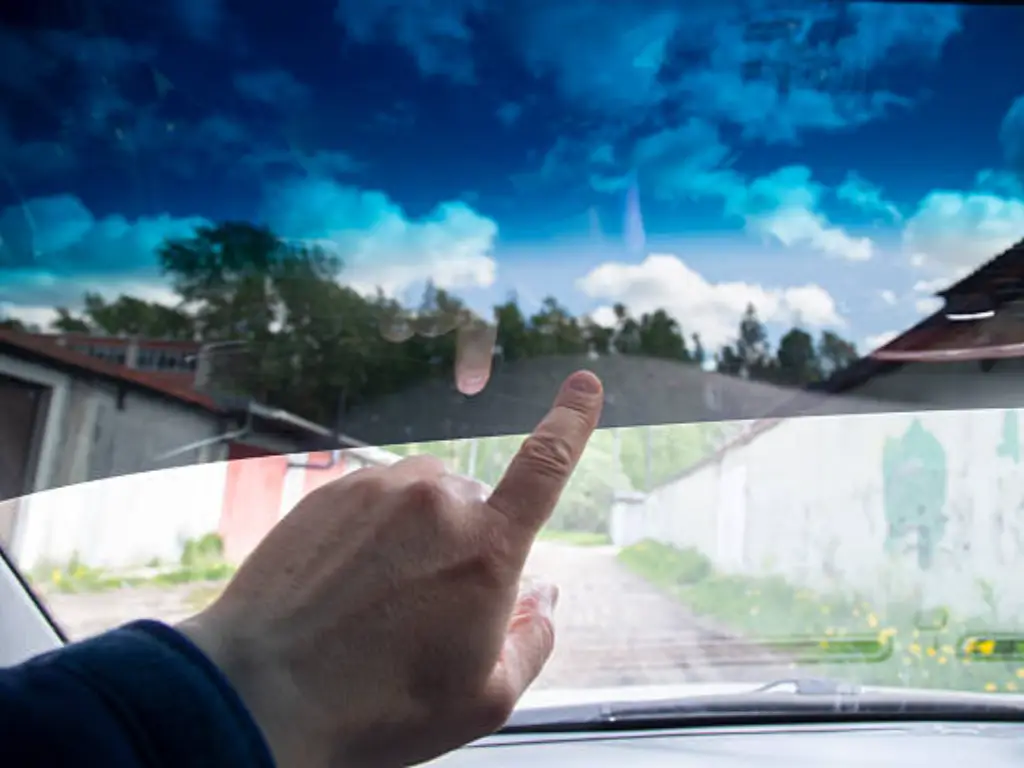
Virtually every state restricts aftermarket tint on the front windshield to maintain optimal forward visibility. The law stipulates that tint can be used on the upper part of the windshield only.
The legal boundary is defined by the AS-1 Line. The AS-1 line is a manufacturer marking, roughly five inches from the top of the windshield, indicating the boundary of the clearest glass. You can usually find the letters “AS-1” etched into the glass near the upper corners. In case a windshield does not have a visible AS-1 line, state regulations fall back to a certain measurement, which is that the tint should not be below the top 4 to 6 inches of the glass. The film above this line also has to be non-reflective.
Additional Legal Parameters: Reflectivity, Colors, and Variance
Beyond VLT percentages, states regulate the optical properties of the film.
- Reflectivity Limits: There are window films that use metallic components to reflect sunlight. The legal limits on the reflectiveness of these films are that very reflective windows cause dangerous glare to other road users. The reflectivity is normally capped at 10%-25% by the states.
- Banned Colors: Automotive tint must generally be neutral (black, charcoal, or gray). Almost all jurisdictions strictly prohibit red, amber, and blue window films. These colors interfere with the recognition of emergency vehicle lights and traffic signals.
- Variance Tolerances: Due to the fact that law enforcement light meters need to be calibrated and ambient light may introduce small measurement errors, most states have a legal tolerance of variance. This is typically a +/- 3% to 5% buffer. As an illustration, when a state law requires 35% VLT, and an officer measures 32%, the 3% variance tolerance does not allow the issuance of a citation.
The 2026 State-by-State VLT Chart for Passenger Sedans
Note: The data below represents standard passenger vehicles (Sedans). Multi-purpose vehicles (SUVs, Vans, Trucks) frequently have different regulations for rear windows, which are detailed in the subsequent section.
| State | Front Side Windows | Rear Side Windows | Rear Windshield | Windshield Rule |
| Alabama | 32% | 32% | 32% | Top 6 inches |
| Alaska | 70% | 40% | 40% | Top 5 inches |
| Arizona | 33% | Any % | Any % | AS-1 line |
| Arkansas | 25% | 25% | 25% | AS-1 line or top 5″ |
| California | 70% | Any % | Any % | Top 4 inches |
| Colorado | 27% | 27% | 27% | Top 4 inches |
| Connecticut | 35% | 35% | Any % | AS-1 line |
| Delaware | 70% | Any % | Any % | AS-1 line |
| Florida | 28% | 15% | 15% | AS-1 line |
| Georgia | 32% | 32% | 32% | Top 6 inches |
| Hawaii | 35% | 35% | 35% | Top 4 inches |
| Idaho | 35% | 20% | 35% | AS-1 line |
| Illinois | 35% | 35% | 35% | Top 6 inches |
| Indiana | 30% | 30% | 30% | AS-1 line |
| Iowa | 70% | Any % | Any % | AS-1 line |
| Kansas | 35% | 35% | 35% | AS-1 line |
| Kentucky | 35% | 18% | 18% | AS-1 line |
| Louisiana | 40% | 25% | 12% | AS-1 line |
| Maine | 35% | 35% | 35% | Top 5 inches |
| Maryland | 35% | 35% | 35% | AS-1 line or top 5″ |
| Massachusetts | 35% | 35% | 35% | AS-1 line or top 6″ |
| Michigan | Any % (Top 4″ only) | Any % | Any % | Top 4 inches |
| Minnesota | 50% | 50% | 50% | No tint allowed |
| Mississippi | 28% | 28% | 28% | AS-1 line |
| Missouri | 35% | Any % | Any % | AS-1 line |
| Montana | 24% | 14% | 14% | AS-1 line |
| Nebraska | 20% | 20% | 20% | AS-1 line or top 5″ |
| Nevada | 35% | Any % | Any % | AS-1 line |
| New Hampshire | No tint allowed | 35% | 35% | Top 6 inches |
| New Jersey | No tint allowed | Any % | Any % | No tint allowed |
| New Mexico | 20% | 20% | 20% | AS-1 line or top 5″ |
| New York | 70% | 70% | Any % | Top 6 inches |
| North Carolina | 35% | 35% | 35% | AS-1 line |
| North Dakota | 50% | 50% | 50% | Top 70% must be clear |
| Ohio | 50% | Any % | Any % | AS-1 line |
| Oklahoma | 25% | 25% | 25% | AS-1 line or top 5″ |
| Oregon | 35% | 35% | 35% | Top 6 inches |
| Pennsylvania | 70% | 70% | 70% | No tint allowed |
| Rhode Island | 70% | 70% | 70% | AS-1 line |
| South Carolina | 27% | 27% | 27% | AS-1 line |
| South Dakota | 35% | 20% | 20% | AS-1 line |
| Tennessee | 35% | 35% | 35% | AS-1 line |
| Texas | 25% | 25% | Any % | AS-1 line or top 5″ |
| Utah | 43% | Any % | Any % | AS-1 line |
| Vermont | No tint allowed | Any % | Any % | AS-1 line |
| Virginia | 50% | 35% | 35% | AS-1 line |
| Washington | 24% | 24% | 24% | Top 6 inches |
| West Virginia | 35% | 35% | 35% | AS-1 line or top 5″ |
| Wisconsin | 50% | 35% | 35% | AS-1 line |
| Wyoming | 28% | 28% | 28% | AS-1 line or top 5″ |
(Disclaimer: When checking window tint percentages by state, keep in mind that traffic laws are subject to legislative updates. Always verify current statutes with your state’s Department of Motor Vehicles or local law enforcement agencies prior to installation.)
Cars vs. SUVs: How Tint Laws Differ by Vehicle
A persistent point of confusion regarding automotive tint laws is the discrepancy between passenger cars (sedans, coupes) and larger vehicles. In a significant number of jurisdictions, sedans face strict regulations on rear-side and rear-windshield tint, while SUVs, vans, and pickup trucks are permitted to use much darker film—often allowing “Any %” or heavily restricted limits like 5% VLT.
This regulatory divergence stems from the Federal Motor Vehicle Safety Standards (FMVSS). Under federal guidelines, sedans are classified strictly as “Passenger Cars.” SUVs, minivans, and pickup trucks are classified as “Multipurpose Passenger Vehicles” (MPVs) or light trucks.
In the past, MPVs and trucks were mostly used commercially, to carry equipment, cargo, or tools. To prevent theft of valuable cargo and degradation of materials by the sun, lawmakers permitted these vehicles to have heavily tinted or completely opaque rear compartments to hide the valuable cargo. Passenger sedans, which do not have this commercial cargo justification, are still subject to higher standards of visibility to enable law enforcement to have a clear view of the entire cabin.
| Vehicle Classification | Front Side Windows | Rear Side Windows | Rear Windshield | Regulatory Logic |
| Passenger Cars (Sedans/Coupes) | Strictly regulated (e.g., 35% to 70%) | Strictly regulated (Matches front or slightly lower) | Regulated. Must allow visibility through the cabin. | Prioritizes law enforcement visibility and overall traffic safety. |
| MPVs (SUVs, Vans, Trucks) | Strictly regulated (Matches sedans, e.g., 35% to 70%) | Often unregulated (“Any %”) or very low (e.g., 5%) | Often unregulated, provided the vehicle has dual exterior side mirrors. | Originates from commercial cargo protection and privacy needs. |
When you have an SUV, you have more freedom when it comes to the privacy of the rear compartment. If you are wondering is 5 tint legal for these vehicles, it is often permitted on the rear windows of MPVs. The front-side windows (drivers and passenger doors) however are limited to the same strict VLT as sedans in nearly all states.
Visual Guide: 5% vs. 20% vs. 35% Tint Examples
Numbers and percentages can be abstract. It is important to know how these VLT measures can be applied to the real world optical clarity in order to choose the right film. The tint of the windows depends greatly on the lighting conditions, the color of the interior of the vehicle, and the viewing angle.
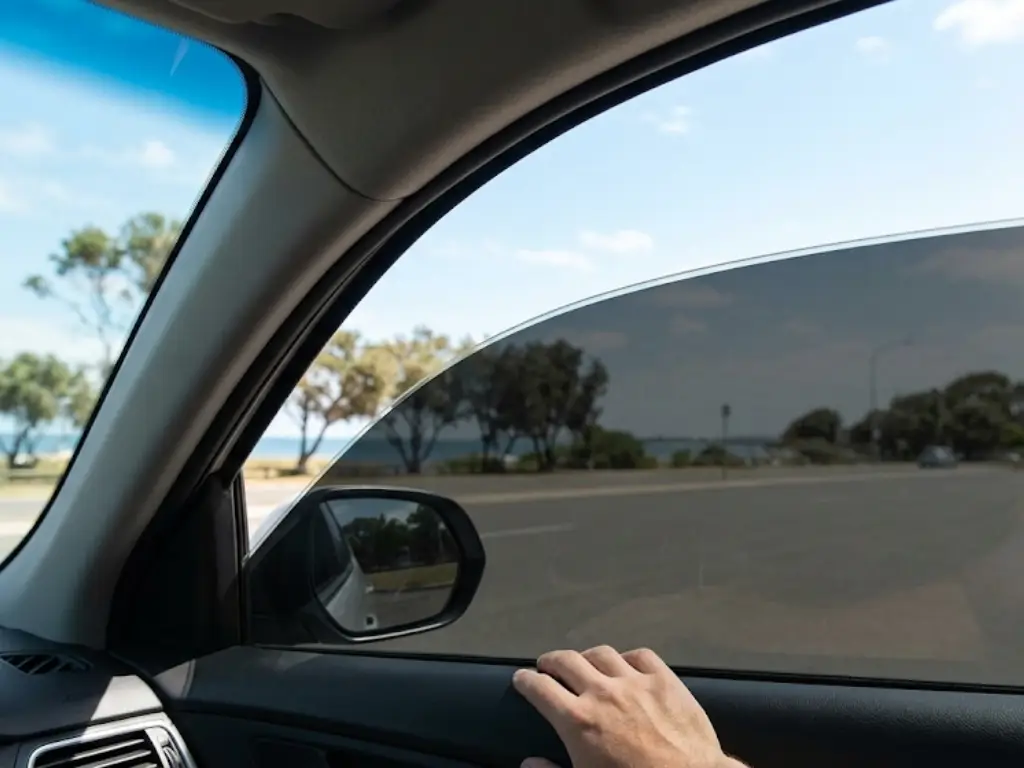
- 5% VLT (The “Limo” Look): Because of how dark it is, people frequently ask is 5 tint legal? From the exterior, 5% VLT creates an opaque, black wall. One cannot even peep into the car, even in broad daylight. The interior view is severely impaired. It is like having very dark sunglasses on during the day. During the night, pedestrians, unlit cars or road hazards can hardly be seen through a 5% film.
- 20% VLT (The Factory Match): This is a percentage that is very similar to the privacy glass that is fitted at the back of factory SUVs. On the outside, the occupants are not visible, being represented by dark figures. The interior has a comfortable daytime visibility, which minimizes glare. The visibility is low at night, but can be handled by careful drivers in well-lit places.
- 35% VLT (The Balanced Standard): From the exterior, 35% film provides a sleek, uniform aesthetic. You are able to peep into the car, but you cannot see faces and details. The interior visibility is also extremely clear, both during the day and at night, and still offers significant glare suppression by the sun and after headlights.
- 50% VLT (The Subtle Enhancement): From the exterior, the glass appears lightly smoked. It does not provide meaningful privacy. Its primary function is optical comfort and interior protection without altering the vehicle’s factory appearance.
Material Science: How Film Construction Dictates Clarity
VLT dictates the amount of light passing through the glass. The quality and clarity of that light are determined by the film’s substrate and manufacturing process. Not all 35% VLT films look the same from the driver’s seat.
- Dyed Film: The entry-level option. It is based on the use of dye layers to capture sunlight. Although cheap, dyed films can have poor optical clarity, a hazy look and will tend to turn purple or bubble with time as the UV radiation destroys the dye. They offer minimal heat rejection.
- Carbon Film: Steps up performance by infusing carbon particles into the film. Carbon film provides a matte finish, will not fade, and offers moderate infrared (IR) heat rejection. However, the carbon particles can sometimes create a slight “low-angle haze” under direct sunlight, slightly compromising absolute clarity.
- Ceramic Film: The top of the industry is ceramic window tint. Non-conductive nano-ceramic particles are used in ceramic films. These are microscopic particles, that is, they do not block the visible light. A high-quality ceramic film provides crystalline optical clarity both internally and externally with no haze, and provides huge IR heat rejection and UV protection.
Flexippf Ceramic Tint: Clarity Meets Legal Compliance
A lot of vehicle owners are being compelled to make a tough choice: use illegal, overly dark tint (such as 5% or 15% VLT) only to ensure that the cabins of their vehicles remain cool during summer. This poses a threat to fines and jeopardization of safety. The Nano-Ceramic Technology of FlexiPPF does not compromise this at all.
Designed using a high-quality German-made polyester base of BASF and combined with the latest nano-ceramic coating, FlexiPPF window films provide the highest solar performance regardless of their VLT percentage. FlexiPPF automotive films block more than 65% of all solar energy and more than 99% of all harmful UV rays (UV400) even in the most transparent, legally compliant shades such as 35% or 50% VLT.
With the help of high-quality Ashland adhesives produced in the USA and high-quality manufacturing processes that meet the ISO standards, FlexiPPF ensures the stability of optical clarity without distortion or hazing that other products of lower quality have. The drivers enjoy a cooler cabin, interior upholstery preservation, and high-end glare reduction, and the interior perspective is absolutely optically transparent. With FlexiPPF, you secure the ultimate heat rejection and interior protection without violating state laws or sacrificing nighttime driving safety.
How to Get a Medical Exemption for Darker Tint
Normal VLT limits might not offer sufficient protection against solar radiation to people with certain medical conditions. To acknowledge this, most states in the United States permit exemptions for medical reasons, allowing the use of darker than the legally required window film on the side windows as well as the front windshield.

Qualifying Medical Conditions
Medical exemptions are strictly regulated and are generally reserved for documented conditions that cause severe photosensitivity or require strict limitation of UV exposure. Common qualifying conditions include:
- Systemic Lupus Erythematosus (SLE)
- Porphyria
- Severe Photosensitive Dermatitis
- Cockayne Syndrome
- Albinism
- Specific ocular conditions (e.g., severe photophobia associated with neurological disorders)
The Exemption Process
The process of getting a medical exemption is a bureaucratic process that involves medical practitioners and the state Department of Motor Vehicles (DMV).
- Medical Consultation: You must consult with a licensed physician (often a dermatologist or ophthalmologist). A licensed physician must evaluate your condition and officially certify that you require shielding from direct sunlight.
- State Documentation: The physician must fill out a specific form issued by the state. In New York, it is the MV-80W form; in Virginia, it has to be submitted with some documentation to the Medical Review Services. The form identifies the diagnosis and directly directs the need of lower VLT tint.
- DMV Submission and Approval: The completed documentation is submitted to the state DMV. On approval, the state will grant a formal exemption certificate.
- Compliance Protocol: The medical exemption procedure is not over with approval. After the darker film is installed, the exemption certificate issued by the state (or a certain exemption decal issued by the DMV) should be stored in the glovebox of the vehicle at all times. During any traffic stop or vehicle inspection, you must immediately present this documentation to law enforcement to validate the legality of the dark tint.
Night Driving Safety: Choosing the Right Tint Percentage
Though dark color is very comfortable and beautiful in the daytime, its impact on night driving is very controversial and a source of a lot of anxiety among motorists. Discussions across automotive forums frequently highlight the stark reality of driving with 20% or 5% VLT in low-light conditions.
The laws of physics dictate that a large decrease in the transmission of visible light has a great impact on visual acuity in low ambient light conditions. A 20% VLT film will cut the sunlight by 80% on a sunny day, and the glare levels will be comfortable. During the dark, you can cut your ambient street lighting by 80 percent or the reflection of your own headlights by 80% and your peripheral vision will be in total darkness.
In roads where there are no overhead streetlights such as in the countryside, dark highways, or dark residential areas, it is very difficult to see pedestrians in dark clothing, cyclists without reflectors, or unforeseen road conditions through the side windows with a tint less than 35%. Drivers even have to open their windows to make a safe left or right turn at an intersection that is not lit.
The Hidden Liability: Insurance Risks
In addition to the physical safety, over tinting of windows has serious financial and legal consequences.
You are in deep trouble, in case of a traffic accident at night or in bad weather, and your car has window tinting that is darker than the state legal limit. Insurance adjusters and opposing legal representation will investigate the condition of the vehicle. The unlawful color of windows is frequently presented in court as a case of “comparative negligence.”
The case is simple, the unlawful alteration directly affected your visual field and led to the accident. Consequently, your insurer may fail to pay the damages or a court may decide to assign a higher percentage of fault to the accident and you will be forced to pay out of pocket to meet the property damage and medical expenses. Ultimately, responsible vehicle modification requires balancing your desire for privacy with the fundamental need for uncompromised visibility.
Traffic Stops and Fines: Dealing with Illegal Window Tint
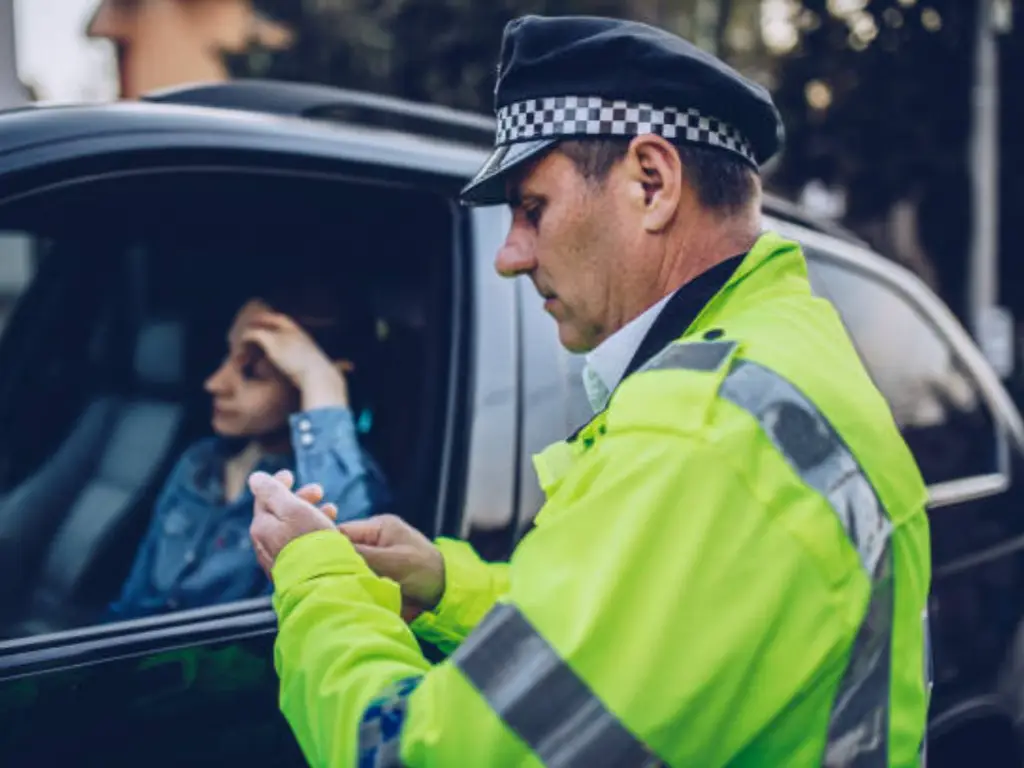
Highly tinted vehicles are of high alert to the police officers. Traffic stop is a dangerous activity of the police as they must approach a car. When the windows of a car are tinted to a high degree, the police cannot peep into the cabin to identify the number of people inside, the action of their hands, and the existence of weapons. This invisibility immediately adds to the conflict of the situation.
Standard Protocol During a Stop
When you are stopped in a car with a dark color, it is possible to follow the right procedure and defuse the situation:
- Immediate Action: As soon as you safely pull over, lower all your windows entirely before the officer approaches your vehicle. This eliminates the visibility barrier.
- Illuminate the Cabin: When the stop is made at night, switch on the interior dome lights as soon as possible.
- Hand Placement: Keep your hands clearly visible on the steering wheel and instruct any passengers to keep their hands visible. Do not reach into the glovebox for registration or insurance until explicitly instructed by the officer.
Understanding the Penalties
If an officer determines your tint is illegal, the resulting citation generally falls into one of two categories, depending on state law and officer discretion:
- Direct Fines: The officer issues a standard moving or non-moving violation, accompanied by a monetary fine. These penalties are between $50 in case of a first offense and more than $500 in case of a second or subsequent offense. In other jurisdictions, later crimes may lead to misdemeanors.
- The “Fix-it Ticket” (Correctable Violation): In most states, a ticket is given to equipment compliance. This provides the vehicle owner with a hard deadline (usually 10 to 30 days) within which to remove the illegal film. After the removal of the film, a police officer or an approved facility should inspect the vehicle to sign off the ticket. The signed ticket is then presented to the court and the fine that comes with it is greatly lowered or completely eliminated. The non-observance of a fix-it ticket within the stipulated time period will turn it into a regular, costly fine and may result in the suspension of the license.
How to Test Your Current Window Tint Percentage
In case you have bought a used car or you are not sure whether your current tint is degrading and exceeds the legal boundaries, it is easy to check your VLT.
To be accurate in the profession, high-calibre, two-piece VLT light meters are used in law enforcement and inspection stations. These are gadgets that slide on the side of a half-rolled-down window. They produce a certain light frequency on one side and record the precise percentage that is received by the sensor on the other side.
For preliminary self-testing, consumers can purchase affordable, basic VLT meters online. While less perfectly calibrated than police-issue equipment, they provide a reliable baseline. Instead, there are a number of smartphone apps that purport to measure VLT with the camera and ambient light sensors on the phone. Although these apps can tell whether a tint is very dark or light, they are not as precise as needed to tell the exact legal compliance, especially in the area of the borderline (e.g., between 32% and 35%).
When your self-testing shows that your window film is unlawful, or when your existing film is showing signs of malfunction, including going purple, bubbling, or peeling, then it is time to upgrade.
Do not compromise your safety, risk expensive traffic citations, or endure degraded optical clarity. Enhance your car with the performance of FlexiPPF that is the best in the industry. Our nano-ceramic automotive films are highly developed and offer 100 percent compliance with state regulations and offer unparalleled IR heat rejection, UV protection, and crystalline visibility. Secure your comfort and protect your investment today. Explore our premium ceramic tint solutions.
 English
  Spanish
  Dutch
Dutch  Japanese
  Russian
  Arabic