
Let’s get one thing straight before we dive into the technicalities: there is no magical, indestructible forcefield for your automotive glass. If a local detailing shop tells you that a $50 chemical spray will make your glass bulletproof against highway debris, they are lying to you.
The brutal, uncomfortable truth is that true physical protection requires a sacrificial layer—a consumable film that will inevitably take the beating, get scratched, and need replacing every one to two years. At first glance, it sounds like a terrible deal. However, when you look at the return on investment (ROI) math of modern vehicles, the perspective shifts dramatically. You are looking at spending $500 every 18 months to sacrifice a piece of engineered plastic, versus paying upwards of $2,500 for a new OEM windshield, mandatory sensor recalibrations, and the hidden costs of insurance depreciation.
If you are wondering how to protect windshield from rocks, you must realize that it is no longer about preserving the pristine aesthetics of your vehicle; it is a strict, undeniable financial defense strategy. In this comprehensive guide, we will dive incredibly deep into the physics of rock impacts, objectively evaluate the real-world defense solutions available on the market, expose the expensive myths sold by the detailing industry, and give you the exact five tactics that actually work.
The Hidden Cost of a Rock Strike: It’s No Longer Just Glass
Most drivers still operate under the outdated assumption that windshields are cheap commodities. They remember the days when a cracked windshield was a minor inconvenience that cost $200 to replace at a local glass shop. Today, they fail to realize that modern automotive glass is less of a traditional window and more of a complex, transparent computer screen integrated into the vehicle’s central nervous system.
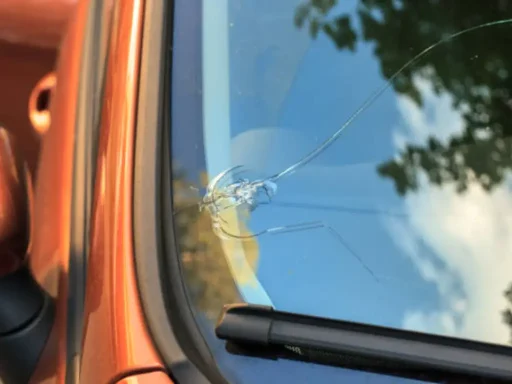
To stop a rock, you must first understand the exact mechanics of why the glass shatters in the first place. Modern windshields utilize Laminated Glass—a structure consisting of two layers of rigid silicate glass sandwiching a flexible Polyvinyl Butyral (PVB) plastic interlayer. When a piece of gravel, even one the size of your fingernail, hits your car at 75 mph (120 km/h), the damage is not caused by the overall blunt force. Instead, it is caused by the extreme concentration of that kinetic energy on a microscopic point. You hear a sharp crack, and suddenly there is a distracting, star-shaped chip directly in your line of sight.
In fracture mechanics, this phenomenon creates what is known as a Hertzian cone fracture. The kinetic energy transfers instantly into the brittle silicate layer. If the peak impact force exceeds the glass’s natural yield strength, it instantly compromises the structural integrity of the glass, causing the surface stress to crack inward in a microscopic cone shape.
Furthermore, aerodynamics play a massive role, governed by the angle of impact formula: Fn = F cos theta. Take the Ford Bronco, Mercedes G-Class, or Jeep Wrangler, for example. Their notoriously vertical windshields mean the impact angle (theta) is extremely close to 0 degrees relative to the normal vector. Thus, cos theta is approximately 1, meaning the glass absorbs nearly 100% of the normal force (Fn). This leads to astronomically high breakage rates compared to aerodynamic sports sedans where rocks glance off at wider angles, significantly reducing the transferred energy.
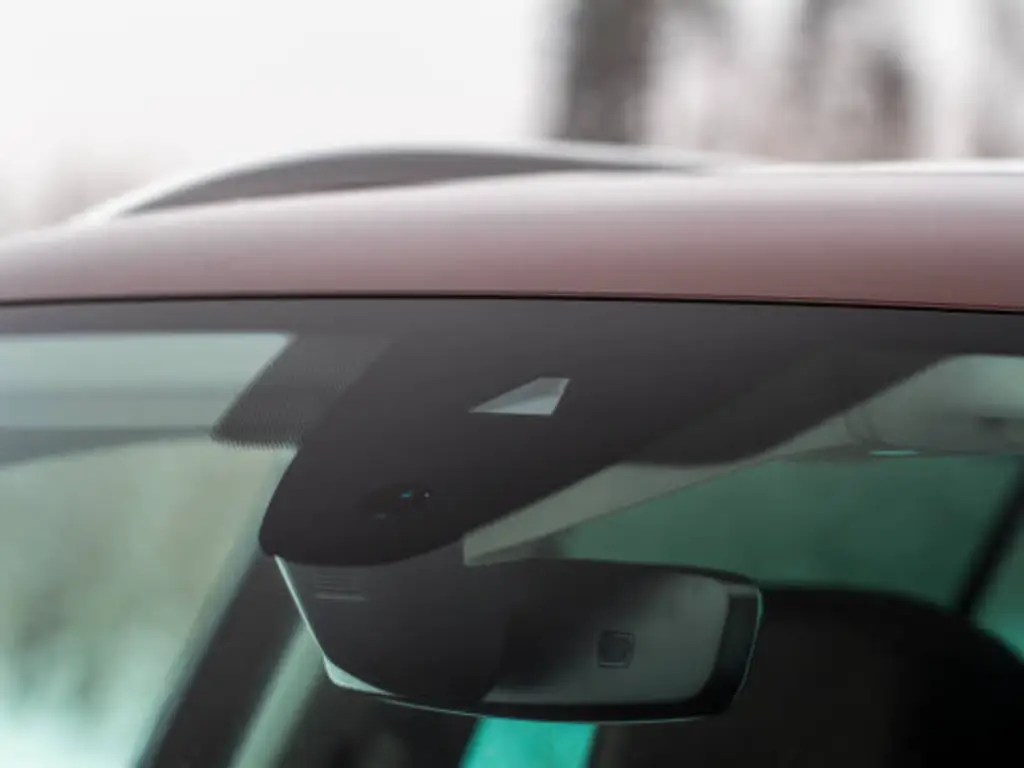
Learning how to protect windshield from rocks is critical because if the glass breaks, the financial hemorrhage truly begins. The cameras and sensors for your Lane Departure Warning (LDW), Rain Sensors, and Automatic Emergency Braking (AEB) are mounted directly to the glass. You cannot simply glue a new windshield in and drive away. The vehicle must undergo mandatory Dynamic and Static Calibration using specialized target boards and OBD2 diagnostic computers. Add the cost of OEM glass, the highly specialized labor required to recalibrate these sensitive safety features, and the inevitable spike in your insurance premiums. Suddenly, your total windshield replacement costs can easily skyrocket well over $2,500 for a single incident.
Defensive Driving Tactics: The Zero-Cost First Line of Defense
Before you spend a single dollar on physical barriers or aftermarket modifications, the most effective defense strategy costs absolutely nothing. Changing how you read the traffic ahead and understanding the physics of highway slipstreams can reduce your risk of rock impacts by up to 80%.
- Abandon the “3-Second Rule” on Gravel: The standard 3-second following distance is designed for braking reaction time, not projectile avoidance. On highways or areas with loose gravel, you must consciously increase your following distance to 5-6 seconds. This allows the kinetic energy of the kicked-up rock to dissipate, causing it to drop back to the asphalt before it reaches your vehicle.
- Master Staggered Positioning: Never drive directly in the tire tracks of the vehicle ahead of you. Rocks are picked up by the sticky rubber tire treads, carried through the rotation, and launched straight back at the apex of the curve. By adopting a staggered position—shifting slightly to the left or right within your lane while maintaining lane discipline—you physically remove your windshield from the direct line of fire.
- Beware of “Lifted Trucks Without Mud Flaps”: While commercial dump trucks are obvious hazards, the silent killers on the highway are heavy-duty trucks or off-road SUVs running deep-tread mud-terrain (M/T) tires without proper, legally mandated mud flaps. These deep, aggressive tread grooves act like mechanical claws. They excel at grabbing large, dense stones from the road surface and hurling them backward with the force of a bullet. Give these vehicles the widest berth possible, or pass them quickly and safely to get out of their debris wake.
Windshield Protection Film (WPF): The Ultimate Physical Barrier
When driving tactics fail—and eventually, they will—car owners must turn to aftermarket protection. When researching how to protect windshield from rocks, the only proven physical barrier against high-velocity projectiles is Windshield Protection Film (WPF). But how exactly does a thin layer of transparent plastic stop a rock that possesses enough energy to shatter solid glass?
It comes down to the impulse-momentum theorem (F = dp/dt) and advanced high-polymer mechanics. WPF does not magically “bounce” the rock away. Instead, the specialized PET (Polyethylene Terephthalate) substrate undergoes rapid elastic deformation upon impact.
More importantly, the true unsung hero providing the physical damping is the PSA (Pressure Sensitive Adhesive) layer beneath the rigid PET. This viscoelastic acrylic glue acts as a microscopic, high-performance shock absorber. As the PET flexes under the blow of the rock, the PSA layer dampens the kinetic energy, artificially increasing the impact duration (dt). By increasing the time it takes for the rock to decelerate, the film drastically reduces the peak normal force (F) exerted on the underlying glass. The film takes the cratering damage, keeping the peak force well below the critical threshold of a Hertzian cone fracture.
Premium, industry-leading solutions like FlexiPPF’s Windshield Film utilize a world-class, extremely durable BASF polyester base manufactured in Germany. This 4-mil thick PET delivers immense tensile strength, combined with a specialized 4H-6H surface hardness nano-ceramic coating. This means it doesn’t just block 99% of harmful UV rays (surviving brutal 5,000-hour UV exposure tests without degrading); its 4H-6H hardness dramatically resists the microscopic scratching caused by daily wiper friction, extending the sacrificial life of the film significantly longer than cheap, generic alternatives found online.
Evaluating Defense Solutions: The Technical Comparison Matrix
When researching how to protect windshield from rocks, consumers often get confused by the overlapping marketing claims of PPF, WPF, and Glass Coatings. To clear the fog, we must look at the specific material properties and how they interact with high-velocity kinetic energy (Fn = F cos theta).
| Performance Metric | Windshield Film (WPF – PET) | Paint Protection Film (PPF – TPU) | Ceramic Coating (SiO2) |
|---|---|---|---|
| Impact Absorption | Maximum. Uses PSA viscoelastic damping to stop Hertzian fractures. | High. Great for paint, but creates dangerous optical glare on glass. | Zero. A 2-micron layer cannot dissipate kinetic energy. |
| Base Material | German BASF Polyester (PET). High tensile strength & rigid clarity. | Thermoplastic Polyurethane (TPU). Self-healing but soft. | Liquid Polymer (Silicon Dioxide). Chemical bond only. |
| Optical Refraction | Optically Pure. Matches OEM glass standards with 0% distortion. | Poor. Causes “Orange Peel” effect and night-time starbursts. | Excellent. Enhances gloss but offers no physical buffer. |
| Wiper Compatibility | Smooth. 4H-6H Nano-ceramic top coat prevents wiper chatter. | Disastrous. High friction leads to wiper skipping and motor failure. | Excellent. Hydrophobic properties improve water shedding. |
| UV Protection | 99% (UV400). Prevents interior fading and dash cracking. | 99%. Prevents paint yellowing. | Minimal. (Depends on coating thickness). |
The Fatal Mistake: Applying PPF on a Windshield
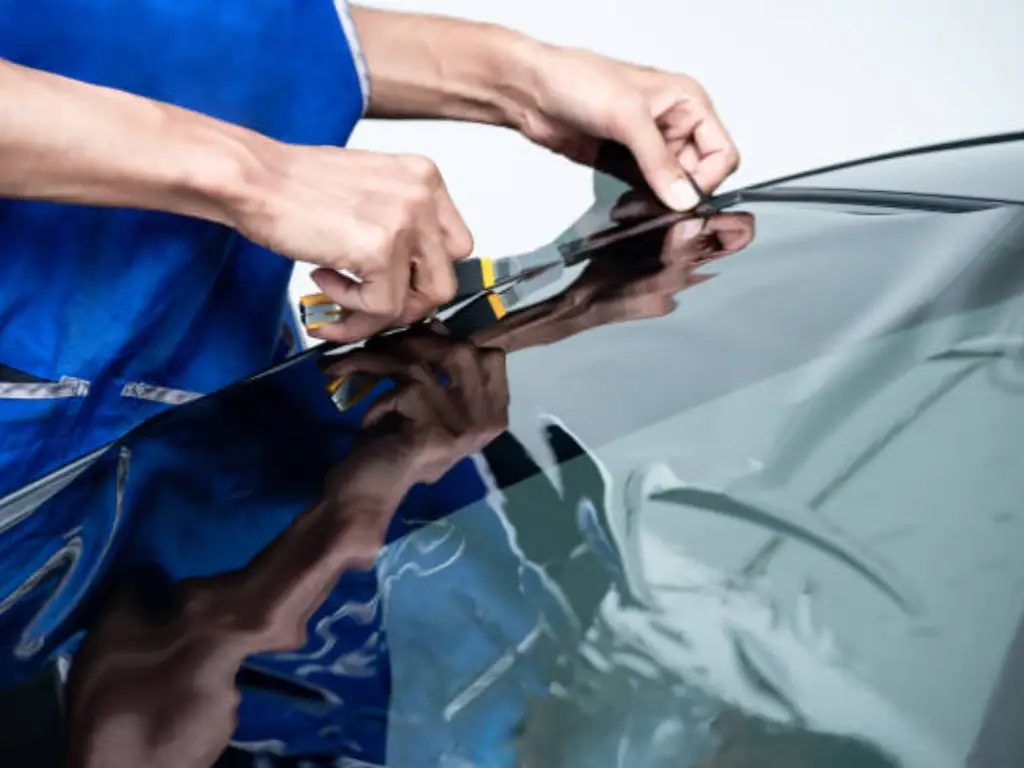
A dangerous and incredibly misguided trend has emerged on automotive detailing forums and social media: car owners attempting to save money by applying leftover Paint Protection Film (PPF) to their windshields. Do not do this under any circumstances. It is a critical safety hazard that can lead to catastrophic consequences.
While both films are designed to protect your car, their chemical compositions and physical properties are fundamentally incompatible. PPF is manufactured from TPU (Thermoplastic Polyurethane). While TPU is highly elastic, possesses self-healing properties, and is phenomenal for absorbing impacts on painted body panels, its surface friction coefficient is incredibly high. It is “grippy” by nature.
Applying TPU to automotive glass causes violent wiper chatter. Your rubber wiper blades will catch on the film, stuttering violently across the glass, which will inevitably lead to wiper motor burnout. Worse still is the optical nightmare. TPU is not optically pure. Its uneven refraction index creates a severe “Orange Peel” effect when stretched over a windshield. At night, this uneven surface scatters the light from oncoming headlights, creating blinding halos and extreme glare. It might stop a rock, but it will severely compromise your visibility, potentially causing a fatal crash. WPF must be made of optically clear, hard-coated PET.
The Great Chemical Myth: Ceramic Coatings
Let’s dispel the biggest marketing myth in the automotive detailing industry once and for all: “Apply our 9H Nano-Ceramic Coating, and your glass will be completely rock-proof.” This is an outright violation of the basic laws of physics, and shops selling this promise are preying on consumer ignorance.
The core active ingredient of a true ceramic coating is Silicon Dioxide (SiO2). While SiO2 is technically a very hard substance when cross-linked, a fully cured ceramic coating on your windshield is incredibly thin—typically only 1 to 2 microns thick. For context, a human hair is about 70 microns thick, and a proper PET Windshield Protection Film is roughly 100 microns (4-mil) thick.
Comparing a 2-micron chemical layer to a 50-gram rock strike traveling at highway speeds is like wearing premium SPF 100 sunscreen to a rock fight. The sunscreen (ceramic coating) is absolutely brilliant at repelling water, making ice removal easier, and preventing acid rain etching. But when it comes to kinetic energy, a 2-micron layer offers zero physical buffering. It will not slow the rock down. It will not disperse the energy. Do not rely on chemistry to solve a physics problem.
The Wiper Friction Dilemma: Maximizing Film Longevity
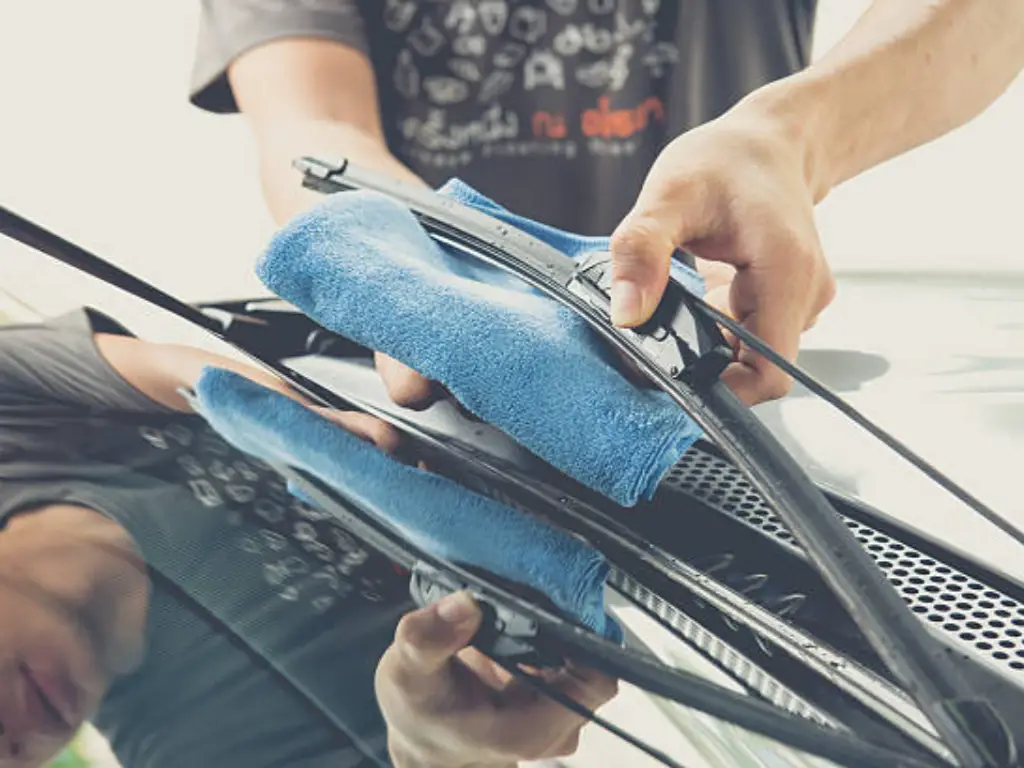
If you make the wise decision to invest in a proper PET Windshield Protection Film, you must understand that your biggest enemy is no longer flying rocks—it is your own windshield wipers. Dragging dry, microscopic sand and silica dust across the film is equivalent to taking fine-grit sandpaper to your expensive investment. To protect your film and maximize its sacrificial lifespan, you must strictly follow these maintenance rules:
- Never Dry-Wipe: This is the golden rule. Always use ample washer fluid before activating your wipers to provide necessary lubrication between the rubber blade and the film.
- Ditch Abrasive Fluids: Avoid cheap, heavy-duty bug removers or washer fluids with high alcohol or ammonia content. These harsh chemicals will chemically strip the 4H-6H hard coating off the PET film, leading to rapid degradation and hazing.
- Use an Acrylic Sealant: Treat the film with a dedicated acrylic polymer sealant every two to three months. This keeps the surface incredibly slick, lowering the friction coefficient and allowing wipers to glide effortlessly.
- Replace Wipers Bi-Annually: Swap your wiper blades every 6 months without fail. Fresh, soft rubber prevents the micro-scratching that hardened, UV-baked rubber causes.
The Comprehensive Protection Matrix: Calculating Your ROI
Ultimately, figuring out how to protect windshield from rocks is about managing a calculated financial risk. Relying entirely on your automotive insurance policy is a losing game, even for basic commuter cars.
First, you must pay your Deductible out of pocket, which is often $500 or more. Second, an insurance claim for full glass replacement goes permanently on your vehicle’s history report (such as Carfax). When you eventually sell or trade-in the vehicle, that structural “ding” on the report causes immediate depreciation that often exceeds the cost of the glass itself.
Without knowing exactly how to protect windshield from rocks, exposing your naked glass to highway speeds is a massive, ongoing financial liability. A premium Windshield Protection Film acts as a proactive, upfront investment to bypass the deductible trap, preserve your vehicle’s long-term resale value, and protect the incredibly expensive ADAS sensors mounted behind the glass.
For Car Owners & Enthusiasts
Do not wait for the inevitable crack to ruin your day and your wallet. Protect your vehicle’s factory seal and expensive ADAS sensors today with absolute zero installation risk.
View Certified InstallersFor Detailing Shops & Installers
Elevate your shop’s installation perfection, eliminate liability, and increase your throughput with FlexiPPF’s BASF-grade, precisely pre-cut windshield films.
Contact for B2B Wholesale Sample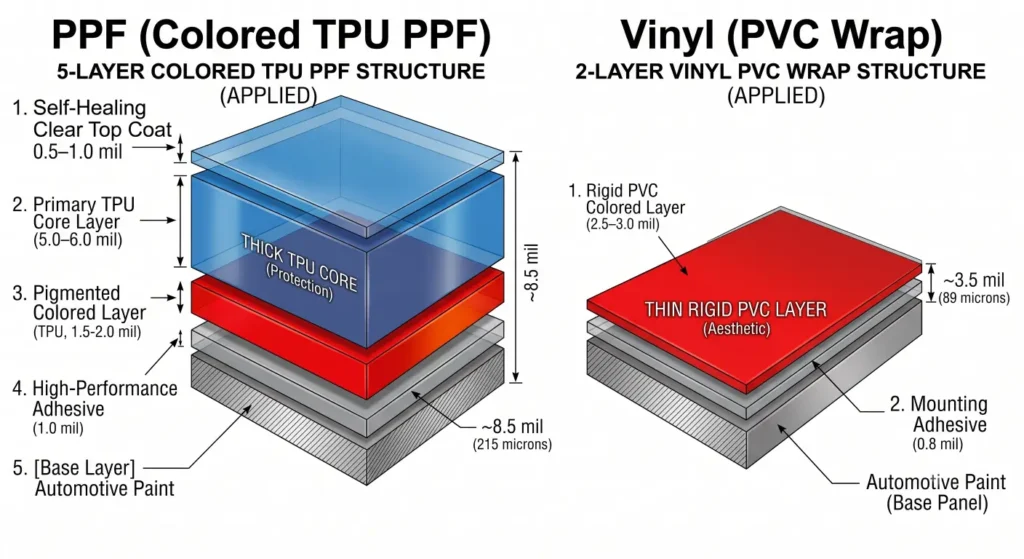
 English
  Spanish
  Dutch
Dutch  Japanese
  Russian
  Arabic