
When you have just bought a new car, or you are just sick and tired of getting into a hot car in the middle of summer, having your car windows tinted is probably on the top of your list of things to do. But when you begin to call local auto detailing shops or even do a search online, you are immediately assaulted with a bewildering truth: the prices you are offered may be as low as a suspicious $99 or even as high as $800 or more. This huge difference makes the question of most car owners the same: What is the actual average cost to tint car windows, and am I being ripped off?
The truth is that the automotive aftermarket is filled with confusing terminology, hidden fees, and aggressive upselling tactics. You are in great danger of either paying too much money on a simple product or on the other hand, wasting money on a low-cost tint job when you do not know the factors that dictate the average cost to tint car windows.
This is a comprehensive guide that aims at fully demystifying the window tinting industry. We will dissect precisely how much you are likely to pay depending on the kind of film material you select, the exact make and model of your car, and the labor costs that are not so obvious and are usually not advertised by the shops. At the conclusion of this guide, you will be able to make an informed decision and confidently select the best window tint that fits your budget, avoid the pitfalls of the industry, and get the best out of your investment without spending a penny more than you need.
What Is the Average Cost to Tint Car Windows?
In attempting to establish a baseline budget, one should realize that there is no one “flat rate” of window tinting. The final amount you pay at the counter is the sum of the cost of the raw material of the film, the complexity of the windows in your car, the local labor rates in your particular city, and the reputation of the installation shop.
The average price to tint car windows nationally on a standard four-door sedan is between $150 and $600 to have the entire car tinted (not including the front windshield which is usually charged separately). This is however a wide range. To provide you with a much more specific and practical expectation, we have prepared a more detailed breakdown of prices depending on the most common film materials and types of vehicles on the market today.
Estimated Average Window Tinting Prices
| Window Tint Material Type | Average Cost for Sedans/Coupes | Average Cost for SUVs/Trucks | Key Characteristic |
| Standard Dyed Film | $100 – $200 | $150 – $250 | Basic privacy, low heat rejection, prone to fading. |
| Metalized Film | $150 – $250 | $200 – $300 | Good durability, reflects heat, but interrupts electronic signals. |
| Carbon Window Tint | $200 – $400 | $250 – $450 | Matte finish, zero signal interference, excellent durability. |
| Ceramic / Nano-Ceramic | $400 – $800+ | $500 – $900+ | Premium heat and UV rejection, crystal clear, highest cost. |
Note: The prices listed in the table above reflect the cost of a full peripheral tint job (all side windows and the rear windshield). Front windshield tinting or specialized visor strips typically incur an additional charge ranging from $100 to $250, depending on the material.
Why Prices Fluctuate by Geographic Location
It is also crucial to factor in your geographic location when evaluating these averages. Just like the cost of housing or groceries, the cost of automotive services varies wildly depending on where you live.
In a metropolitan region with a high cost of living, such as Los Angeles, New York City, or Miami, you can expect to pay at the very highest end of the above ranges, or even 15% to 20% above. The reason is that the owners of the shops have to pay increased commercial rent, insurance and wages of the employees. On the other hand, in a smaller suburban or rural town in the Midwest, you will probably find quotes that are on the lower end of the range.
Moreover, areas that receive high sun exposure throughout the year like Florida, Texas and Arizona have a huge, highly competitive market in window tinting. The number of shops in these regions can occasionally push the average prices down because of the intense competition, yet the demand of ultra-premium, high-heat-rejection ceramic films is extremely high, and these particular materials are priced at a premium.
Window Tint Prices by Material: Dyed to Ceramic
The one largest variable that determines your final invoice is the type of film material that is used on your glass. The chemical and physical distinction between these films is the key to understanding why one quote is $150 and another is $600. We shall discuss the four main types of window tints in the market, deconstructing their advantages, disadvantages, and real worth.
- Dyed Window Tint (The Budget Option)
Average Price Range: $100 – $250
The oldest, simplest, and cheapest kind of film is dyed window tint. Just like the name implies, this film is produced by applying a coating of dye to the adhesive or the polyester base to darken the glass.
- The Pros: It is very cost-effective. In case you are just interested in making the windows of your car darker to ensure visual privacy and aesthetic value, then dyed tint will do the trick at a low cost. It also provides a basic level of glare reduction, making driving slightly more comfortable in bright conditions.
- The Cons: Dyed film absorbs solar heat rather than reflecting it. While it might make the inside of your car look dark, it does very little to actually keep the cabin cool during a hot summer day. More to the point, dyed films are infamous in terms of their short life. The dye decomposes quickly when it is subjected to the intense ultraviolet (UV) rays of the sun. In a period of one to three years, the cheap dyed tint will definitely fade, bubble and change to an ugly shade of purple.
- Metalized Window Tint (The Reflective Option)
Average Price Range: $150 – $300
Metalized window film takes a different approach. Instead of relying solely on dye, this film contains micro-particles of metals (such as aluminum, nickel, or titanium) embedded within the layers.
- The Pros: The metal particles are used as a mirror to reflect the heat and UV rays of the sun off the car instead of absorbing them. This is why metalized film is much more effective in cooling the inside of your car than dyed film. It is also extremely tough; the metal strengthens the film and it is very resistant to scratching, shattering and will not fade or turn purple with time. It provides the windows of the car with a unique, slightly shiny, or reflective look.
- The Cons: Signal interference is the largest disadvantage of metalized tint, and the cause of its decline in popularity over the past few years. Due to the high density of modern cars with electronics, the metal in the window film can have a devastating effect on GPS navigation systems, cellular phone reception, satellite radio (SiriusXM), and even tire pressure monitoring systems (TPMS) and toll-booth transponders.
- Carbon Window Tint (The Mid-Range Sweet Spot)
Average Price Range: $200 – $450
Carbon window tint represents a significant leap forward in film technology. Instead of dyes or metals, this film is infused with microscopic carbon particles.
- The Pros: Carbon tint gives a gorgeous, rich, matte-black finish that car lovers adore since it lacks the “mirror” appearance of metalized films. It is very efficient at infrared heat rejection- it can reject as much as 40% of the heat that tries to enter the cabin. Because it contains zero metal, it will never interfere with your smartphone, GPS, or vehicle sensors. Moreover, the carbon particles are extremely stable, which means that this film will never turn purple, and your car will look smooth years later.
- The Cons: The only actual negative of carbon film is that it is significantly more expensive than dyed or metalized. Nevertheless, the long-term value is immeasurably better given that it does not have to be replaced very often.
- Ceramic and Nano-Ceramic Window Tint (The Premium Standard)
Average Price Range: $400 – $800+
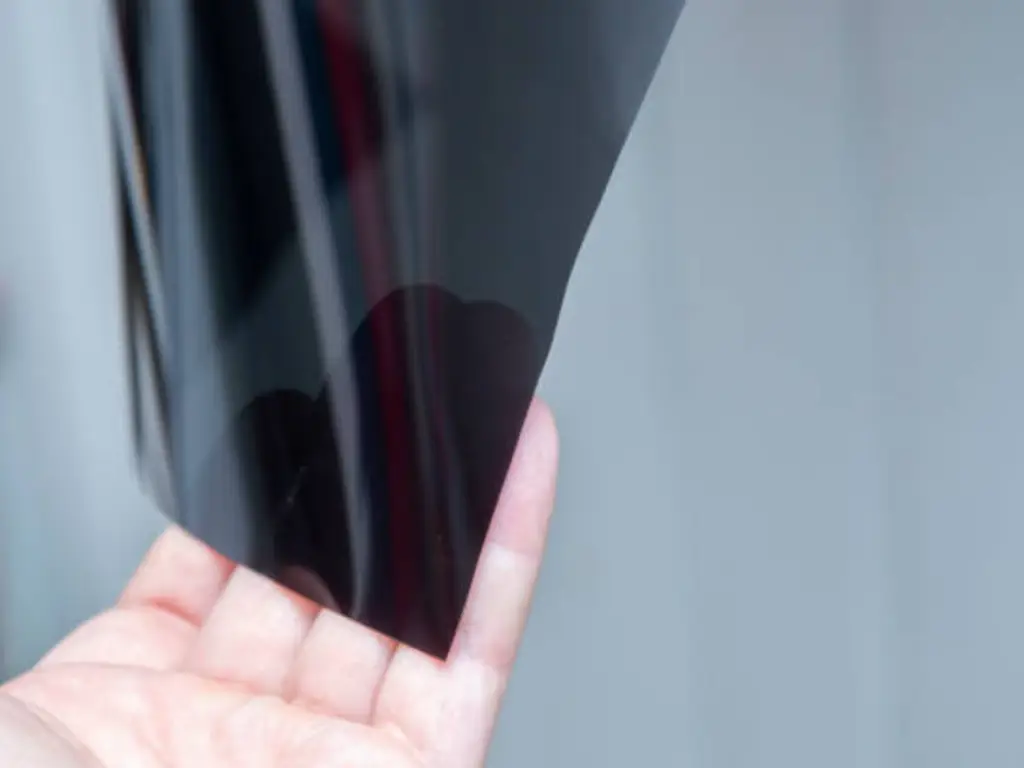
Ceramic tint is the absolute pinnacle of current window film technology. It utilizes nano-ceramic particles that are non-conductive and non-metallic, engineered to target and block specific spectrums of solar energy.
- The Pros: The performance of nano-ceramic film is unmatched. It is able to filter out up to 99.9% of bad UVA and UVB rays (saving your skin and keeping your leather interior from cracking), and at the same time, it can also block up to 98% of infrared (IR) heat. This is despite the fact that even when you select a very light, almost transparent color of ceramic film (such as a 70% VLT), it will still make your car much colder than the darkest color of regular dyed film, offering superior heat rejection. It provides the highest visibility, no glare, no signal interference and the highest level of durability.
- The Cons: The entry barrier is high. To equip a big SUV with the highest quality nano-ceramic film everywhere can easily cost over $1000 in a premium store.
Why FlexiPPF Ceramic Tints Are the Smart Choice
When you are ready to switch out the cheap, fading dyed films with the high-quality performance of the modern Ceramic tints, the idea is to achieve long-term quality without becoming a victim of the huge price markups of the highly marketed legacy brands. This is the point where FlexiPPF transforms the market.
FlexiPPF offers a no compromise, high-end product range that offers the best balance of high performance and smart prices. We have developed our high-tech Nano-Ceramic films based on a world-renowned polyester base of BASF in Germany, which guarantees high tensile strength and crystal-clear optical clarity. We combine this with high quality Ashland adhesives of the USA that ensure a perfect bubble free bond with low VOC emissions and excellent heat resistance.
Choosing FlexiPPF means you are investing in genuine, cutting-edge technology. Our Nano-Ceramic coating acts as an invisible shield, blocking over 99% of harmful UV rays (UV400) and rejecting up to 70% of infrared heat (reducing total solar heat gain by up to 65%). This will dramatically cool the inside of your car, lessen the load on your air conditioner and save your upholstery the effects of fading and cracking.
Produced on the most sophisticated German SLOT DIE coating machines and Leybold production lines, each roll of FlexiPPF film is assured of consistent density, no electronic signal interference and a bright finish that will never become yellow or purple. Backed by an industry-leading 10-year warranty, FlexiPPF ensures that you receive professional-grade, long-lasting protection. You do not need to pay more to be prestigious, with FlexiPPF, you receive uncompromised performance, which is laboratory proven to keep your car cool, safe and beautiful in excess of a decade.
How Vehicle Type and Size Impact Your Total Cost
Although the material you choose determines the base price per square foot, the car you drive will dictate the amount of that material that is required and more importantly the number of hours of labor that will be required to install it, which drastically impacts the average cost to tint car windows. Not all cars are created equal and professional tinters charge depending on the complexity of the job.
Two-Door Coupes and Sports Cars
You might assume that because a coupe only has two doors, it will be the cheapest vehicle to tint. This is a common misconception. Although the amount of square footage of film used by a coupe is slightly less than that of a sedan, sports cars are usually characterized by extreme angles, narrow corners, and minimal rear seat space. To an installer, attempting to maneuver a squeegee and a heat gun into the sharply sloping rear windshield of a sports coupe (such as a Chevrolet Corvette or a Porsche 911) is extremely tedious. Thus, the prices of coupes are usually equal or sometimes higher than the regular sedans, and they usually cost between $150 and $450, depending on the film type.
Four-Door Sedans
The four-door sedan (e.g. a Honda Accord or Toyota Camry) is the standard against which the window tinting industry is measured. These cars possess predictable window designs, comparatively flat side glass, and readily available rear windshields. Since installers are engaged on these vehicles on a daily basis, the labor time is very predictable and as such, sedans are the easiest and most competitively priced vehicles to tint.
SUVs, Crossovers, and Minivans
The size of the glass is much larger when you get to an SUV or a minivan. With these larger vehicles, you are not merely tinting four roll-down windows and a rear windshield anymore, you are also paying to cover the stationary quarter panels, the huge cargo area windows, and possibly a huge rear hatch glass. The greater the surface area, the greater the cost of materials and the labor time, significantly increasing your overall cost. You should expect to pay a 15%-30% premium on a regular sedan quote on an SUV. Nevertheless, most SUVs have a rear half of the car with “factory privacy glass.” In case you just have to tint the two front driver and passenger windows to match the back, this will cut your quote by a large margin to about $80 to $150.
Pickup Trucks
The most convenient vehicles that professionals can tint are usually trucks. The glass tends to be very flat, the windows are big and square and there is no sloping rear windshield to manoeuvre. Normal pickup trucks (Standard Cab, Extended Cab, or Crew Cab) can be a little cheaper than SUVs, and most truck owners choose to simply tint the two front windows to resemble factory rear privacy glass, which is a very inexpensive modification.
Hidden Fees: Old Tint Removal and Complex EV Windows
In budgeting, it is not enough to consider the base price of the film. The fact that many consumers are taken by surprise when they get their final invoice is due to the fact that they did not consider the hidden labor costs and vehicle-specific surcharges.
The Cost of Old Tint Removal
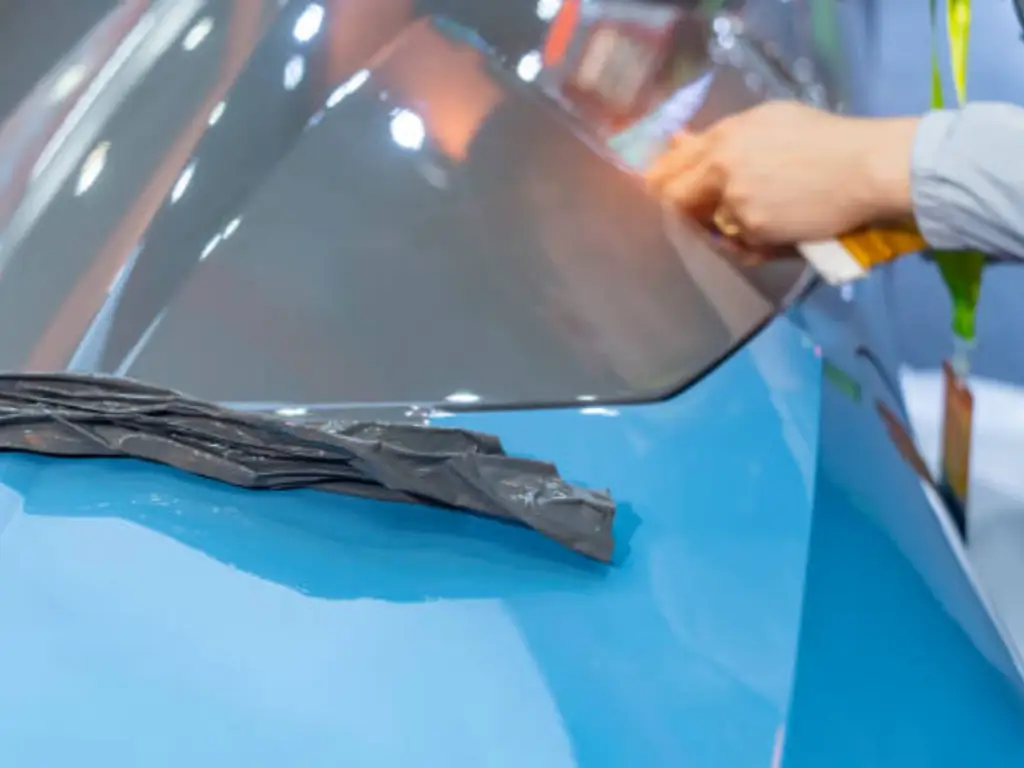
If your car currently has old, bubbling, or purple tint on the windows, you cannot simply apply new film over it. The old material must be painstakingly removed. Tint removal is not free. In fact, it is often the most hated job in the detailing industry.
When old tint bakes in the sun for years, the adhesive turns into a stubborn, sticky crust that bonds tightly to the glass. The installers are required to clean the glass with commercial garment steamers, special chemical solvents and razor blades. The back windshield is especially risky; unless an installer is extremely cautious, scraping the rear glass will cut the fragile, inbuilt copper defroster lines, and your rear defroster or radio antenna will be permanently ruined. Because of the risk and time involved, shops generally charge anywhere from $50 to $150 solely for old tint removal before they even begin applying the new film.
The “EV Tax” and Complex Windows
When you drive a modern Electric Vehicle (EV), especially a Tesla Model 3 or Model Y, you have to be ready to pay a premium surcharge. EVs pose special and extreme difficulties to window tinters.
To begin with, the size of the glass is enormous. The back windshield of a Tesla Model 3 is stretched all the way to the roof. This involves a huge, large single sheet of tint film to cover. It takes master level skills to shrink a piece of film that large with a heat gun without burning or creasing it.
Secondly, contemporary EVs are computers on wheels. In tinting a windshield or rear glass, installers have to spray a lot of soapy water (slip solution) on the glass to position the film. In cars such as Teslas, important computer modules and amplifiers are placed directly under the dashboard and the rear deck. Unless an installer carefully wraps these spaces with microfiber soak ropes to absorb the runoff water, the electronics of the vehicle can be fried immediately, costing thousands of dollars in damages. Due to the high liability and the need of highly skilled technicians, tinting an EV typically carries a premium charge of $100 to $300 over and above the normal vehicle rates.
DIY vs. Professional Tinting: Which Is Truly Cheaper?
When quoted prices are as high as $400 or higher to have professional ceramic tinting, most resourceful car owners jump to the internet and locate ready-prepared DIY window tint kits on Amazon or eBay at as low as $30 to $50. On paper, it appears to be the best method of ending over-payment. But once you consider the actuality of the installation process, DIY tinting is hardly the deal it seems to be.
The True Cost of DIY
To install window tint properly, you cannot just slap it on like a phone screen protector. You need tools. If you do not already own a high-quality heat gun, professional-grade squeegees, razor blades, specialized slip solutions, and lint-free microfiber towels, you will need to purchase them. Suddenly, your $40 kit costs $100 in supplies.
The Skill Gap and the “Crease” Tax
The glass in the window is not perfectly flat, but it is curved both horizontally and vertically. A flat sheet of polyester film needs to be carefully “heat-shrunk” in order to fit a curved windshield. You must use a lot of heat on the exterior of the film and at the same time flatten it out, making the material shape itself to the precise shape of the glass before you attach it to the interior.
When you use a little too much heat, you will immediately burn a hole in the film. When you squeegee in the opposite direction, you will get a hard crease that is impossible to remove. The vast majority of first-time DIYers entirely ruin their first roll of film and are forced to purchase a second or third kit just to get a decent result, entirely nullifying any savings made in the first place.
Dust, Bubbles, and Warranties
Professional tint shops are kept in highly clean and climate controlled closed-bay settings to avoid the dust blowing around. When you attempt to tint your car in your driveway or an open garage, microscopic dust particles and pet hair will always find their way in between the film and the glass leaving permanent, unsightly white spots and air bubbles.
Moreover, the best films (such as the best Carbon and Ceramic) are not sold to the end-users; they are distributed exclusively to the authorized dealers. When you have a professional installation, you are not only paying the labor, you are paying the peace of mind that you have a nationwide lifetime warranty against peeling, bubbling and fading. When a DIY project goes wrong in half a year, you must peel it off and begin again at your cost. Finally, it is often the most economical choice to pay a professional in the long-term satisfaction.
Understanding VLT Percentages and Local Window Tinting Laws
There is one important legal point that you need to know before you finalize your budget and make an appointment, Visible Light Transmission (VLT). The measure of the darkening of a window tint is called VLT. The percentage is the percentage of visible light that the film permits to pass through the glass and into the cabin.
- 5% VLT is often referred to as “limo tint.” It is incredibly dark, making it almost impossible to see into the vehicle.
- 35% VLT is a medium-dark shade. It offers great privacy while still allowing you to see out safely at night.
- 70% VLT is nearly transparent, often used on front windshields to block heat without impairing vision.
Before you waste hundreds of dollars, it is of paramount importance that you do some research on the specific window tint laws of your state or local municipality. Each jurisdiction has legal boundaries on the darkness of the front side windows, rear windows, and windshield. As an illustration, in New York, the front side windows must have a minimum of 70% VLT, whereas in Florida, you can legally have them tinted as dark as 28%.
You take a huge risk when you disregard these laws and order a shop to install 5% limo tint all over. You will not only be pulled over and fined heavily on traffic offences, but in most states, your car will automatically fail its annual safety check. Then you will have to pay a shop to take off the illegal tint (another $100+), and then pay to have legal tint installed. Violation of VLT laws is the quickest method of doubling your window tinting expenses.
How to Avoid Cheap Window Tint Scams and Rip-offs
The fact that the window tinting business is not strictly regulated at the national level means that it has its fair share of fly-by-night operators and unscrupulous stores. To prevent overpaying and to save your investment, you need to be able to identify the red flags of a tinting scam and ensure you are getting a quality window tint.
The “$99 Full Car” Illusion
When you come across a shop that is offering a “Full Car Tint Special at $99,” run. Raw materials of high quality are priced at a higher cost of over $99 without considering labor. These cheapies are made with the poorest quality of dyed film imported abroad. The store is aware that in one year, the color will change to purple, create huge air bubbles that distort your rear-view mirror, and peel off the edges. When it occurs, that pop-up shop might have changed its name or relocated.
The Fake Ceramic Scam
Nano-ceramic window tint is an expensive product, and therefore, unscrupulous shops will be willing to sell you ordinary Carbon or even Metalized film at the Ceramic price. To avoid this, it is always better to ask the installer to inform you what brand and line of film they are using. Reputable shops will be proud of the high-quality materials they stock and they will be glad to show and the spec sheet of the manufacturer.
Additionally, ask if they have a “Heat Box” display. A heat box involves the use of an intense infrared heat lamp that is located behind the panes of glass that have been coated with various films. An authentic ceramic film will immediately stop the heat and your hand will be cool on the other side. When a store boasts of selling ceramic yet denies to prove its ability to reject heat, then go elsewhere.
Vague or Non-Existent Warranties
Always read the fine print of the warranty. A shop might claim to offer a “Lifetime Warranty,” but if that warranty only covers the installation labor (meaning they promise it won’t peel tomorrow) and does not cover the film itself (against fading or turning purple), it is worthless. Demand a manufacturer-backed warranty that covers bubbling, peeling, cracking, and color change, and ensure you get a physical or emailed copy of the warranty card upon completion.
Is Upgrading to Premium Ceramic Window Tint Worth It?
You may be looking at a $500 to 700 quote of Nano-Ceramic tint after you have analyzed all the costs, the materials and the hidden variables and you are asking yourself, “is it really worth spending that much money on window film?”
The answer is a resounding yes in case you intend to retain your vehicle over two years. Although the initial investment in high quality ceramic tint is much more expensive than the basic dyed film, the payback in the long term (ROI) is indisputable.
First, consider the savings on fuel and electricity. Because ceramic tint provides unparalleled heat reduction by rejecting up to 98% of infrared heat, your car’s interior will not become an oven when parked in the sun. When you start the vehicle, your air conditioning system does not have to work nearly as hard or as long to cool the cabin down. For gas-powered cars, this translates to improved fuel economy. For electric vehicles, reducing the AC load drastically preserves your battery range.
Second, consider interior preservation. The 99.9% UV protection of high quality films is like SPF 100 sunscreen for your car interior. It keeps your costly leather seats dry and uncracked, your plastic dashboard uncracked and split, and your black trims a dull grey. Once you are ready to sell or trade in your car, a clean, unfaded interior will fetch a significantly higher resale price, and will cover the price of the original tint job with ease.
Lastly, health and comfort cannot be priced. The UV ray blocking will keep your skin younger and prevent skin cancer in the long commute and the high glare will decrease eye fatigue and headaches. Knowing the industry, not falling into the trap of the cheap scams, and investing in quality materials such as FlexiPPF, you are not only purchasing a darker look on your car, but also purchasing safety, long-term durability, and an experience of driving that is much more comfortable. Quit paying more money to buy low quality products, and make the intelligent decision on your vehicle today.
 English
  Spanish
  Dutch
Dutch  Japanese
  Russian
  Arabic