
Selecting window tinting for a vehicle has grown beyond just the overall aesthetic appeal. Technology has evolved past simple dyed films (fading and bubbling) and metallized films (blocking signals) to engineered and improved laminates.
Among the main types of tints, carbon-based films and ceramic window tint are the two primary competitors. The two are both solutions to the signal-interference problem, but they have key differences in performance, production, and longevity.
This guide goes beyond aesthetics to deconstruct material science, real-world heat rejection, and the cost-benefit ratio of the two technologies. It will offer factual insight to help you make an informed decision about the appropriate tint film to invest in for your car.
Carbon vs. Ceramic: The 60-Second Comparison
For those who need a high-level overview, the battle between carbon and ceramic tint boils down to how they handle heat. Carbon absorbs infrared heat; ceramic rejects (reflects and absorbs) it. This fundamental difference dictates their performance and price, especially in terms of heat rejection.
Here is the essential breakdown:
| Feature | Carbon Tint | Ceramic Tint |
| Heat Rejection | Good (Absorbs IR) | Superior heat rejection (Reflects/Absorbs IR) |
| Technology | Carbon particles (non-conductive) | Ceramic particles (nanoparticles, non-conductive) |
| UV Protection | Excellent (99%+) | Excellent (99%+) |
| Clarity / Haze | Very Good (Slight matte finish) | Superior (Optically clear) |
| Signal Interference | None | None |
| Fading / Color | Superior stability (True black) | Superior stability (True black) |
| Price Point | $$(Mid-range) | $$$$ (Premium) |
While this table provides the “what,” it doesn’t fully explain the “why.” The true distinction lies in their superior performance under duress, particularly in their ability to manage the invisible spectrum of light that generates heat.
Heat Rejection: A Real-World Performance Test
To appreciate the main value of premium window tint, it’s important to understand solar heat. Solar energy from the sun comes to us in three forms:
- Harmful ultraviolet rays (UV Light): Includes UVB rays, causes interior fading, and damages skin (requiring skin protection).
- Visible Light (VLT): This is the light that we can see, and is the source of glare.
- Infrared Light (IR): This is invisible to the human eye, but it’s what we experience as heat, leading to excessive heat buildup.
A low-cost, dark-stained film may help block visible light (lessening glare), but does hardly anything to prevent infrared heat. This is why even a car with dark, limo tint can suffer from massive heat buildup and turn into an oven.
This is where carbon and ceramic films come in.
Carbon Tint: The Absorber
Carbon particles are added to carbon window tint. These particles are very efficient in blocking and absorbing infrared light. When the solar energy reaches the window, the carbon film serves as a sponge to absorb the IR energy and not to pass the energy directly to the cabin. The heat is then slowly dissipated and radiates out of the glass as the car moves.
It is a huge improvement over dyed film. A good carbon film will absorb 50 percent or more of the total infrared heat, and this will make a significant difference in interior temperatures.
Ceramic Tint: The Reflector
The best of modern advanced technology is ceramic window tinting. This thin film employs non-conductive, non-metallic ceramic nanoparticles, which are tiny to the extent that they are quantified in nanometers, and are sprayed on the film. These microscopic particles are designed to be spectrally selective, that is, they are able to absorb and reject certain wavelengths of light.
This is not merely a film that absorbs heat; this advanced performance ceramic film actually reflects much of the infrared spectrum.
The Test Data
Consider a controlled experiment with two pieces of glass, one with carbon and one with ceramic, both with the same 35% VLT (Visible Light Transmission). On one side we put a 250-watt heat lamp (simulating intense sunlight as a pure infrared source) and on the other an infrared power meter.
- Untinted Glass: The meter may be 200 W/m² (Watts/squared) of high-intensity IR energy.
- Carbon Tint: The carbon film absorbs a great deal of energy. The meter reading would be reduced by a large margin, maybe to 90 W/m². The film itself, though, is made warm to the touch as it takes in and retains that energy, showing its specific heat rejection capabilities.
- Ceramic Tint: The ceramic film is aimed at the IR wavelength and reflects it. Reading of the meter goes down to as low as 45 W/m². This demonstrates excellent heat rejection. The film and glass are much colder than the carbon sample since the heat energy is not merely being stored, but it is being rejected.
This is the major performance difference. The capacity of a ceramic film for better heat rejection (rejecting, not just absorbing) offers a superior degree of comfort, especially in hot weather conditions.
These are test results that are founded on high grade materials. The market is awash with movies that purport to be ceramic yet they are not technologically advanced. This is the reason why the source of the film is important in achieving this degree of superior heat rejection.
Clarity, Glare, and UV Protection Explained

Although the main battlefield is heat rejection, the other aspects are essential to the driving experience.
UV Protection: A Solid Tie
It is important to be clear that any good carbon or ceramic film of a good manufacturer will filter out 99 percent or more of the harmful UV rays. This is an inadmissible requirement for contemporary movies. This superior uv protection keeps your dashboard crack-free, your upholstery colorless, and your skin free of cumulative sun damage. Do not make a decision between them depending on the level of uv protection; both are outstanding.
Darkness: Another Glare Reduction Function
Similar to UV protection, the Visible Light Transmission (VLT)—or the darkness of the tint, which controls the amount of sunlight—is the primary determinant of glare reduction, rather than the material. A 20 percent VLT carbon film will also eliminate glare as well as a 20 percent VLT ceramic film. They will both significantly lower the glare on the eyes caused by the sun, snow, or headlights, making driving safer and more comfortable.
Clarity: The Underestimated Differentiator
Here, ceramic pulls ahead. The carbon film micro-particles though effective, are larger than the ceramic film nanoparticles. This may in some carbon films cause a very small reduction in optical acuity or a slight haze, especially when looked at an angle.
The ceramic films are designed to be of high end and are made to be optically clear. The nanoparticles are minute to the extent that they are practically invisible and do not scatter light. The outcome is a sharper, clearer vision of the road, particularly during the night or in bad weather conditions such as rain. Ceramic is the unquestionable winner among drivers who require the utmost sharpness of sight.
Signal Interference, Fading, and Durability
It is these long-term factors that make modern technology stand out of the tinting failures of the past.
Signal Interference: The Contemporary Benefit.
This is a critical point. The replaced films were the carbon and ceramic films that were metallized films, which reflected heat using microscopic metal particles. Although efficient, these metal particles also reflected radio, GPS, cell phone, and Toll-Tag (E-ZPass) signals, which resulted in a lot of electronic interference.
Both carbon and ceramic films are 100 percent signal-enabling. They do not have any metals and are not conductive and all the electronic signals can pass through the glass without any hindrance. This is a complete triumph of the two technologies.
Fading and Durability: Built to Last.
The characteristic of a cheap, dyed film was the notorious purple window of the 1980s and 90s. The dye would degrade under unremitting UV radiation and turn color.
- Carbon films do not involve dye, the color is produced by the stable particles of carbon. It is color stable and will not fade or change to purple.
- Ceramic films are the same. The ceramic nanoparticles are chemically inert, such as the ceramic on a coffee cup, and are not decomposed by UV light or heat.
Both technologies provide superior durability and color stability that is way better than older films. A good carbon or ceramic film is an investment that is expected to serve the life of the car.
Cost vs. Long-Term Value: A Full Breakdown
This usually becomes the last decision point. Ceramic tint can be installed on a full vehicle with ease at twice the cost, or higher, than a carbon tint. Is it worth the premium?
The Case for Carbon Tint
The leader of performance values is carbon film. It provides the great majority of drivers with just what they want:
- Excellent UV protection (99%+)
- High heat rejection (through absorption)
- A sleek look that is authentically deep black and will not wear out.
- No signal interference
Carbon tint is a huge upgrade in comfort and protection to any factory or dyed film, and is a moderate budget. It is the sensible, smart choice for people who desire high-quality appearance and good performance but do not need to spend the high price.
The Case for Ceramic Tint
Ceramic tint is not a purchase, it is an investment. The increased initial expense is amortized over years of increased performance. You are paying for high-tech material science-the nano-scale technology that is actively heat-rejecting.
- Long-Term Comfort: The distinction is not subtle in a hot climate, such as Arizona, Texas, Florida, or the Middle East. The better IR rejection of ceramic film ensures the interior cooler and the air conditioner doesn’t have to work as hard, allowing for better climate control. This puts less load on the engine (or battery, in an EV), offering potential cost savings on fuel/energy and a direct, physical boost in comfort each time you get into the car.
- Resale Value: One of the selling points is a high-performance ceramic tint that is of premium quality. It reminds a prospective customer that the car was in good condition and that the interior has been preserved since the very beginning.
- Optical Clarity: To the discriminating driver, the unrivaled night-driving visibility is a comfort and safety feature that is worth the money itself.
It is a trade-off: Carbon is a short-term saving; ceramic is a long-term saving in comfort.
Quality & Consistency: The Secret to a Perfect Tint Job
It is only the beginning of deciding whether to use carbon or ceramic. The ultimate result and look of your tint job is solely a matter of two things: the expertise of the installer, and the quality of the film itself.
There are numerous films in the market that purport to be ceramic yet they do not block infrared heat, or purport to be carbon yet they dissipate within a year. This is a nightmare to the car owner who has paid to be performed and the installer who has to deal with the customer complaint.
That is why professional installers, 4S centers and specialty glass shops as well as high-end detailing studios establish long-term relationships with well-known automotive film vendors. They require a supplier not only a label, but a full-fledged manufacturing and support partner.
The consistency required by professionals is achieved through a real one-stop supplier such as Flexippf that has more than 100 types of automotive and architectural films. Such integration enables an installer to get all the way up to PPF and window tint in one, reliable place.
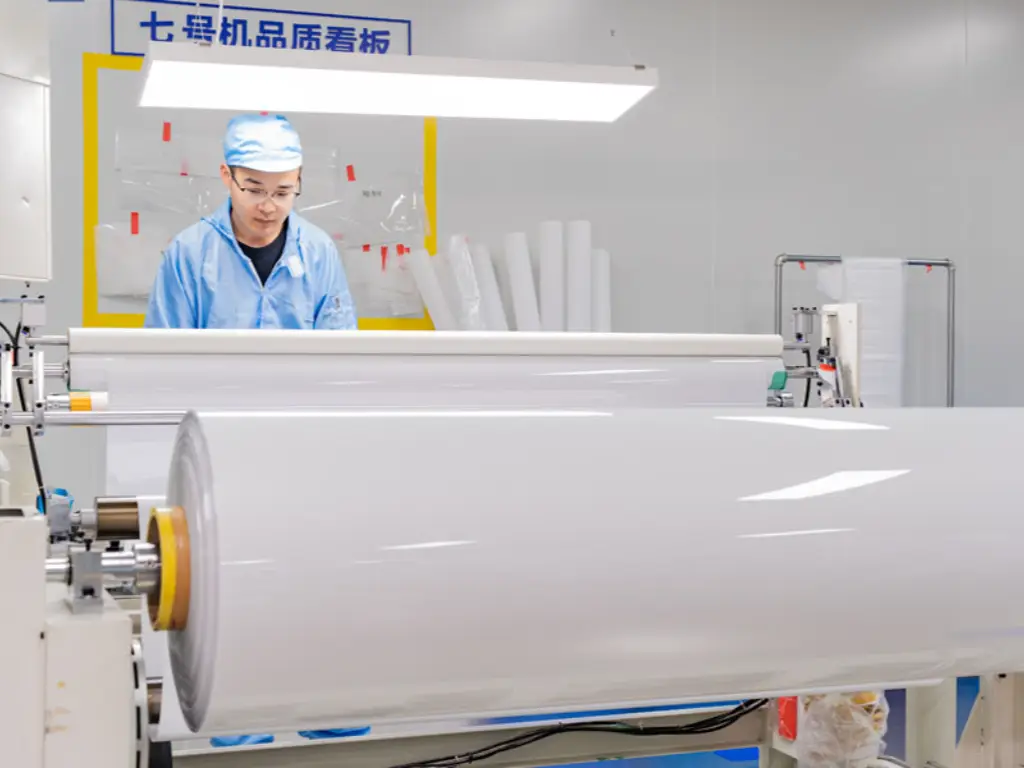
Moreover, real film quality is created through control of manufacturing. With the help of the modern German magnetron sputtering equipment and 13 Laibao production lines in a 60,000m² state-of-the-art production plant, a manufacturer can ensure consistency on roll to roll. This grade of engineering guarantees the film is constructed to be workable- with better adhesive and flexibility- which to the installer will mean an easier and quicker installation with a less chance of bubbles or contamination.
To the car owner, this vertical integration implies that the promises in the film can be checked. A 98% UV rejection (more than the industry standard) or 10-year warranty is due to the fact that it has been tested using the highest quality raw materials to ensure that it can endure over 5,000 hours of UV exposure and temperatures up to 80 C without yellowing or degradation. This is the material science that supports the guarantee of the installer.
Finally, the most preferred installers rely on suppliers who assure their materials. Being a reliable B2B provider, Flexippf offers flexible ordering (1 roll to 100), 24/7 assistance with technical problems, and a 10-year warranty that safeguards the image of the partners and the investment made by their clients.
The Final Verdict: Which Tint is Right for You?
It is a personal decision when it comes to carbon or ceramic, depending on your needs, climate, budget, and performance.
Choose Carbon if:
- You have a moderate budget but desire a high-quality value, which is long-lasting.
- UV protection, privacy and a meaningful (but not excessive) decrease in heat are your major objectives.
- You desire a vintage, pure-black appearance that will never go out of fashion.
Choose Ceramic if:
- You are in a hot climate and you need the best heat rejection technology that exists.
- You are ready to pay a premium on a higher level of comfort and less weight on your A/C.
- You are concerned with optimum optical clarity, particularly to drive at night.
It does not matter which way you take, the choice of the source is the most significant. Make sure you are receiving your film off a professional installer who is using films of high quality that is supplier backed.
 English
  Spanish
  Dutch
Dutch  Japanese
  Russian
  Arabic