
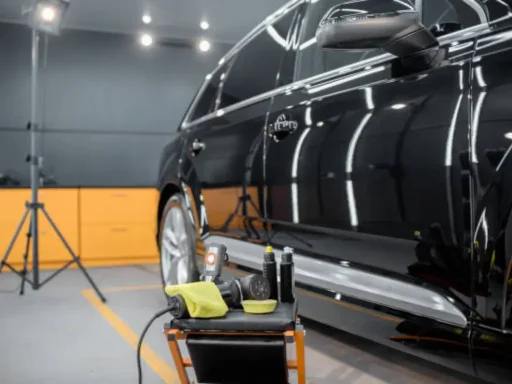
La trampa más frecuente en el negocio de la reparación de automóviles es que uno trabaja 60 horas a la semana y luego descubre que su beneficio neto es justo para llegar a fin de mes. La mayoría de los operadores cobran sus servicios por intuición o simplemente imitando al taller de la calle de abajo. Esta es una vía rápida hacia el agotamiento.
To establish a sustainable, scalable business, you need to shift your mindset to that of a “laborer” to a “consulting and asset preservation” mindset. This requires a rigorous, data-driven approach to your financial architecture. This is a detailed guide that will specify the precise structures, mathematical equations, and business designs that will be needed to design a very profitable detailing business in 2026.
2026 Industry Benchmarks: National Average Detailing Rates
It is important to set a baseline based on vehicle size before you get down to the granular mathematics of your particular business. Considering the recent 2026 inflation rates and the increasing cost of chemicals supply, the national averages have moved upwards.
It is also important to use regional modifiers to these baselines. The US East and West Coasts are considered to be High Cost of Living (HCOL) areas, which are generally priced 15%-25% higher than the Midwest and Southern regions.
2026 Adjusted Baseline Averages (Standard Market)
| Vehicle Category | Express Wash & Vac | Premium Detail (Int + Ext) | Elite Deep Clean / Restoration |
| Small (Coupe/Compact) | $65 – $85 | $175 – $225 | $300 – $450+ |
| Medium (Sedan/Small SUV) | $80 – $100 | $200 – $260 | $350 – $550+ |
| Large (Truck/Full-Size SUV) | $100 – $130 | $250 – $320 | $450 – $700+ |
Note: These figures are to be multiplied by 1.2 by el coastal operators to match the local economic conditions.
The Core Math: Structuring Your Base Hourly Rate & Overhead
Putting a price tag of $200 on a detail job blindly without knowing your underlying costs is a financial leakage recipe. When calculating how much to charge for detailing a car, the basis of a profit-first business is to be aware of the price of an hour of your time.
In order to set a profitable price, you will have to use the following core pricing structure:
Final Price = (Hourly Rate × Estimated Hours) + COGS + Overhead Allocation + Target Profit Margin
You should aim at having a healthy net profit margin of 20% to 35% after deduction of all expenses, taxes, and owner compensations.
Calculating Direct Labor and Material Costs (COGS)
Direct labor is not simply the hourly wage you give an employee (or yourself). It incorporates the unseen costs of work. Cost of Goods Sold (COGS) includes the physical liquids, towels, and pads that have been used in a particular job.
Standard Technician Hourly Burden Breakdown
- Base Wage: $22.00
- Payroll Taxes (FICA, etc.): $1.68
- Workers’ Comp & Insurance: $2.15
- Paid Time Off Allocation: $1.10
- True Hourly Labor Rate: $26.93
Note: Estimated Chemical/Material COGS per standard vehicle typically ranges from $8.50 to $14.00, depending on the quality of polymers and surfactants used.
Hidden Overhead Costs Ruining Your Profit Margins
Most of the detailers have the syndrome of “high cash flow, low profit” due to the inability to consider overhead. Capital Expenditures (CAPEX) such as pressure washers, air compressors, and polishers and Operational Expenditures (OPEX) such as CRM software, marketing, and insurance make up overhead.
Knowing these will enable you to determine your Break-even Point– the number of vehicles you have to service in a month to break even.
Overhead Desviación: Mobile vs. Shop Operations
| Expense Category | Entity 1: Mobile Detailing | Entity 2: Physical Shop |
| Initial CAPEX | $4,000 – $12,000 (Van/Trailer, Generator, Water Tank) | $15,000 – $40,000 (Lighting, Lifts, Extraction Systems) |
| Monthly Rent/Lease | $0 (Assuming home storage) | $2,500 – $6,000+ |
| Vehicle Fuel & Maintenance | High ($300 – $600/month) | Low ($0 – $50/month) |
| Utilities (Water/Power) | Low (Filled at home) | High ($300 – $800/month) |
| Software & Insurance | $150 – $300/month | $300 – $600/month (Higher liability) |
Mobile operators should carefully monitor fuel and drive time as one of the main OPEX consumptions, but shop owners should aim at maximizing bay occupancy to cover high fixed rent.
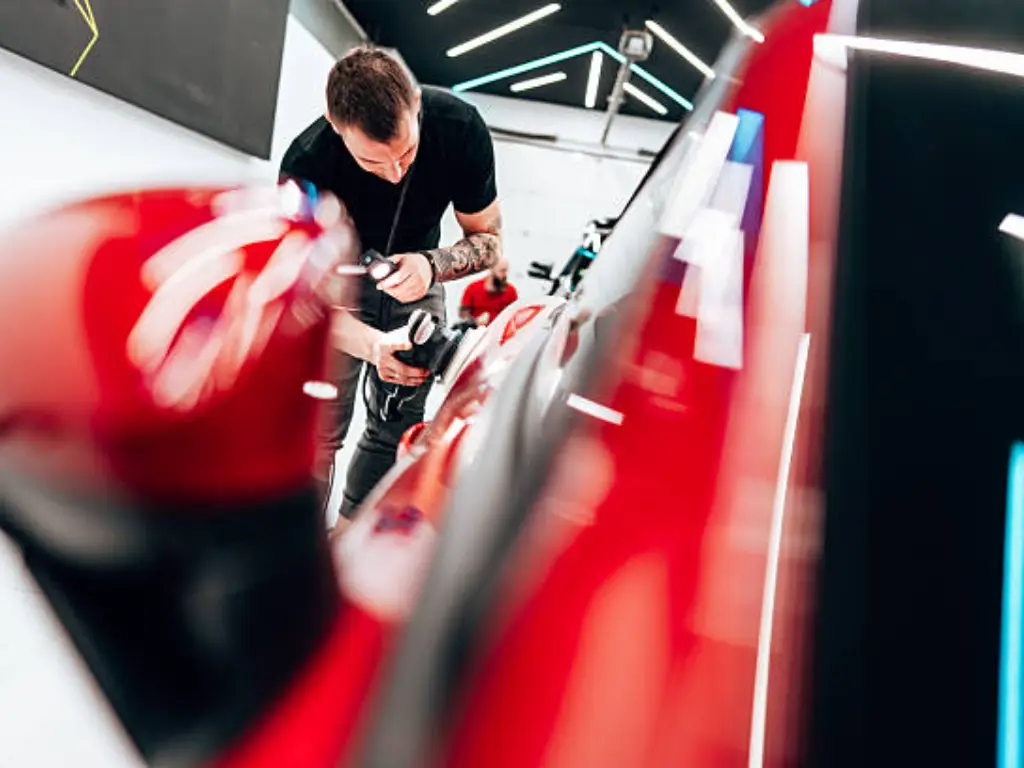
Flat-Rate vs. Variable Pricing: Which Model Wins?
The classical “menu pricing” model, in which a customer orders a $150 interior detail online and the operator does not even see the car, is flawed. The same sedan that is driven by a single commuter will demand a tremendous amount of labor compared to the same sedan that is driven by three toddlers and a golden retriever.
Flat-rate pricing will always compel you to take the risk of extreme conditions, and ruin your margins on hard jobs.
The better model is Variable Pricing (also known as “Starting At” pricing). It sets a minimum standard to the client but clearly indicates that the ultimate pricing will depend on a physical inspection of the client. This insures your hourly production and makes sure you are fairly paid in case of extreme degradation.
Tiered Detailing Packages: Basic Wash to Paint Correction
Architecting your service menu requires a strategic funnel. We recommend the “30-50-20 Rule” for your package distribution: 30% of your volume serves as lead-generation (Express), 50% constitutes your core revenue (Premium), and 20% drives your high-margin profitability (Elite/Coatings).
Structured Tier Comparison Matrix
| Package Tier | Service Inclusions | Expected Time | MSRP Range (Mid-Size) |
| Express Wash | Foam wash, quick vacuum, spray wax. | 1.0 – 1.5 hrs | $80 – $120 |
| Premium Detail | Iron decon, clay bar, deep interior detailing, 6-month sealant. | 3.5 – 5.0 hrs | $220 – $350 |
| Elite Correction | 2-step correction, ceramic prep, restoration. | 8.0 – 12.0 hrs | $600 – $900+ |
Vehicle Condition Multipliers: Pricing for Extreme Grime
In pricing a variable, you must have a systematic, objective way of computing upcharges. Subjective pricing creates embarrassing customer negotiations. The first vehicle audit is done using a 0-10 Condition Scoring System.
Moreover, vehicle architecture predetermines the use of baseline ladders (Sedan -> SUV -> Truck), and new technologies need special treatment. As an example, Electric Vehicles (EVs) frequently require special pricing because of high-voltage battery seal checks during undercarriage washes, and the application of special alcohol-free cleaners to huge, delicate infotainment screens.
The 0-10 Condition Scoring System & Multiplier SOP
| Condition Trigger | Score Additive | Pricing Multiplier / Surcharge | Action Required |
| Mild Dust/Debris | 0 | Base Price | Standard SOP |
| Embedded Pet Hair | 2 | Add $35 – $75 | Requires specialized brushes/pumice stones. |
| Biohazard / Mold / Vomit | 4 | Add $100 – $150+ | Requires full PPE, ozone treatment, enzyme extraction. |
| Severe Paint Oxidation | 5 | Convert to Hourly ($75/hr+) | Cannot be quoted flat; requires multi-stage heavy compounding. |
Standardized Add-On Menu:
- Engine Bay Detailing: $50 – $80
- Headlight Restoration (Sanding & Clear Coat): $60 – $120
- Ozone Odor Removal: $50+
- Entry-Level Ceramic Coating: $500+
Scaling Revenue: Upselling High-Yield PPF and Ceramic Coatings
When you just sell traditional washing and detailing, your income has a hard ceiling that is determined by the number of physical labor hours. In order to scale, you need to evaluate your business in terms of Hourly Yield (revenue per hour of labor).
Take this: You can earn $250 (an hourly rate of $62.50) doing 4 miserable hours of interior work. On the other hand, when a client is upsold to a high-ticket protective service, this paradigm is radically changed.
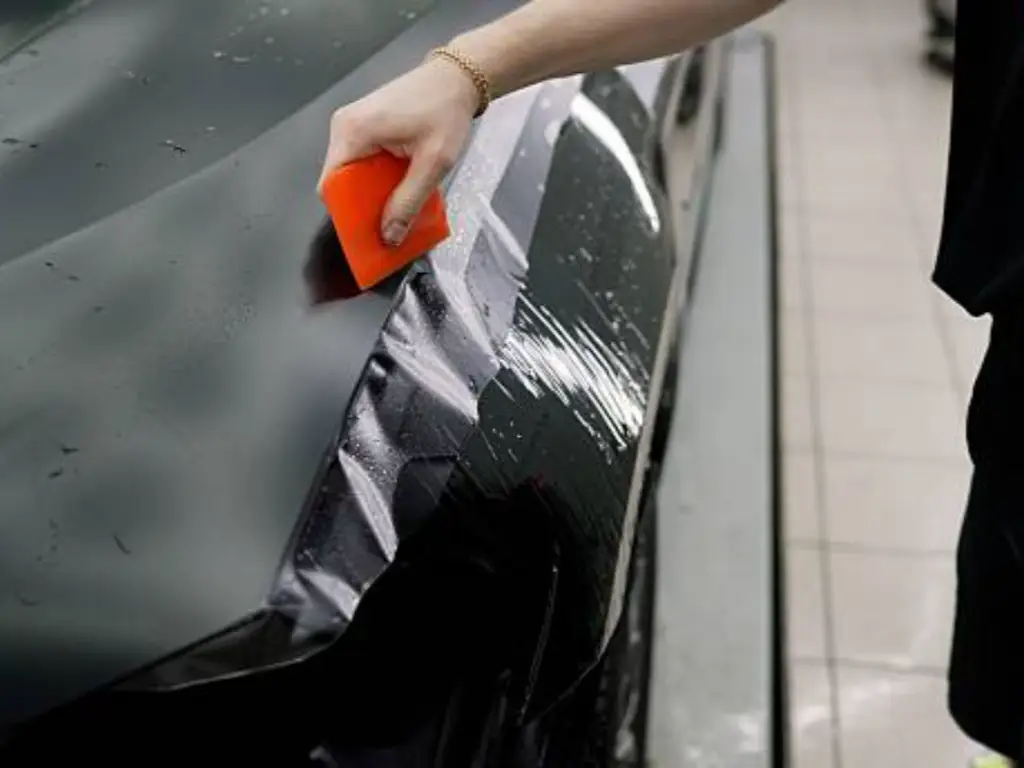
This is where incorporating new materials such as FlexiPPF changes your business model. Selling a client a $200 detail to a $2,000+ Paint Protection Film (PPF) package makes you a “car washer” and not an “automotive asset protection specialist.”
FlexiPPF is designed in such a way that it maximizes the profitability of the installer due to its operational efficiency. The film is made using German BASF polyester bases and Ashland adhesives in the USA and provides low initial tack to allow easy repositioning. More to the point, FlexiPPF employs the use of the latest 3D scanning technology to achieve accurate pre-cut patterns. This does not require risky and time-consuming bulk hand-cutting.
Using pre-cut FlexiPPF simplifies installation and allows you to complete a partial front-end in just 4 hours. This generates $800+ in revenue, effectively pushing your hourly yield to over $200/hr—all while providing the client with unmatched asset protection and a 10-year warranty.
Local Market Auditing: Benchmarking Competitor Detailing Prices
The danger of basing your prices on the national averages or online forums is risky. You must audit your specific micro-market. However, do not simply copy the prices of your rivals, they can be operating at a loss.
Rather, audit their operational health in reverse with the following three audit steps:
- Map el Radius: With the help of Google Maps, find the top 5 ranking of businesses in the 15-mile radius. Do not listen to the bottom feeders, but to those who have premium branding.
- Analyze Review Entities: Read their Google and Yelp reviews, with a particular focus on references to services. When 80% of the reviews of a competitor mention “cheap wash,” then their Average Order Value (AOV) is low. When they are checked as being “painted,” “ceramic,” or “PPF,” they are targeting the high-end market.
- Secret Shop for Frameworks: Do not ask for their lowest price. Call and describe a complex problem (e.g., “I have a 2022 SUV with severe hard water spots and dog hair”). Pay attention to how they quote. Do they offer a flat rate over the phone? (A sign of an amateur). Or do they demand a visual inspection and quote a starting range? (An indication of a professional operator). Charge 10%-15% more than the amateurs and equal the professionals.
Justifying Your Rates: Client Communication and Sales Psychology
The last obstacle to professional auto detailing success is the capacity of the operator to convey value. Therefore, you must shift the discussion from the ‘cost of cleaning’ to the ‘value of preservation’ by remaining consultative and advisory.

B2B / Fleet Client Script Template:
“I know that another vendor had offered a lower flat rate. We have a different pricing structure. We are not washing cars, we are doing preventive maintenance on your company property. Our process prevents the clear coat degradation and interior material failure that typically accelerates fleet depreciation. Through our routine maintenance procedure, you are ensuring the residual resale value of the vehicle at the expiry of its lifecycle.”
High-End B2C Client Script Template:
“I completely understand that $800 seems like a significant investment for a surface treatment. However, modern factory clear coats are incredibly thin. What we are doing isn’t a temporary shine; it’s microscopic surface engineering. We are meticulously leveling the paint and sealing it with a protective matrix. This prevents UV oxidation and chemical etching, meaning your vehicle maintains its showroom integrity for years, rather than months. We view this as protecting your investment, not just washing your car.”
With a change of attitude, learning to do your overheads, a strict variable pricing SOP, and a well-planned upselling of high-yield protective services, you can create a detailing business that is not only highly respected but also extremely profitable.
Listo to Scale Your Shop’s Hourly Yield?
Understanding your costs is the first step toward a “Profit-First” business, but scaling that profit requires moving into high-ticket protective services. Do not limit your revenue to the amount of time you can spend scrubbing interiors.
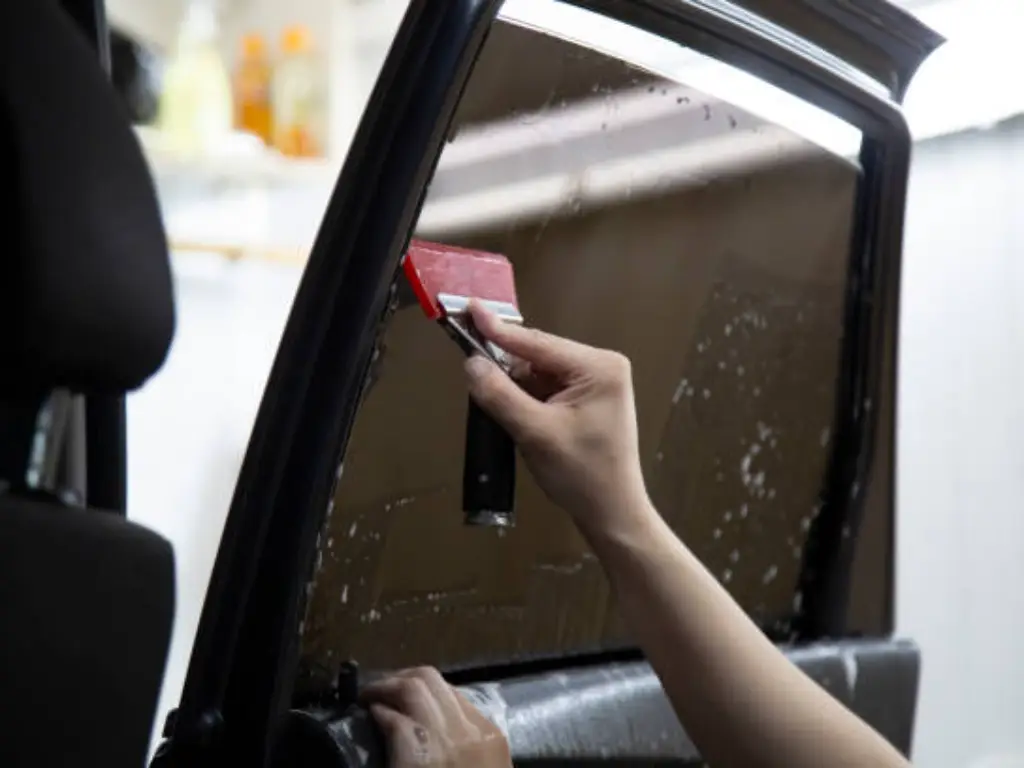
FlexiPPF is looking for strategic partners. If you are a detailing shop owner or a regional distributor ready to upgrade your service portfolio with world-class PPF and Window Tint technology, we invite you to join our growing global family.
- Become an Authorized Dealer: Competitive advantage with our 10-year warranty products and 24-hour custom design services.
- Join Our Distribution Network: Benefit from our massive 60,000m² manufacturing capacity and 13 Leybold production lines.
Apply to Become a FlexiPPF Partner/Distributor Here
Contact our Global Growth Team today to receive our 0-10 Condition Scoring Sheet and a customized profitability roadmap. Let’s build a more profitable detailing industry together.
 English
  Spanish
  Dutch
Dutch  Japanese
  Russian
  Arabic