
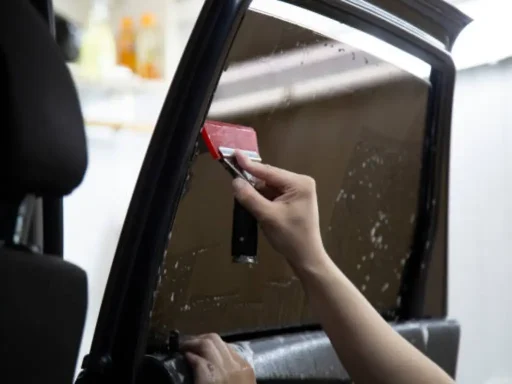
You want to increase the privacy of your vehicle, keep the summer heat out, or shield your interior against the damaging UV rays—which also provides crucial skin care and delivers the much-needed health benefits of uv protection. For these reasons, having your car windows tinted is one of the best investments you can make in your car. Nevertheless, one of the most common questions drivers pose prior to making an appointment is the following: exactly how long does it take to tint car windows?
Time is a critical factor, especially when you are managing tight daily schedules and anticipating your wait times. You should understand whether you can comfortably wait in the lobby of the shop with your laptop, or if you have to find a ride and leave your car there for the entire day. The thing is that professional window tinting is not a universal, one-size-fits-all service. It is a very technical art, and it involves accuracy, a controlled atmosphere, and meticulous attention to detail to ensure your ultimate peace of mind. Hurrying the job virtually ensures dust entrapment, unsightly creases, or peeling edges along the road, which drastically diminishes the overall value of professional tinting.
In this detailed guide, we will break down exactly how long you should expect your window tinting appointment to take, the hidden variables that can add hours to the clock, and what actually happens while your vehicle is in the bay. We will also discuss the critical curing stage once the installation is done so that you are absolutely sure of how to take care of your new investment.
The Short Answer: Tinting Time by Vehicle Type
To get a rough estimate of how much time you will need, you should know that window tinting time is highly dependent on the vehicle size, the total amount of glass on the vehicle, and the overall architectural design of the car.
Below is a quick reference matrix outlining the standard timeframes for a professional installation on clean glass (without old tint that needs removing):
| Vehicle Type | Estimated Installation Time | Key Architectural Considerations |
| 2 Front Windows Only | 30 – 45 Minutes | The quickest service, often operating similarly to an express window tint service; usually done to perfectly match the factory tint privacy glass on the rear of SUVs and trucks. |
| Standard Sedan (4 Doors) | 1.5 – 2.5 Hours | Standard front/rear doors (including those with modern frameless windows) and a moderately curved rear windshield. |
| SUV / Truck / Minivan | 2 – 3 Hours | Larger glass surface areas and additional cargo/quarter windows require more film and squeegee time. |
| EVs (e.g., Tesla vehicles) | 3 – 5 Hours | Massive panoramic glass roofs and large windshields require extensive heat shrinking and rigorous electronic water protection. |
Although these benchmarks give a good basis for scheduling, they are the “ideal scenario.” In the actual automotive detailing, there are a number of unseen variables that can easily turn a two hour task into a four hour painstaking process.
5 Hidden Variables That Affect Installation Time
When you drop off a normal sedan and the shop charges you three hours rather than two, they are not out to waste your time. There are certain important factors that professional installers should take into consideration that determine the speed of the installation. Here are the five most significant factors:
- Glass Curvature (The Heat Shrinking Factor)
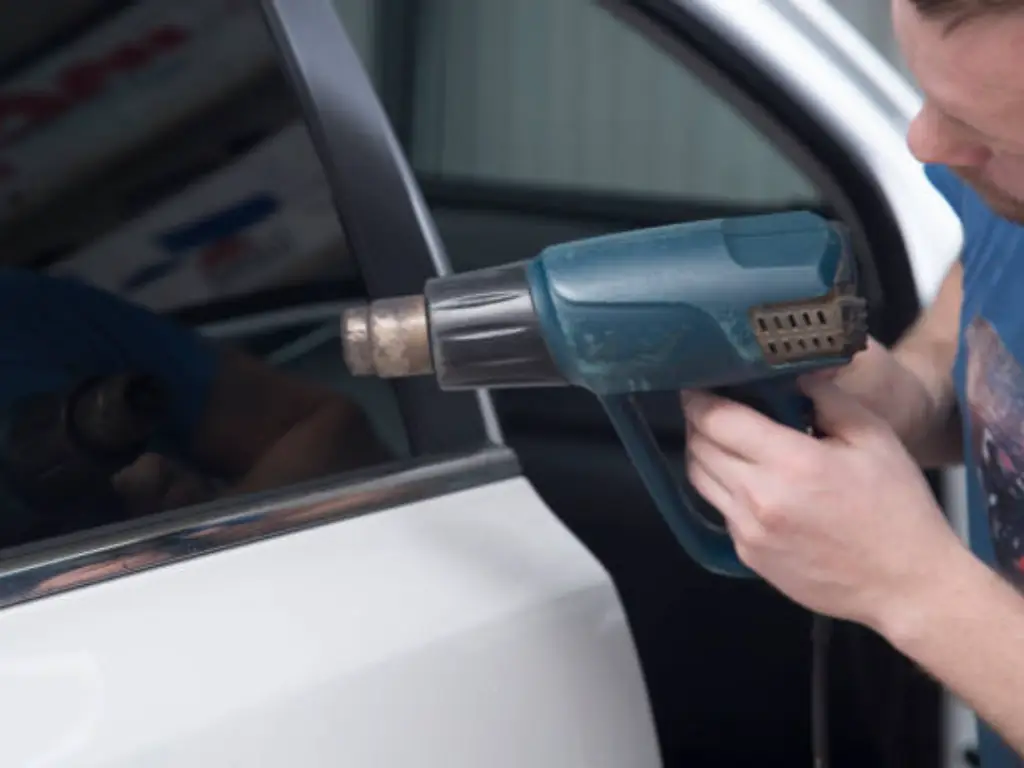
Window film is completely flat, but your car’s windows are not. The rear windshields on many modern sedans and sports cars have a severe, compound curve. In order to have a flat piece of film lie flat against a curved piece of glass without wrinkling, technicians need to heat the film with a heat gun to “shrink” it to the precise shape of the glass and then install it. The more curved the car (such as a Volkswagen Beetle or a Tesla Model 3), the more time it will take to heat shrink.
- Number of Windows and Complexity
It’s not just about the total square footage of glass; it’s about how many individual pieces there are. Small quarter windows (the tiny triangular windows behind the rear doors) are notoriously difficult to tint. They are frequently hidden behind narrow plastic trims and the technician has virtually no space to move their squeegee. A car having several small, complicated windows will never be quicker than a truck having large, square windows.
- The Cleanliness of the Interior (The Invisible Enemy)
Dust, dirt, and pet hair are the greatest enemies of a flawless window tint. When a car comes in with a lot of dog hair or a dusty dashboard, the technician will need to take an additional 30 to 45 minutes cleaning the car by deep vacuuming and wiping the interior. A single strand of pet hair floating into the air and landing on the wet film will permanently leave a highly visible defect.
- Electronics Protection (Crucial for Modern Vehicles)
Installing tint requires heavily spraying the inside of the glass with a slip solution (water and baby shampoo). In modern vehicles—especially EVs and luxury cars—the dashboard and door panels house sensitive computers, sensors, and amplifiers. To avoid the dripping of water into the electronics and frying a motherboard, technicians have to spend considerable time carefully laying down “soak ropes,” waterproof dash towels, and masking tape.
- Weather and Humidity
The surrounding atmosphere both indoors and outdoors in the shop is a massive factor. Unpredictable weather—such as the notoriously erratic oklahoma weather conditions featuring sudden humidity spikes or freezing snaps—means the slip solution evaporates very slowly. This implies that the tint film will require more time to adhesively stick to the glass. Depending on the exact film type or type of film being applied, the installer will have to spend more time carefully squeegeeing the edges to make sure that the film does not peel or lift up as soon as it is applied.
The Process: What Happens During Those 2–4 Hours?
When you give up your keys, your car is subjected to a very regimented tinting process. Knowing exactly how the time is spent will demystify the labor expenses and emphasize the need to be patient to achieve a high-quality outcome.
- Prep Work and Cleaning (Takes up to 50% of the time): You may think that most of the time is spent on the film being put on, but preparation is all. Special razor blades, scrub pads and cleaning solutions are used to scrub the glass to eliminate microscopic sap, grease and debris. The glass is also washed on the outside to allow the film to be applied on the outside during the heat-shrinking stage.
- Shaping and Heat Shrinking (Takes about 30% of the time): The film is cut off the roll, placed on the outside of the wet glass, and cut to the approximate shape. The installer then uses a heat gun to shrink the film until it mirrors the exact contour of the window.
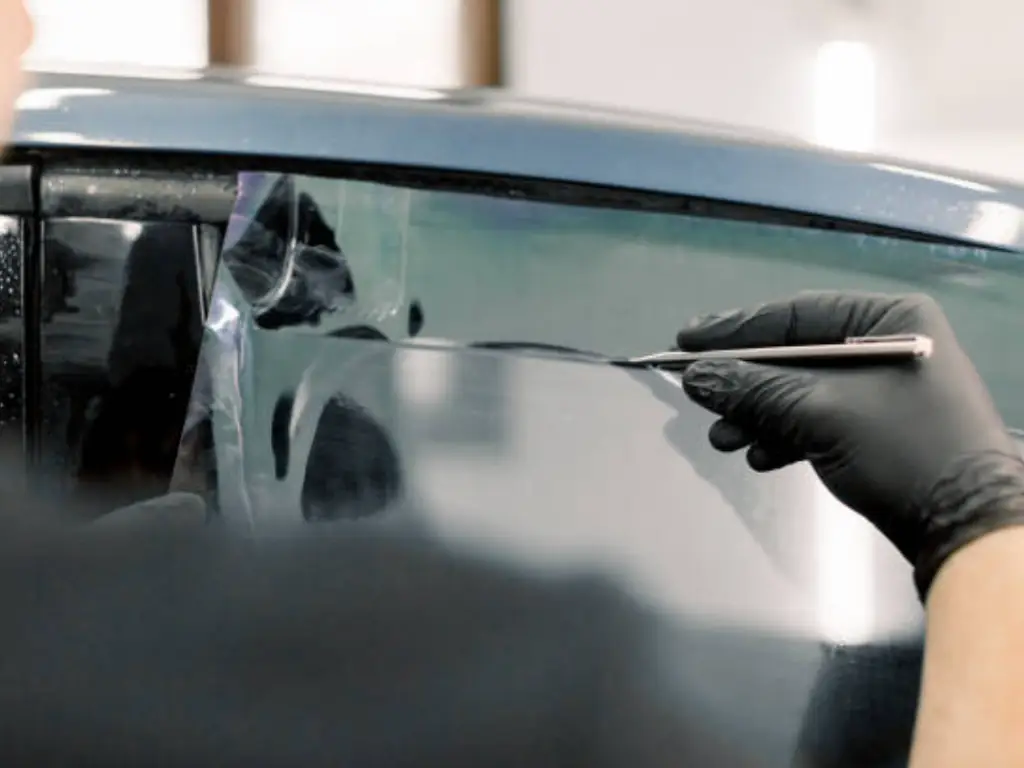
- Final Cutting (Micro-edging): The shop can either use a computer plotter to generate extremely precise window tint patterns to make the pre-cuts very accurate, or they can use a carbon blade to cut the film by hand. Either way, every single edge requires separate attention and must be perfected to the point that you can roll down the window without seeing any light gaps.
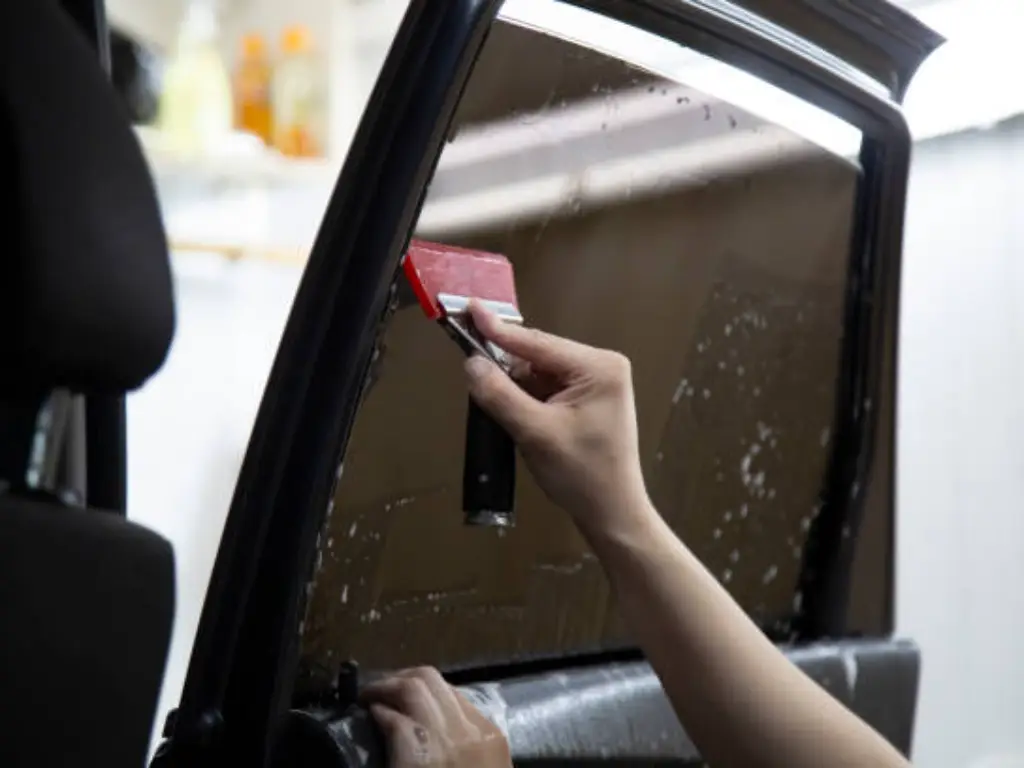
- Installation and Squeegeeing (Takes about 20% of the time): The protective liner is peeled off, the adhesive is sprayed and the film is then carefully rolled into the car and applied to the inside of the glass. The technician then applies special squeegees to squeegee all the water and air out of the back of the film and lock it in place.
Time Reality Check: DIY vs. Mobile vs. Shop
When reviewing diy comparisons and deciding how to get your windows tinted, you generally have three routes, each with vastly different time commitments and risk profiles.
DIY (The Slowest and Most Risky):
It is tempting to buy a roll of tint online to save money, but diy projects offer a harsh reality check. For a beginner, tinting a full car will likely consume 6 to 8 hours of your weekend. The “hidden time” in DIY is failure. Novices nearly always ruin the film in the heat shrinking stage or get huge quantities of dust trapped during the installation. This leads to tearing the film off and starting completely over, which doubles the time taken, and the money used on the materials is wasted. In the end, an attempt to save $150 usually takes a whole day and leaves a bubbling, purple mess.
Mobile Service (The Variable):
Mobile tinting, in which the installer visits your driveway or garage, appears to be the time-saving solution of all time since you do not need to go out. The installation is however usually slower. Mobile tinting is very weather sensitive. Even the slightest wind blows the dust and the installer has to spend much more time cleaning, covering the glass, and struggling with the elements. In case your garage does not have brilliant LED lighting, it is more time-consuming to cut and inspect the film. A mobile job will require an average of 30 to 60 minutes more time than a shop job.
Professional Shop (The Fastest and Most Reliable):
Taking your car to a professional tint shop or a trusted local shop is the pinnacle of efficiency. For example, for local drivers navigating the streets of oklahoma city, visiting established north okc shops provides access to a perfectly Controlled Environment. Whether they are catering to everyday north okc drivers or clients visiting from north oklahoma city, the greater north okc area, or upscale neighborhoods like nichols hills, these shops possess dust-controlled bays, brilliant overhead lighting, special glass-cutting boards, and computer plotters. Since they are fully in charge of the temperature and the quality of the air, an experienced technician can perform a perfect installation within approximately 2 hours on a typical car.
Removal: Why Taking Old Tint Off Takes Longer
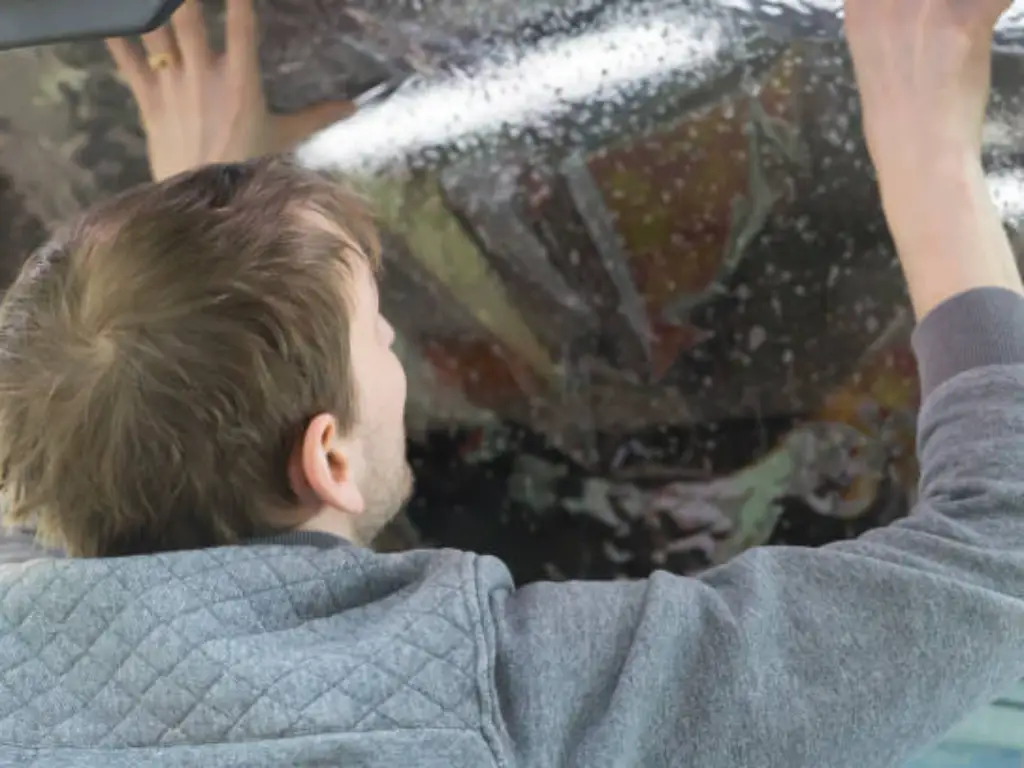
When purchasing a used car with bubbles, purple fading, or peeling color, or when you just want to change your existing film to comply with strict oklahoma tint laws, you will have to consider the tint removal process.
Explicit Warning: If your car currently has tint that needs to be removed, you must add an extra 2 to 4 hours, or sometimes even half a day, to your appointment time.
Removing old tint is never just about grabbing a corner and peeling it off like a sticker. In the case of old film, the uppermost layer of plastic tends to peel off the adhesive, leaving a thick, sticky, opaque layer of glue permanently attached to the glass. This is referred to as “glue residue removal.”
Technicians cannot just use a razor blade to scrape the rear windshield, or they will immediately cut off the rear defroster lines and radio antennas embedded in it. They have to dissolve the glue inch by inch instead using industrial chemical solvents, steam machines, and delicate scrubbing pads. It is a dirty, tedious, and very exasperating procedure which takes a lot of time to make the glass perfectly bare before new film can be put on.
Does Film Quality Affect Installation and Longevity?
The kind of material you use does not only determine the way your car will appear and feel, it also has a direct effect on the way your investment will be installed and the duration of its life.
Films that are cheap and dyed are very thin. They do not have sophisticated technological layers and thus they shrink very fast when using a heat gun and an installer can complete the task in a short time. This speed is however at a colossal price to the consumer: dyed films have little heat rejection and are infamous to turn purple, bubble, and fail in a year or two of severe UV exposure.
Conversely, modern ceramic films are inherently thicker. These premium professional aftermarket films are multi-layered with advanced heat rejection technology that is designed to actively prevent heat and radiation from penetrating the cabin. Understanding the major differences between materials is vital; investing in a high-quality ceramic window tint provides superior heat rejection and massive infrared heat rejection benefits. Because of this density, they require a highly skilled technician to carefully manage the heat-shrinking process. Although a high-end heat rejection window tint may require an installer a little more time to shrink, the performance is well worth the time spent on it.
This is precisely the point at which selecting a high-end, industry-best supplier such as FlexiPPF entirely alters the game for both the installer and the vehicle owner. Whether you simply need a reliable uv protection film or a top-tier heat rejection window film, FlexiPPF is designed to flawlessly fill the gap between uncompromising quality and exceptional installability.
By choosing the automotive window films of FlexiPPF, you are enjoying a product which is produced using a robust BASF Polyester Base from Germany, which guarantees high durability and incredible consistency in optical clarity. The film employs high-quality Ashland Adhesive from the USA that provides fantastic bonding performance without the stubborn and rigid sticking quality that typically slows down installers. This implies that FlexiPPF is a high-performance nano-ceramic film that provides a beautiful, uniform appearance while remaining incredibly easy to handle. It shrinks predictably—often working faster than many traditional turbo tint products—and lays down smoothly, allowing technicians to tackle complex, curved glass efficiently without dragging out the clock.
Moreover, FlexiPPF applies the latest 3D scanning technology to provide accurate pre-cut films. With the film being perfectly fitted to each individual car model prior to the squeegee ever touching the glass, the installation process will be smooth, and the bay will save a lot of time, with the micro-edge results being flawless.
Above all, spending an additional 30 minutes on a high-end installation is a decades-long payoff. The high-tech ceramic coating of FlexiPPF blocks more than 99% of the harmful UV rays (UV400) and up to 65% of the solar heat gain. With a 10-year warranty, a premium film purchase will give you a part of your afternoon to a decade of unparalleled privacy, less glare, interior protection, and driving comfort.
The Curing Phase: When Can You Roll Down Windows?
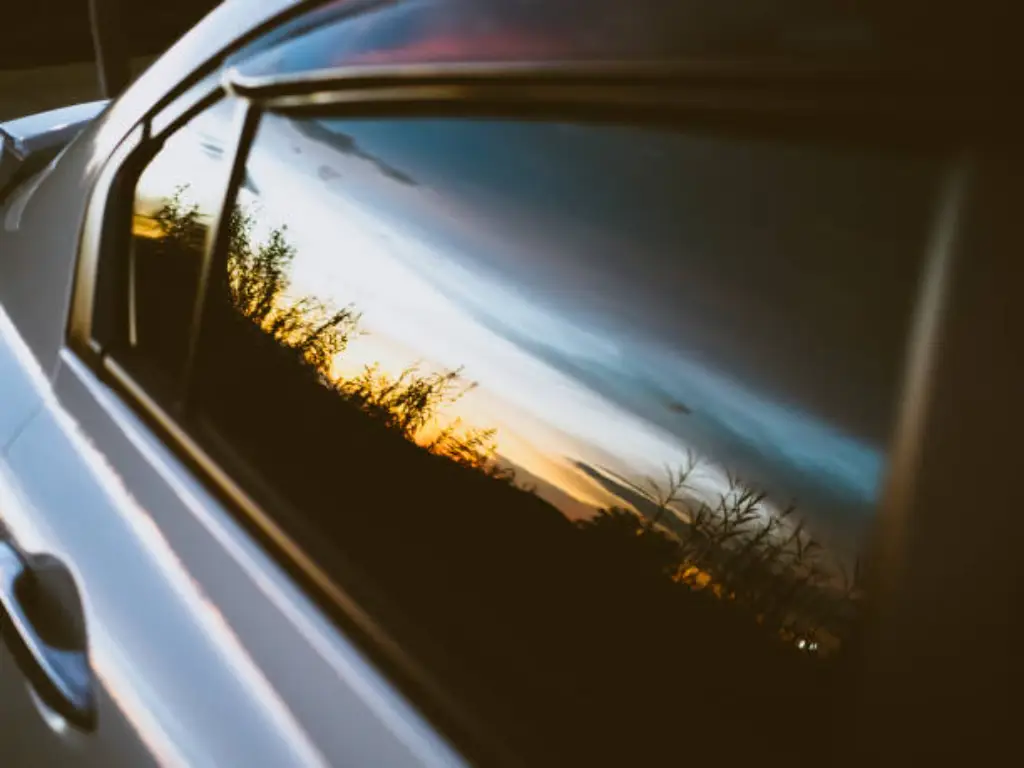
Your tinting journey doesn’t end the moment you drive off the lot immediately following your window tint installation. The film now passes into the Curing Phase, and you need to be a little more patient.
A liquid solution is used to apply window film. As the technician squeegees the maximum amount of water he can physically get, there is still a microscopic amount of moisture that is trapped between the film and the glass. The process of this residual moisture evaporating through the porous surface of the film to cure the adhesive is simply known as “curing.”
- The “No Roll Down” Rule: You absolutely must not roll down your windows for 3 to 5 days after installation. If you roll the window down before the adhesive has cured, the friction against the tight weather stripping inside the door panel can catch the edge of the wet film, peeling it back and ruining the job completely.
- Visual Imperfections (Don’t Panic): During the first few days to a week, it is completely normal to see what looks like water pockets, a cloudy “hazing” effect, or temporary bubbles under the film. Do not poke, press, or try to push these out. As the sun hits the car and the moisture naturally evaporates, these visual anomalies will disappear entirely on their own.
- Total Drying Time: Depending on your climate, a full cure can take anywhere from a few days in the hot summer to 3 or 4 weeks during a freezing winter.
Summary: Planning Your Appointment
Finally, to have a perfect, permanent window tint, it is necessary to prepare it carefully, perform it professionally, and in the appropriate atmosphere. Whereas a normal car may require approximately two hours, complicated cars, messy interiors, or the necessity to strip off old glue can easily increase the time.
When planning your appointment, secure your preferred time slot early and budget at least a half-day (3 to 4 hours) of flexibility into your schedule. Treat your appointment as a drop-off service rather than a quick pit stop. Avoid hovering or rushing your technician. Remember that high-performance materials and perfect, edge-to-edge execution cannot be rushed. Quality is time-consuming, and allowing your installer the space to do the job properly will mean that your investment will be sparkling and work perfectly in the many years to come.
 English
  Spanish
  Dutch
Dutch  Japanese
  Russian
  Arabic