
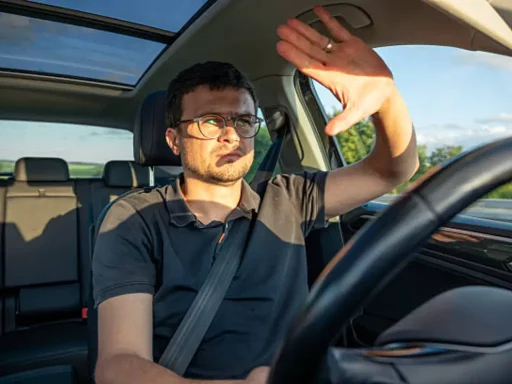
Je kent de marteling al als je in een auto stapt en het gevoel hebt dat je in een oven zit tijdens de hete zomermaanden op een plek waar de hitte verzengend is. Het stuur verbrandt je handen, de leren stoelen verschroeien je huid en de airconditioning doet er tien minuten over om de cabine ademend te maken. De ouderwetse uitweg is altijd geweest om je autoruiten zo donker te maken als de wet (of illegaal) toestaat. Maar wat als je een hekel hebt aan de "verduisterde" look? Wat gebeurt er als je het moeilijk vindt om 's nachts door donkere ramen te kijken, of als je de politie gewoon geen excuus wilt geven om je aan te houden?
This makes the 70% window tint the perfect compromise.
Often referred to as a “clear tint,” a 70% film offers a seemingly impossible compromise: it remains virtually invisible to the naked eye while secretly working as a powerful thermal shield. However, is it worth the investment? Does a film this light actually stop this intense level of heat of the sun or is it merely an expensive placebo?
In this comprehensive guide, we are pitting 70 tint vs no tint in the ultimate showdown. We will cut through the marketing hype and get into the actual thermal camera tests, driver view of night visibility, the confusing legal environment, and get you through the premium window film market, so you do not end up spending your money on the wrong technology.
What Does 70% Window Tint Actually Look Like?
In order to know what 70% tint is, we must first define the industry terminology. VLT is an abbreviation that means Visible Light Transmission and it is used to measure window tint darkness. This percentage is the actual percentage of visible ambient light that the film permits to pass through the glass and into the cabin of the vehicle.
Thus, a 5% VLT tint (also known as “limo tint”) is so dark that it blocks an enormous 95% of the light, and cannot be seen at all externally. The rear privacy glass of factory SUVs is normally a 20% VLT tint.
A 70% VLT tint, however, permits 70% of the visible light to pass through. To the untrained human eye, 70% tint looks exactly like factory glass.
When you put a 70% film on a windshield or side windows, you still have what automobile lovers call the “fishbowl” effect jokingly. People can easily look inside the car, you can look directly at other cars and pedestrians at the four-way stops, and the original aesthetic appeal of the car is not changed in any way.
The White Interior Illusion:
It is important to note that the perceived darkness of any tint of the window is strongly dependent on the color of your car interior. If your vehicle has a dark charcoal or black interior, the cabin naturally absorbs more light, which might make a 70% tint look ever so slightly shaded (perhaps closer to a 60% perception).
But when you are driving a car with a white or light interior, which is a very common design in modern electric cars such as Tesla or Lucid, the bright seats are like reflectors. They bounce ambient light back out through the glass. In such cases, a 70% tint will appear a 100% clear on the surface. When you want to keep the glass crisp, bright, and factory-fresh, but at the same time, you want to improve the performance of the glass, 70% is the final undercover change.
70 Tint vs No Tint: Night Visibility Comparison
The most enduring and legitimate concern regarding window tinting, particularly in the front windshield, is the effect it will have on visibility once the sun sets. Night driving is already more dangerous because of the lack of depth perception, peripheral vision, and color recognition. It would be counterintuitive to add a layer of film to your main viewing area.
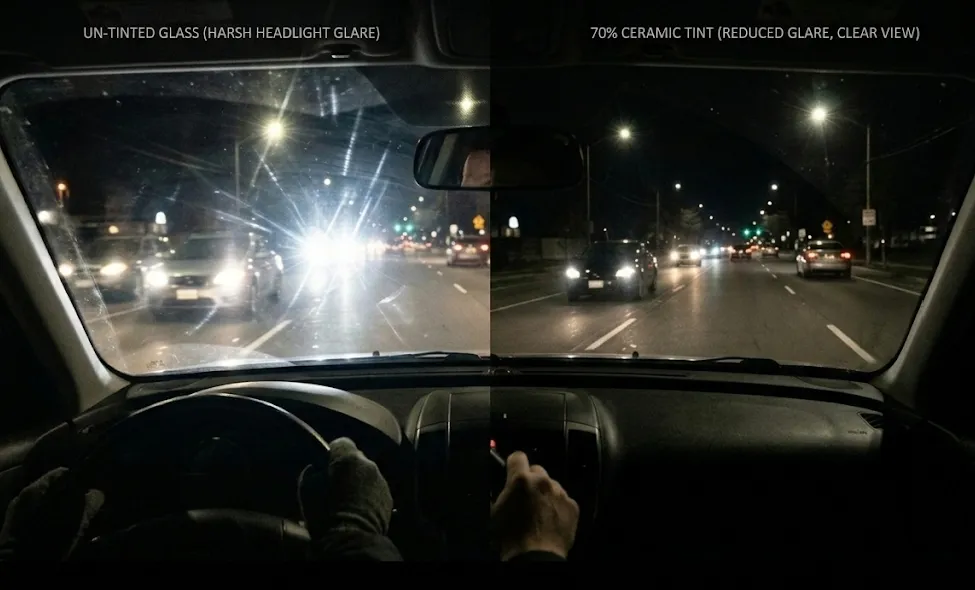
The results are very counterintuitive when you compare a 70% tint to an un-tinted windshield at night. You would think that the 70% film would make the road a little more difficult to see, but in fact, it does just the opposite and makes your night driving experience much better.
This is the science of why a good 70% film will by no means render night driving hazardous:
- The Human Eye’s Adaptability: The human eye is very skillful in adapting to small changes in light transmission. The difference between 100% clear (or, as it is really, 75%-80% clear of the glass in a factory) and a net 70% transmission is so slight that your pupils readily enlarge to counteract it. You will not feel that there is a loss of light on the road before you.
- Massive Glare Reduction: This is the true game-changer. Modern vehicles are increasingly equipped with ultra-bright LED and HID matrix headlights. When driving on a two-lane road at night, the glare from oncoming traffic can temporarily blind you, causing a phenomenon known as “white-out” or “halo” effect. This is especially agonizing for drivers with astigmatism. A premium 70% tint acts like a pair of high-end, polarized anti-glare driving glasses. It cuts the harshness of oncoming headlights by up to 55%, reducing eye strain, preventing squinting, and stopping those blinding starbursts.
- Rainy Night Performance: It is well known that driving in the rain at night is extremely hard since the wet roads reflect the headlights of other vehicles straight into your eyes. By applying a 70% film, you drastically mute these harsh reflections from the wet pavement.
To conclude, a 20% or 35% windshield tint is truly hazardous and will greatly reduce your visibility of pedestrians or unlit objects at night, but a 70% tint will not only leave you with full situational awareness but will also actively relax your eyes. It is the ideal remedy to fatigue in long-distance drivers.
Thermal Camera Proof: Does 70% Tint Block Heat?
This leads to the most important question: If the film is practically clear, how can it possibly keep the car cool? Does not dark film prevent more heat?
We break this myth by referring to empirical evidence in the form of Forward Looking Infrared (FLIR) thermal imaging cameras. In a controlled test on a 95°F (35°C) summer afternoon, we left two identical vehicles parked in direct sunlight for three hours. The factory glass in vehicle A was totally un-tinted. Vehicle B had a high-quality 70% nano-ceramic tint on the windshield and front windows.
The Thermal Test Results:
- Vehicle A (No Tint): The FLIR camera measured the black dashboard surface temperature baking at an astonishing 162°F (72°C). The steering wheel was too hot to hold comfortably and the cabin air seemed to be suffocating.
- Vehicle B (70% Ceramic Tint): The FLIR camera recorded the same dashboard space at only 108°F (42°C). The steering wheel was hot and totally comfortable to handle and the cabin temperature was much more manageable.
How can this huge 54°F surface temperature difference exist with a film that you can hardly see?
It boils down to the knowledge of the solar spectrum. The warmth that you experience on your skin when the sun is shining is not the result of the visible light, but rather the result of Infrared Radiation (IR).
The Pitfall Warning: Why You Must Choose Nano-Ceramic
Thousands of consumers lose their money here. When you visit a cheap tint shop and request them to install a 70% film, they may install a traditional Dyed film or a getinte ruiten van koolstof.
- Dyed Films rely on dark colors to absorb heat. When you purchase a 70% dyed film, there is hardly any dark dye in it. Thus, it is nothing more than a transparent piece of plastic. It will block zero heat. It is a total waste of money.
- Nano-Ceramic Films zijn heel anders ontworpen. Tijdens het fabricageproces worden microscopisch kleine keramische nanodeeltjes (vaak gemaakt van titaniumnitride of soortgelijke geavanceerde verbindingen) in de polyesterlagen ingebed. Deze nanodeeltjes zijn niet met het blote oog te zien (met de 70% VLT), maar ze zijn wel erg gevoelig voor het infraroodspectrum. Een goede 70% keramische film kan meer dan 85% tot 95% infrarood warmte blokkeren.
Als je de magische truc van "hoge zichtbaarheid met maximale warmteafstoting" wilt, dan moet je moet Controleer of de winkel een echte nanokeramische film installeert. Als deze niet keramisch is, krijgt u niet de thermische voordelen die onze FLIR-test laat zien.
Blokkeert 99% UV-stralen: Bescherming van huid, interieur en veiligheid
Hoewel de belangrijkste reden waarom mensen hun ramen tinten is om de warmte buiten te houden, is de onzichtbare bescherming tegen ultraviolette (UV) straling aantoonbaar net zo belangrijk voor je gezondheid en de levensduur van je auto.
Volledig behoud van interieur
UVA- en UVB-stralen van de zon zijn genadeloze moordenaars van het interieur van een voertuig. Het proces staat bekend als fotodegradatie en is het resultaat van voortdurende blootstelling. Na verloop van tijd breekt UV-straling de chemische verbindingen af in de materialen van je auto. Dit is de oorzaak van het uitdrogen, verstijven en barsten van luxe lederen stoelen. Het zorgt ervoor dat het rijke zwarte plastic op uw dashboard vervaagt tot asgrauw en het veroorzaakt het uitwasemen van vinylverbindingen (waardoor die hardnekkige, wazige film aan de binnenkant van uw voorruit ontstaat). Je kunt meer dan 99% van deze schadelijke UV-stralen elimineren (UV400-bescherming) door een keramische tint van 70% te installeren. Dit is in wezen een permanente coating van SPF 1000 zonnefilter aan de binnenkant van je auto, die eersteklas UV-bescherming biedt en ook helpt om de doorverkoopwaarde van je auto te behouden.
Huidbescherming voor bestuurders
Volgens de Skin Cancer Foundation zien dermatologen vaak een significant hoger aantal gevallen van melanoom en huidbeschadiging aan de linkerkant van het gezicht en de linkerarm bij bestuurders in landen met linksgestuurde voertuigen. Standaard zijruitglas houdt UVA-stralen niet effectief tegen. Een 70% tint biedt diepgaande medische voordelen door deze dagelijkse blootstelling aan straling tegen te gaan, en beschermt jou en je gezin tijdens het dagelijkse woon-werkverkeer en lange autoritten.
Het elektrische voertuig (EV) Efficiëntieverhoging
In het geval van eigenaars van elektrische auto's zoals Tesla Model 3, Model Y of Hyundai Ioniq 5, die enorme panoramische glazen daken en grote voorruiten hebben, heeft 70% keramische tint een speciaal passief energievoordeel. EV's laten de aircocompressor werken op de hoogspanningsbatterij. Het airconditioningsysteem hoeft niet zo hard te werken om het interieur op een vooraf bepaalde temperatuur van 70°F te houden omdat de zonnewarmte (tot 65% van de warmte) die de cabine binnenkomt drastisch wordt verminderd. Deze verminderde HVAC-belasting vertaalt zich direct in een langere levensduur van de accu en een marginale maar meetbare toename van de actieradius. Bovendien wordt de activering van systemen zoals de "Tesla Cabin Overheat Protection", die telkens wordt geactiveerd wanneer de auto in de zon wordt geparkeerd, overbodig.
Veiligheidsuitbreiding: Splinterbestendigheid
Naast zonregulering biedt hoogwaardige keramische raamfolie een cruciaal, vaak over het hoofd gezien veiligheidsvoordeel. De verbrijzelde stukken glas worden bijeengehouden door de krachtige Ashland kleeflaag van de folie in het onfortuinlijke geval van een botsing of een zwaar voorwerp dat het glas raakt. Het glas spat niet in grillige stukken de cabine in en op uw gezicht en ogen, maar breekt en blijft aan de folie plakken in één enkel vel.
Is getinte voorruit 70% legaal in jouw staat?
We moeten het hebben over de olifant in de kamer voordat je een afspraak maakt en dat is de legaliteit. De lokale wetten en provinciale voorschriften voor het tinten van ramen zijn zeer strikt gereglementeerd en zijn berucht ingewikkeld voor de voorruit.
In de meeste rechtsgebieden is het technisch illegaal Het is niet toegestaan om aftermarket-folie op de hele voorruit aan te brengen, ongeacht hoe licht of transparant het is. De meeste wetten bepalen dat je alleen niet-reflecterende tint mag aanbrengen op de bovenste 4 tot 6 centimeter van de voorruit, eindigend bij de fabrieksopgave. Lijn AS-1 (een kleine markering die meestal op de rand van het glas aan de bovenkant staat).
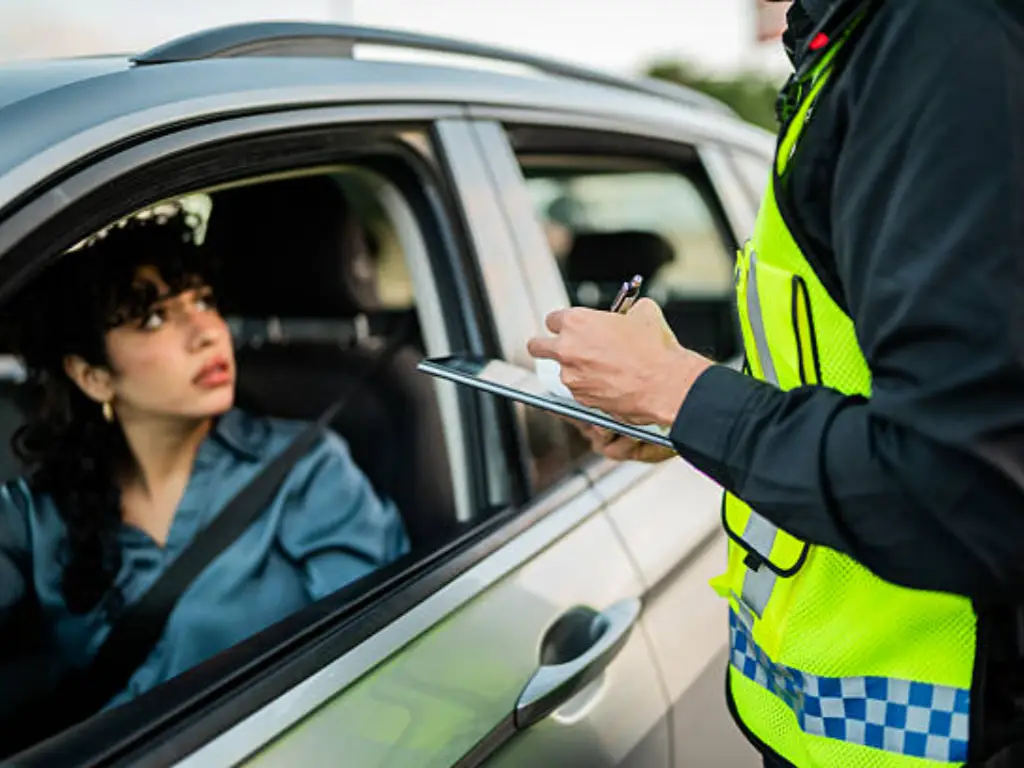
Maar het feit van de handhaving van deze wetten maakt een enorm grijs gebied. Omdat 70% tint zo ongelofelijk licht is en niet zichtbaar is door fabrieksglas, hebben tienduizenden bestuurders hun hele voorruit getint en zijn nooit aangehouden, bekeurd of ondervraagd door de politie. Politieagenten zijn over het algemeen op zoek naar agressief donkere voorruiten (zoals 20% of 35%) die de identiteit van de bestuurder verbergen. Een 70%-folie blokkeert het zicht van de agent in het voertuig niet en wekt daarom nauwelijks argwaan.
Disclaimer: Je neemt alle risico's op je als je ervoor kiest om je hele voorruit te tinten in een staat waar dit verboden is.
De Medische Vrijstelling Hack (Hoe blijf je 100% legaal):
Om de voordelen van een 70% getinte voorruit te hebben zonder bang te hoeven zijn voor een mogelijke boete, is er in de meeste staten een maas in de wet: de medische vrijstelling.
- Controleer de wetgeving van je staat: Controleer of het Department of Motor Vehicles (DMV) of Department of Public Safety (DPS) van je staat medische vrijstellingen toestaat voor het tinten van ramen. (Staten zoals Texas, Florida en Californië hebben specifieke bepalingen).
- Raadpleeg uw arts: Maak een afspraak met je dermatoloog, optometrist of huisarts. Als je aandoeningen hebt zoals ernstig astigmatisme, lichtgevoeligheid (gevoeligheid voor licht), lupus, rosacea of een hoog risico op melanoom in het verleden, kan je arts verklaren dat je extra bescherming tegen de zon nodig hebt.
- Dien het papierwerk in: Laat je arts het specifieke door de staat voorgeschreven formulier voor medische vrijstelling invullen. Je hebt er een in je handschoenenkastje en af en toe stuur je een kopie naar de DMV zodat er een speciale indicator kan worden toegevoegd aan je voertuigregistratie.
Nu je deze vrijstelling hebt, kun je veilig een keramische folie van hoge kwaliteit 70% op je hele voorruit aanbrengen en nog steeds binnen de wet blijven.
Beste kleurcombinaties: 70% combineren met 20% zijkanten
Wanneer je kiest voor een 70% folie op de voorruit voor maximale zichtbaarheid en warmtereflectie, is de volgende vraag die bij je opkomt: Hoe moet ik de rest van de auto kleuren? Het tinten van ramen is het meest effectief als er sprake is van een esthetische stroom. Als je de zij- en achterruiten niet kleurt, heeft de auto geen privacy. Als je de zijkanten te donker kleurt, kan het contrast tussen de heldere voorruit en de verduisterde zijkanten er onsamenhangend uitzien.
Dit is de "Golden Ratio"-combinatie die favoriet is bij professionele installateurs en autoliefhebbers:
De 70% voorkant / 20% zijkanten instellen
Dit wordt algemeen beschouwd als de ultieme combinatie voor zowel luxe auto's als auto's voor dagelijks gebruik.
- Windscherm (70%): Biedt maximale warmteafstoting, feilloos nachtzicht en zorgt ervoor dat de voorkant van de cabine er helder en legaal uitziet.
- Zijruiten vooraan (20% of 35%): Een 20%-folie komt perfect overeen met het fabrieksprivacyglas op de achterste helften van de meeste SUV's en vrachtwagens. Het biedt uitstekende privacy - mensen buiten kunnen niet gemakkelijk zien wie er rijdt of welke waardevolle spullen er op de passagiersstoel liggen. Als 20% 's nachts te donker aanvoelt voor uw zijspiegels, dan biedt een 35% folie een elegante, licht gerookte look die nog steeds gematigde privacy biedt.
- Achterruiten & Achterruit (20%): Past bij de voorkant voor een uniform, gestroomlijnd exterieurprofiel.
Een cruciale opmerking voor perfectionisten:
Denk aan de VLT-stapeling. Het glas in je auto is niet altijd 100% helder, het heeft meestal een inherente lichtblokkering van ongeveer 20% tot 25% (fabrieksglas is dus ongeveer 75% VLT). Met een 70% folie op een 75% fabrieksglas wordt de netto VLT in feite gereduceerd tot ongeveer 52%.
Bovendien, wanneer je auto een donker interieur heeft, zal het verschil tussen de 70% voorruit en de 20% zijruiten ervoor zorgen dat de voorruit er iets donkerder uitziet dan het buiten gezien zal zijn. Aan de andere kant, als je een wit interieur hebt, zal het licht dat door de voorruit komt weerkaatsen tegen de cabine, en je 20% zijruiten zullen aanzienlijk lichter lijken (bijna 35%) als de zon er onder bepaalde hoeken op schijnt. Houd deze optische illusies in gedachten bij het plannen van uw bouw!
Beste 70% Keramische Tinten: Topmerken & Flexippf
After making the decision on the 70% specification, the last challenge is to overcome the very crowded window film market. The quality of the film you choose dictates everything from the optical clarity (how blurry the road looks) to the TSER (Total Solar Energy Rejected).
In the case of purchasing high-quality Nano-Ceramic films, the market is dominated by three key legacy brands, which sell at a premium price. Expect to be quoted anywhere from $200 to $350+ just for the front windshield, and upwards of $600 to $900 for the entire vehicle at reputable shops.
| Brand & Product Line | Stated VLT | TSER (Total Solar Energy Rejected) | Visual Hue / Color Tone | Estimated Price (Windshield Only) |
| 3M Crystalline 70 | 68% | 50% | Slight brownish/champagne hue | $250 – $350 |
| XPEL Prime XR Plus 70 | 71% | 52% | Noticeable bluish tint | $250 – $350 |
| Llumar AIR 80 | 77% | 43% | Very distinct light blue hue | $200 – $280 |
Although these legacy brands are making great films, their high prices are grossly overcharged by marketing expenses and “brand tax.” Moreover, a lot of drivers are complaining about the specific color change of these films to blue or brown when exposed to direct sunlight and this may change the appearance of the car.
Flexippf 70% Ceramic Tint: The Premium Alternative
Flexippf has designed the best nano-ceramic performance without the outrageous brand mark up. Based on the FABE (Features, Advantages, Benefits, Evidence) model, the following is why Flexippf is shaking up the high-end window film industry:
Feature (The Technology):
The 70% Automotive Window Tint of Flexippf is made of a world-class BASF polyester base of Germany, which is of high tensile strength and durability. It employs the use of the latest Nano-Ceramic Coating that is sourced by the best suppliers in the world and is coated by the latest SLOT DIE coating equipment. The film is bonded using highly stable, low-VOC Ashland lijm uit de VS.
Advantage (The Performance Edge):
In contrast to legacy brands, which tend to experience blue or brown color changes, Flexippf has a high level of accuracy in its manufacturing, which guarantees an optical clarity that is perfectly stable with a neutral, factory-glass look. It boasts an aggressive UV400 rating (blocking >99% of harmful UV rays) and delivers an outstanding heat rejection profile, reducing solar heat gain by up to 65%. It also features engineered glare reduction of up to 55%.
Benefit (What it Means for You):
By choosing Flexippf, you achieve the exact same world-class thermal comfort, interior preservation, and crystal-clear night vision as the $300+ legacy brands, but at a significantly more reasonable price point. Since Flexippf is a direct manufacturer with huge production capacities (60,000m² plant, 13 Leybold production lines), the savings are directly transferred to the consumer and the installer. You have a nicer cabin, a more secure ride, and an interior that is not tortured by the “brand tax.”
Evidence (The Guarantee):
Flexippf backs all the film produced with a 10 jaar garantie that is the best in the industry, and your investment will not bubble, peel or turn purple as the years go by. Our films are registered by national traffic safety and glass quality inspection centers.
Explore the Flexippf 70% Ceramic Window Tint Series Here and Upgrade Your Driving Experience Today
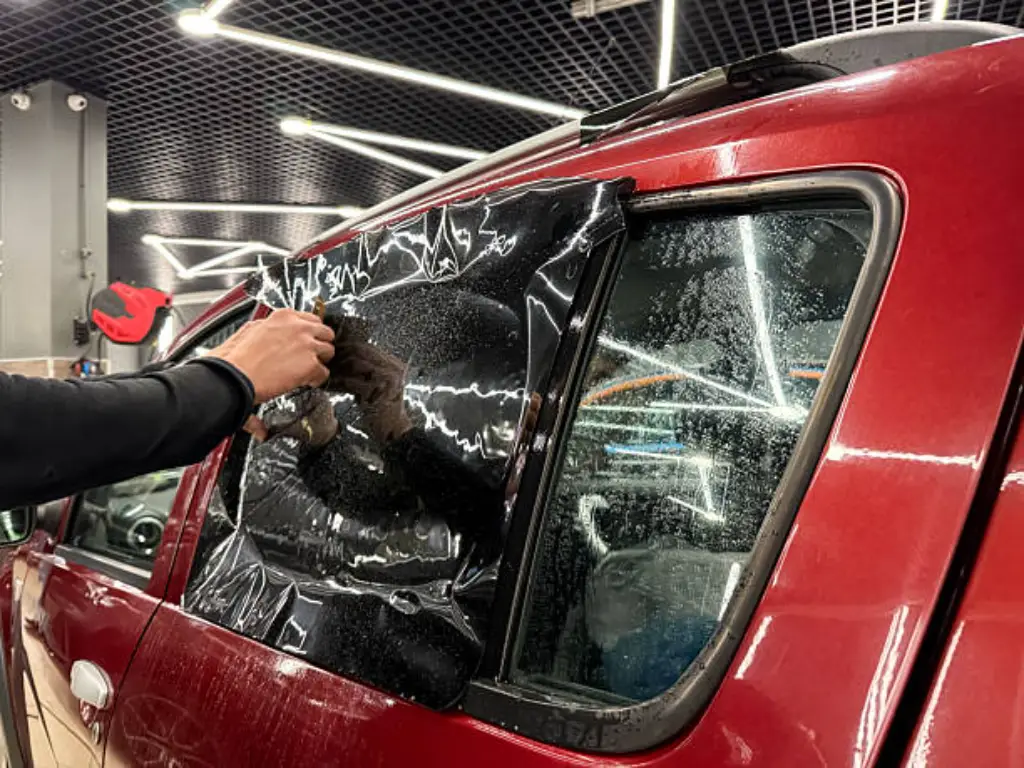
Final Verdict: Is 70% Ceramic Tint Worth It?
Ultimately, the debate of 70 tint vs no tint is not a debate at all once you look at the data to make an informed decision. Upgrading to a 70% Nano-Ceramic film is one of the most functional, comfort-enhancing modifications you can make to any vehicle.
Who is it best for?
- Drivers living in hot, sun-drenched climates who want to drastically cool their cabins.
- Electric Vehicle (EV) owners looking to maximize their AC efficiency and battery range.
- People who struggle with astigmatism or night blindness and need to reduce headlight glare without darkening their view.
- Luxury car owners who do not want to have their costly leather interiors rot away in the sun but do not want to change the classy, factory appearance of their car.
Who is it NOT for?
- Drivers whose main objective is privacy. To conceal valuables or yourself to the external observers, a 70% film will not assist you, you require a 20% or 15% film.
- Price-sensitive buyers who are not ready to spend on Nano-Ceramic technology. A low-end 70% dyed film is a waste of money.
When you appreciate a cool cabin, clear night vision and the well-being of your skin and interior, a high-quality ceramic film such as the 70% series of Flexippf is worth the money in terms of pure day-to-day comfort. It is the final invisible cover to your car.
 English
  Spanish
  Dutch
Dutch  Japanese
  Russian
  Arabic