
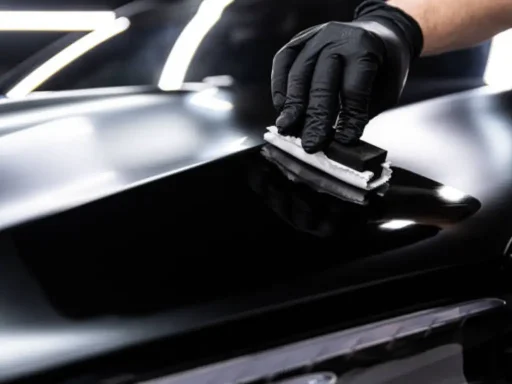
The shine of the factory-fresh paint is short-lived. As soon as you pull your new car out of the lot, it is being attacked. Gravel, road debris, insect acids, and small abrasions all combine to chip, scratch, and dull the finish you paid so much to have. The automotive aftermarket has in turn offered a clear answer to this question: Paint Protection Film, often called ppf film.
Nevertheless, this high-tech security is very expensive. The question that arises to discriminating owners is not just ‘how much does it cost,’ but whether the expensive cost of ppf film installation is a reasonable expenditure or a luxury? The yes or no is not a yes or no. It is a value, risk and long-term financial foresight calculation. This guide will break down the expenses of ppf pricing, discuss the most important variables that determine your final invoice, and give you a clear structure to make an informed decision on whether this investment is the correct choice to make on your vehicle.
What Is Paint Protection Film (PPF)?
Before we can analyze its cost, here is a brief description of the product itself. Paint Protection Film (PPF), widely known as clear bra, is a clear, multi-layered film, which is normally made of thermoplastic polyurethane (TPU).
It is a performance material that was initially developed to be used in the military- to shield the helicopter rotor blades against sand and debris in extreme conditions. In automotive use, PPF is cut and applied to the painted areas of a vehicle to serve as a self-healing, sacrificial, skin. Its main purpose is the protection of physical impacts, shielding the underlying paint.
Unlike decorative vinyl films or ceramic coatings (which are more for chemical and environmental damage resistance), PPF is meant to absorb the kinetic energy of small collisions. It is the sole product available in the market that can prevent:
- Stone Chips: the most obvious and apparent type of paint damage.
- Minor Scratches: Scratches on the car caused by car wash brushes, fingernails on door handles, or branches.
- Bug Splatter: The acidic residue of insects that can permanently etch clear coats.
- Bird Droppings: These are also very damaging and acidic as well as bug splatter.
- Light Scuffs of the Parking Lot: Light contact with other car doors or objects.
High quality and modern PPF also has an advanced topcoat that is resistant to stains, UV blockers to avoid fading, and a self-healing feature. In cases where small scratches are formed on the surface of the film, the heat (generated by the sun, heat gun or warm water) is applied to the film to re-level the polymer structure, effectively removing the scratches.
Average Paint Protection Film Cost by Coverage
The professional cost of ppf installation is not a standardized cost. It is a direct relationship between two variables, the quantity of material consumed and the difficulty of the labor involved. In order to make a clear estimation, the industry usually presents different cost options based on three levels of cover.
Basic (Partial Front)
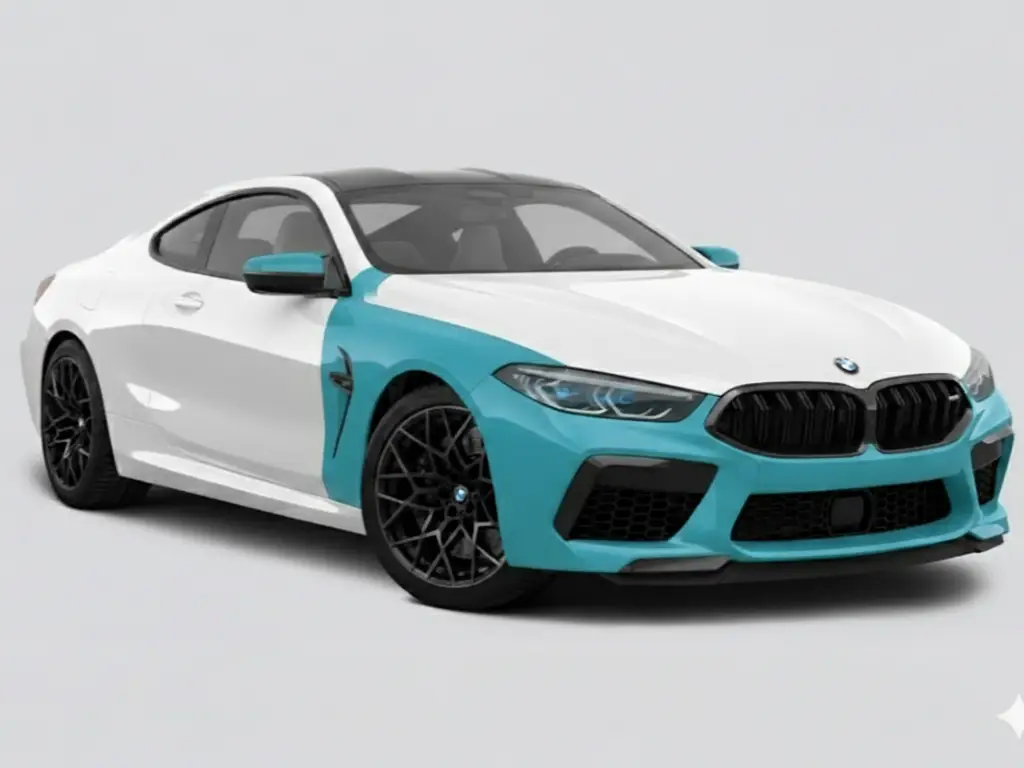
This is the basic package, which is aimed at securing the most vulnerable and high impact areas of the car. It is an affordable option for daily drivers who have to deal with a lot of highway usage. It is usually covered to the front bumper, side-view mirrors, and the first 18-24 inches of the hood and front fenders.
Standard (Full Front)

This is the most favored choice by the car enthusiast and new car owners. It offers complete coverage of the entire front of the vehicle, which suffers more than 90 percent of all road damages. The main benefit of this package is that it does not leave any visible film line across the hood resulting in a smooth and almost invisible finish. The coverage will cover the entire hood, entire front fenders, front bumper, and side-view mirrors.
Premium (Full Car)
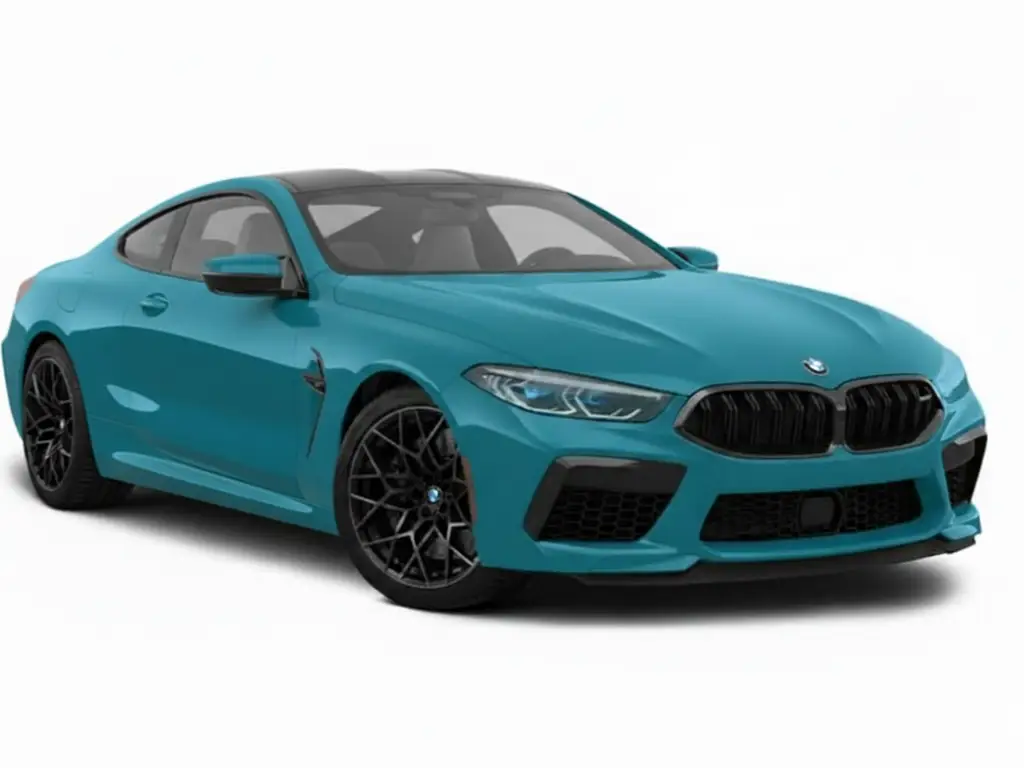
This is the final answer to the perfectionist, the luxury car owner or the person who desires complete, no compromise peace of mind. All the painted panels of the vehicle—the entire body—are covered with PPF, from the front bumper and side skirts to the rear trunk lid and rocker panels. This is comprehensive coverage that does not only protect the car against road debris, but also against any kind of incidental damage, keeping the factory paint in a showroom condition.
Here is a breakdown of typical cost ranges for a professional installation on a standard-sized sedan.
| Coverage Level | Typical Coverage Area | Estimated Cost Range ($USD) |
| Basic (Partial Front) | Front bumper, mirrors, 18-24″ of hood & fenders | $600 – $1,500 |
| Standard (Full Front) | Full bumper, full hood, full fenders, mirrors | $2,000 – $3,500 |
| Premium (Full Car) | All painted exterior surfaces | $5,000 – $8,000+ |
Note: These prices are estimates. Your final quote will vary based on the factors discussed below.
7 Key Factors That Determine Your Final Price
You will soon realize that the same job may have a difference of hundreds, or even thousands, of dollars. This is not a random variance. It is motivated by seven different factors that distinguish a poor job and a high-quality, long-term installation.
1. Vehicle Size and Complexity
This is the simplest variable. The size of the vehicle matters. Larger vehicles like a Ford F-350 or a Mercedes-Benz GLS just have a much greater surface area than a Porsche 718 Cayman. It takes additional material and additional time of labor, which directly raises the cost. Moreover, the complexity of the design is significant. A car with complex bodywork, violent aerodynamic features, compound curves, and lots of vents (imagine a new Lamborghini or a C8 Corvette) is exponentially harder and more time-consuming to wrap than a Tesla Model 3 with its huge flat surfaces.
2. Installer Labor and Skill
This is,by all means, one of the most vital cost factors. A ppf installer is applying an art rather than just a product. The cost of the ppf install is an indication of the technician’s experience. A cheap installer can install pre-cut kits that do not go all the way to the edges, or have visible seams, or, in the worst, cut a blade on the car itself, leaving knife marks in your paint. A reputable installer hires master technicians. They will carefully prepare the paint (decontamination, clay bar, polish) in a clean, controlled environment, cut the paint to fit perfectly with a custom-trimmed piece of “bulk” film and wrap the film around the edges of the panels. This renders the film indeed invisible and much less prone to peeling or lifting with time. You are buying their experience and it is well worth the money.
3. Geographic Location
Overhead costs are king. The operating expenses of an installation shop in a high-rent area of Los Angeles or New York City are vastly different than the operating expenses of a shop in a small town in the Midwest. The final price includes labor rates, rent, and insurance.
4. Film Brand and Quality
Polyurethane films are not all equal. The market is divided based on brand reputation, R&D investment and warranty. The highest quality brands (3M, XPEL, and SunTek) are priced higher since their products have a history of optical clarity, adhesive durability and top-coat functionality. An unbranded film can cost you less in the short run, but it is much more likely to turn yellow, crack, or peel away.
5. Type of PPF
The conventional film is a glossy, clear coating. Technology has however come with a number of specialized films which come with a higher price tag.
- Matte/Satin PPF: This coating can immediately change the gloss paint on your car into a smooth, contemporary matte finish, and at the same time offer the same protection.
- Colored PPF: This is a more recent product, which provides protection and a complete color change in one product.
- Specialty Films: These are off-road vehicle thicker and tougher off-road vehicle films, windshield protection films, and tinted PPF on headlights and taillights.
6. Installation (Pre-Cut vs. Bulk)
As stated, there are two ways of installers. They are able to cut patterns with a plotter out of a database (pre-cut) or cut a large roll of film and trim it to your car (bulk). Pre-cut is quicker and less damaging to the paint of the car, but can be less capable of covering the entire edge-to-edge. Bulk installation is very skilled but it can be fully wrapped around the edges and it has a more smooth appearance. A combination of the two is employed by many of the leading stores and the extra time spent in this custom work raises the price.
7. Warranty Duration and Terms
A high quality film is supported with a high quality warranty. An inexpensive movie may be accompanied by a 3- or 5-year warranty, but it will only cover certain defects. A high-quality film, though, will be supported by a 10 or even 12-year warranty covering yellowing, staining, bubbling, cracking, and peeling, and will provide you with 10 years of guaranteed performance. This is a major component of the initial cost which is long-term security.
Why Film Quality Is the Most Important Cost Factor
In the analysis of a quote, it is easy to pay attention to labor. Nevertheless, the film is the basic factor that determines the success and duration of the whole project. The workman is the carver, the film the marble.
Being a one-stop shop in the provision of a wide variety of automotive and architectural films, we at Flexippf have a special, technical level understanding of why quality materials are the major force behind cost and value. High-performance PPF is a sophisticated composite and its price is based on three layers:
1. The Substrate (TPU): The main part of the film. Lower grade polyurethane is used in cheaper films and is more likely to contaminate the environment and yellow and harden when exposed to UV. High quality films are made using the highest grade, aliphatic TPU substrates, including those of BASF, which are optically transparent and very tough.
2. The Adhesive: This is a concealed yet important element. Poor quality of adhesive may fail and lead to lifting and bubbling. In the worst case, it may bond excessively or disintegrate and ruin the clear coat that it was supposed to preserve. High quality movies employ pressure-sensitive adhesives such as Ashland, which are powerful, stable and removable without leaving any residue.
3. The Top Coat: It is here that the magic is done. This microscopic coating gives hydrophobic (water-repelling), stain-resistant, and self-healing properties to the film. Production of this layer is a technical process.
The manufacturing process should be strict in order to produce a product that can be assured with a 10-year warranty. This is achieved by using the latest technology, including German magnetic sputtering machines and several high-speed coating lines, to achieve flawless consistency.
The movie should then be taken through the rigorous quality control. Our materials are subjected to rigorous testing at Flexippf, which imitates a complete life cycle, such as being subjected to more than 5,000 hours of artificial UV and weather conditions (many times more than industry standards) and high temperatures (up to 80 C) to make sure they never delaminate or fail.
It is this dedication to quality, be it in blocking more than 98-99 percent of the harmful UV rays or adding ceramic-infused top coats to give it a better gloss and self-healing qualities that you are buying. You are not only purchasing a transparent film; you are purchasing ten years of research and development and material science that is designed to ensure that the paint on your vehicle is in excellent condition.
Is Paint Protection Film Worth the Investment?
This brings us to the central question. To answer it, we must compare the cost of PPF against the cost of the two things it directly impacts: paint repair and resale value.
PPF Cost vs. Repainting Cost
A stone chip is not a simple fix. To repair it correctly, a body shop must sand down, prime, paint, and re-clear the entire panel (a process called “blending”) to achieve a perfect match.
- Cost of Repainting a Bumper: $600 – $1,200
- Cost of Repainting a Hood: $800 – $2,000+
- Cost of a High-Quality Full-Car Repaint: $10,000 – $20,000+
A Full Front PPF package, which costs on average 2,500, is more costly than repainting one panel. Nevertheless, it shields all front-facing panels up to ten years. All it takes is a single bad accident with a gravel truck on the highway that will cause damage that is more expensive to fix than the film itself.
What is more important is that a repaint will never be the same as factory paint. The paint is OEM (Original Equipment Manufacturer) and it is sprayed and dried in a sterile, robotic environment and then the car is assembled. This is a more durable and harder finish that cannot be replicated by any body shop. This original, inimitable finish can only be maintained by PPF.
PPF and Resale Value
When selling a car, the cosmetic condition of the car is the most important determinant of its value. A car that has rock chips and scratches on the front side will automatically fetch less.
A vehicle that has PPF can, however, appear new many years later. When it comes to selling, you can choose between:
- Keep the movie on, and offer a car with an immaculate, shiny finish.
- Get the film professionally removed, and under it is a perfect, untouched factory paint job.
In both cases, the car will be valued at a much higher price than a non-protected one. In most instances, the resale value has increased to the extent of covering the total initial cost of the PPF installation, which makes the years of protection a free offer.
The Verdict: PPF is a good and rational investment, in terms of pure finances, in case you have a new car, a luxury or sports car, or any car that you would like to maintain in good condition over a period of several years.
PPF vs. Ceramic Coating: Which Do You Need?
This is the second-most-common question from consumers, and it stems from a misunderstanding of the products. They do not compete; they complement.
Think of it this way: PPF is body armor. A ceramic coating is a rain-slicker.
- PPF (Body Armor): Its job is to stop a physical projectile (a rock). It is thick, absorbent, and designed for impact resistance.
- Ceramic Coating (Rain-Slicker): Its job is to make the surface extremely slick (hydrophobic) and resistant to chemicals and UV rays. It repels water, dirt, and grime, making the car incredibly easy to wash and keeping it glossy. It offers zero protection from a stone chip.
| Feature | Paint Protection Film (PPF) | Ceramic Coating |
| Primary Function | Impact & Scratch Protection | Chemical Resistance & Hydrophobicity |
| Protects Against | Stone chips, deep scratches, scuffs | UV rays, acid rain, bird droppings, dirt |
| Self-Healing | Yes (most premium films) | No (scratches must be polished out) |
| Finish | High-gloss or Matte (by type) | Extreme high-gloss, “candy-like” shine |
| Lifespan | 7-12 years | 2-7 years |
The Ultimate Solution: You do not have to choose. The best-protected vehicles on the road have both. The process is:
- Install PPF on high-impact areas (like the “Full Front” package).
- Apply a ceramic coating on top of the PPF and on the rest of the car’s paint.
This gives you the impact-absorbing power of PPF and the slick, self-cleaning properties of a ceramic coating.
How to Choose the Right Installer and Film
The value of your PPF investment is decided by two choices: the installer who puts it on and the film they use. A great film can be ruined by a bad installer, and a great installer can be hamstrung by a bad film.
As you vet local shops, you must act as an informed consumer. Go beyond the price quote and ask these critical questions:
- “Can I see your portfolio of work on my specific car model?” Look for clean, wrapped edges and no visible seams.
- “What is your paint preparation process?” A correct answer must include a full decontamination wash, clay bar, and (often) a light polish to perfect the paint before the film is applied.
- “Do you use pre-cut patterns, or do you bulk install and wrap edges?” As discussed, the best shops often use a hybrid approach to ensure full, invisible coverage.
- “What film brands do you offer, and why do you prefer them?” A passionate installer will have a clear, technical reason for their brand choice.
- “What does the warranty really cover, and who honors it?” Is the warranty from the installer or the film manufacturer? A manufacturer’s warranty is far more robust.
This final point on warranty and support is where the installer-supplier relationship becomes critical to you, the end-user.
A professional installer’s reputation is built on the film they use. They choose suppliers who not only provide a superior product but also stand behind it. As a one-stop supplier, we at Flexippf know that our role extends far beyond shipping a roll of film. It’s about partnership.
We provide our certified installers with films backed by one of the industry’s most comprehensive 10-year warranties, giving both them and their customers a decade of security. This confidence is born from our rigorous ISO-standard quality control.
Furthermore, we empower our installers to succeed by providing them with 7×24 technical team support,installation guidance videos, and detailed operation manuals. If a unique challenge or quality issue arises, our team is available to help them resolve it immediately. This robust support system is your unseen safety net.
This flexible, supportive relationship even extends to customization. By partnering with a vertically integrated supplier, an installer can offer you solutions others cannot—from custom-designed patterns created in 48 hours to a selection of over 100 different film types, ensuring you get the exact look and protection you desire.
Final Verdict: Is PPF Right for You?
Paint Protection Film is not an impulse purchase. It is a significant, upfront investment in the preservation of your vehicle’s most visible and valuable component: its factory paint. While the five-figure price tag for a full-car wrap can be staggering, the value proposition of a “Full Front” package is exceptionally strong. This protects the entire front end and the most heavily covered panels, which take the brunt of everyday wear. For an investment that is often less than a single insurance deductible, you are buying up to a decade of peace of mind and protecting your car from thousands of dollars in potential paint and bodywork. PPF is unequivocally worth the cost if you:
PPF is unequivocally worth the cost if you:
- Have just purchased a new car and want to keep it “new.”
- Own a luxury, performance, or classic car.
- Are leasing a vehicle and want to avoid costly “excess wear” penalties.
- Are a daily commuter who faces high-speed highway driving.
- Are an enthusiast who takes pride in a flawless finish and wants to maximize resale value.
PPF is likely not worth the cost if you:
- Are driving an older, lower-value vehicle with existing paint damage.
- Are on a very strict budget and are not concerned with cosmetic perfection.
Ultimately, the price of PPF is high, but the cost of inaction—the slow, inevitable degradation of your car’s finish by a thousand tiny impacts—is often far higher.
 English
  Spanish
  Dutch
Dutch  Japanese
  Russian
  Arabic