
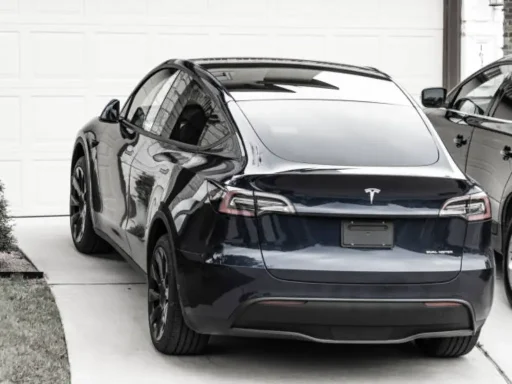
You already know the truth, having just accepted delivery of a new Tesla, or having endured a summer of hell driving one: Teslas are nothing but rolling glass greenhouses. The huge panoramic roofs and large windows provide unbelievable visibility, but they also transform the cabin into a sauna, and tesla window tinting becomes not a luxury, but a necessity.
However, when you start calling local tint shops, you might experience sticker shock. Tesla prices are infamously more expensive than a typical Honda Civic or Toyota Camry. This is commonly reluctantly known as the “Tesla Tax” and many owners are left wondering whether they are being ripped off or there is a valid reason behind the high price tag.
In this comprehensive 2026 guide, we are stripping away the industry secrets. We will break down the true average costs, explain the critical differences between cheap carbon and premium ceramic films, explore the terrifying hidden risks of water damage during installation, and reveal how advanced solutions like precut tint films are revolutionizing the industry—lowering labor costs and protecting your investment.
Average Tesla Tint Cost: What Should You Pay?
The first principle when determining the average tesla tint cost is that pricing is not a one-size-fits-all. The quality of the film, the amount of glass panels you desire to be covered, and your geographical location are the three factors that are crucial to the final bill.
To give you a clear baseline, here is a modular pricing breakdown based on current 2026 national averages across the United States.
| Coverage Area | Standard Dyed/Carbon Film | Premium Nano-Ceramic Film | Ultra-Premium (Top Tier Brands) |
| Two Front Doors Only | $100 – $150 | $150 – $250 | $250 – $350 |
| All Sides + Rear Window | $300 – $450 | $500 – $800 | $800 – $1,200 |
| Windshield (Full) | $150 – $200 | $200 – $350 | $350 – $500 |
| Panoramic Roof (Per Glass) | $100 – $150 | $200 – $300 | $300 – $450 |
| Full Car (Sides, Rear, Windshield) | $450 – $650 | $800 – $1,200 | $1,300 – $1,800+ |
The Reality of Regional Pricing Differences
When you visit forums such as Reddit (r/TeslaModel3 or r/TeslaLounge), you will soon find that there are enormous differences in the amount that owners claim to pay.
- High-Cost of Living Areas (California, Florida, New York): In such cities as Los Angeles or Miami, where the demand of heat rejection is extremely high and the overhead of the shop is very high, a full-car premium ceramic tint job is a regular cost of over $1200 to $1500.
- Midwest and Suburban Areas: In areas where the cost of living is lower, or even in places outside the contiguous US like Hawaii, the sun is not as intense all year round, and the same ceramic installation would only cost between $700 and $900.
The moral of the story is to compare several local quotes. Feel free to send an email to multiple shops to ask for pricing, keeping in mind they are usually busiest from Monday through Friday. When a store in California offers to tint your car completely in ceramic at a price of $300, then it is definitely a scam with fake or low quality dyed film. On the other hand, when a store in Ohio is charging you $2,000, you are paying an unwarranted premium.
Price Breakdown by Model: 3, Y, S, and X
Not all Teslas are created equal in the eyes of a window tint installer. The unique engineering, overall glass surface area, and specific curvature of each model drastically dictate the amount of labor and materials required. This means the final price on your invoice will vary significantly depending on which Tesla you drive. Let’s explore the unique challenges and cost factors associated with each specific vehicle.
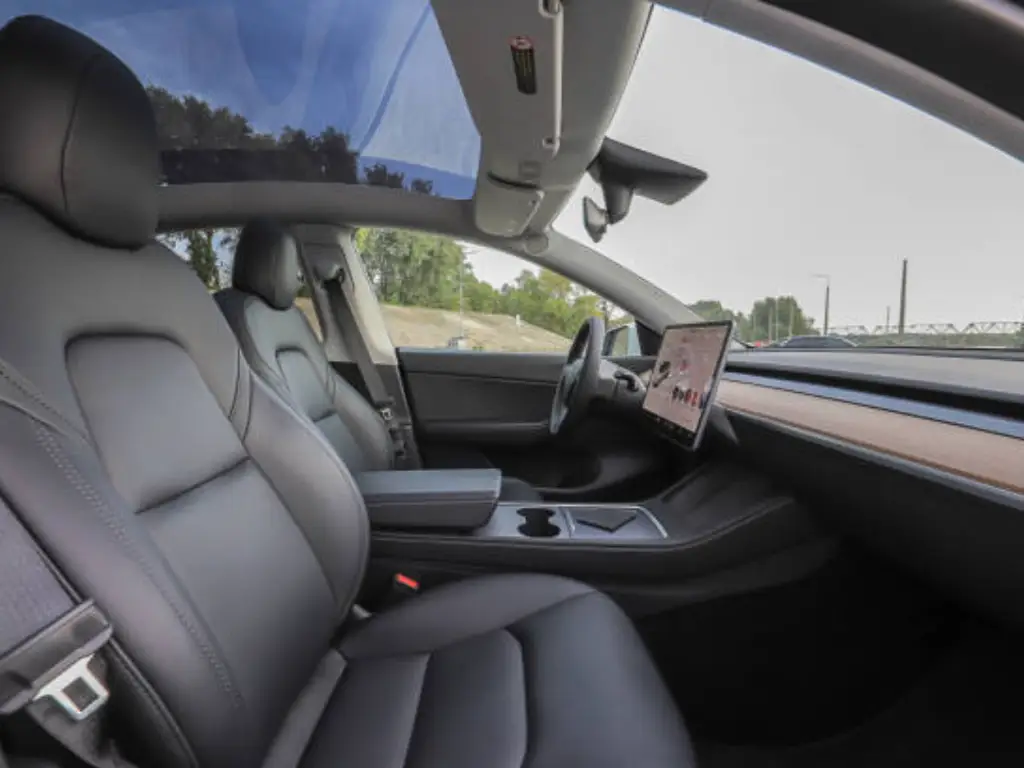
Tesla Model 3
The Model 3 is infamous in the tinting community for one specific reason: the rear windshield. Unlike traditional cars where the rear window stops at the roofline, the Model 3’s rear glass stretches all the way from the trunk, over the rear passengers’ heads, to the middle crossbar of the roof.
- The Cost Factor: To tint this huge sheet of glass, a roll of film (usually 60 inches wide, not the usual 36 inches) is needed that is oversized. More to the point, it takes great expertise to heat-shrink the film to fit the shape of the glass compound curve. Most of the cheap stores will attempt to fit this in two parts, which will leave an unsightly visible line. The cost of a professional one-piece installation will always be high.
Tesla Model Y
The Model Y is another challenge: rear privacy glass that is factory-dyed. When evaluating the tesla model y tint cost, you must remember the rear windows and rear windshield are dark pigmented (typically between 20% and 24% VLT – Visible Light Transmission) at the factory.
- The Cost Factor: Another factor driving up the tesla model y tint cost is that this dark glass gives the wrong impression to many new owners that it offers protection against heat. It does not. It is plain colored glass that offers privacy but allows infrared heat to enter the cabin. In order to get the heat rejection you need to pay to tint over the factory privacy glass with a high-VLT (light-colored, such as 70%) ceramic film. Ultimately, the total tesla model y tint cost will depend heavily on the shop’s labor rates to match the front windows with the rear and make the entire car reject heat.
Tesla Model S
The Tesla that is the easiest to tint is usually the Model S, which looks like a conventional luxury sedan.
- The Cost Factor: The side windows are fairly ordinary, but the rear hatch glass is big and very slanted. The labor price is a little lower than a Model 3, but the owners of this flagship car usually choose the highest-quality ceramic features, which increases the average price of the ticket.
Tesla Model X
The Model X is the absolute hardest vehicle on the market to tint.
- The Cost Factor: It has the biggest panoramic windshield in the market, extending to the top of the head of the driver. It takes two technicians, special oversized film rolls and hours of painstaking heat shrinking to tint this monolithic piece of glass. Moreover, the Falcon Wing doors possess special top-glass panels which contribute to the complexity. You will pay the highest “Tesla Tax” of all models when you own an X.
Ceramic vs. Carbon Tint: Which is Best for Tesla?
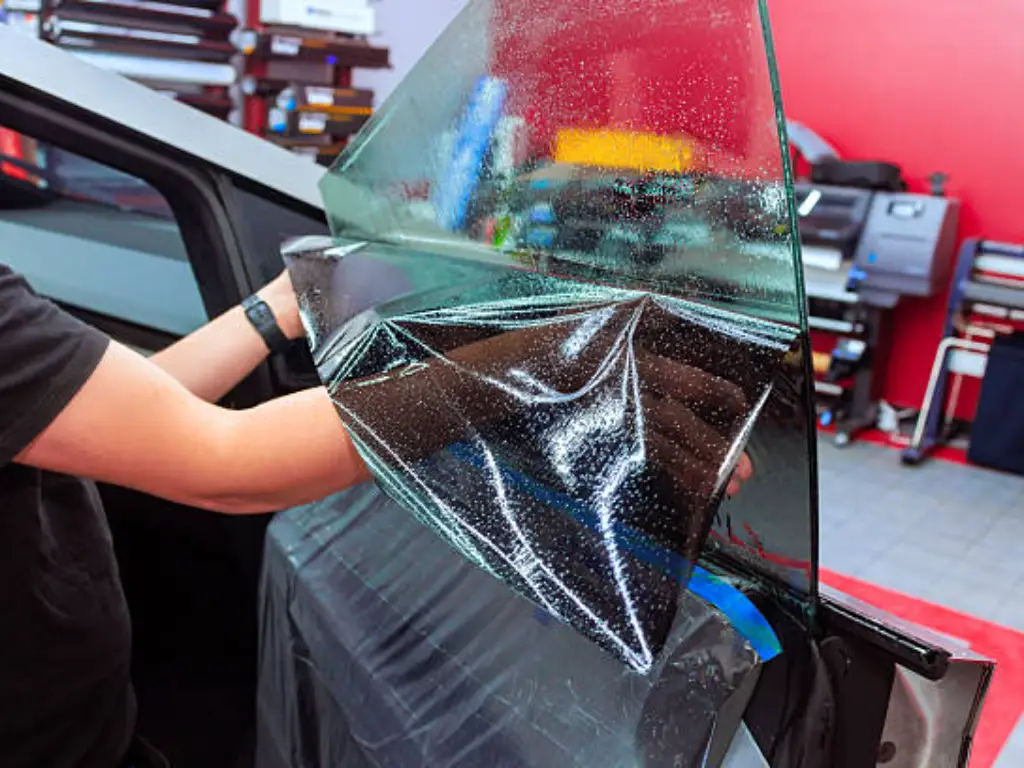
When you look at a window tint sample, you are only seeing how much visible light it blocks. What is not visible is the way the film treats solar energy. In the case of a tesla window, the selection of the appropriate material is not a question of aesthetics, but rather a question of life in a glass cabin.
Dyed Window Tint (The Budget Option)
Dyed films are exactly what they sound like: layers of polyester with dye injected into them. They absorb some solar heat but mostly just darken the glass. Over time, UV rays break down the dye, causing the film to turn purple and bubble. This film should never be put on a Tesla.
Carbon Window Tint (The Mid-Tier Option)
Carbon films inject carbon particles in the film layer. They do not fade or turn purple with time and they offer a matte finish. They absorb approximately 40% of infrared heat. Carbon film is decent as a normal commuter car, but in the summer of peak sunlight, it cannot compete with the huge glass surface area of a Tesla.
Nano-Ceramic Window Tint (The Only Logical Choice for Teslas)
Ceramic tint is the undisputed king of window films. Instead of dyes or carbon, it uses microscopic, non-conductive nanotechnology embedded in the film, usually measuring several mils in thickness, offering greater protection.
- Absolute Heat Rejection: Ceramic films excel at blocking Infrared (IR) rays—the specific spectrum of sunlight that causes you to feel burning heat on your skin. High-end ceramic films are engineered to reject the most heat possible, blocking over 85% to 95% of IR heat.
- No Signal Interference: Unlike the older metallic films, ceramic does not have any metal in it, which means that it will never interfere with the GPS of your Tesla, cellular connectivity, or Bluetooth keys.
- The Verdict: Due to the panoramic roofs and huge windshields, the interior of Teslas is a magnifying glass. When you put a cheap carbon film on, the AC will not perform. The technology that can effectively reduce the “greenhouse effect” is ceramic film. It provides ultimate uv protection for your skin as well as any personal belongings you leave inside. Always remember to check your local tint laws before selecting a tint percentage.
Why Tesla Windshields and Roofs Cost More to Tint
When a store charges you $300 to replace the front windshield alone, you can easily think that you are being cheated. But the objective reality of the labor tells otherwise.
Much of the quote you get is not about the actual physical film, but about the extremely specialized work, namely, a process known as Heat Shrinking.
When removed off the roll, window film is completely flat. The windshield and rear glass of your Tesla are spherical with complicated, multi-directional curves. When a technician merely stuck flat film on curved glass, it would immediately bend, forming huge creases and “fingers” along the edges.
To make flat film fit the shape and curvature of your windows, the technician must lay the film on the outside of the car first. They then use a high-temperature heat gun and specialized squeegees to meticulously shrink and mold the film until it permanently takes the exact shape of your specific windshield.
Since Tesla glass is much bigger and much more curved than a regular car (such as a Toyota Corolla), the heat shrinking process is two to three times longer. It needs a master level technician; a single slip with the heat gun will scald a hole in the $100 piece of ceramic film and they will have to start all over again. You are buying their time, their experience and the risk of material wastage.
Lowering Labor Costs with FlexiPPF Pre-Cut Tints
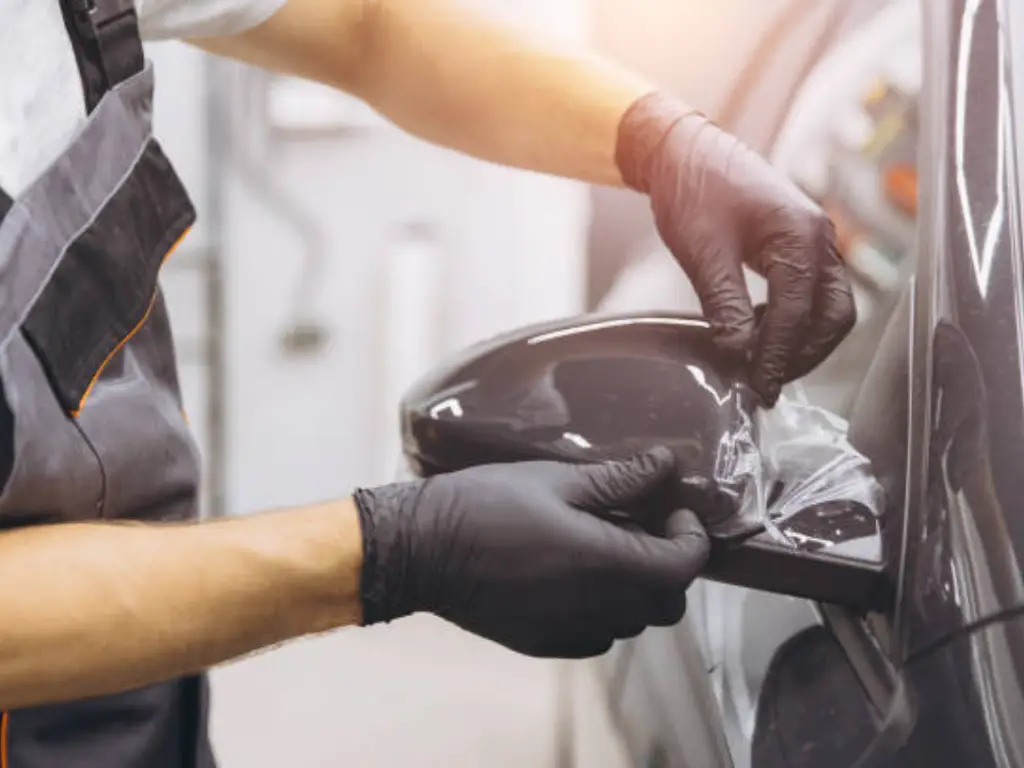
The excessive “Tesla Tax” we have to pay at tint shops is, as we have seen, largely due to the great manual labor involved in measuring, cutting and manipulating film to fit the huge curved glass panels in Tesla. However, what would happen should there be a means to avoid hours of manual work, the possibility of human error, and the total absence of the risk of razor blades scratching your Tesla glass?
It is here that FlexiPPF and the revolution of 3D Pre-Cut technology transforms the game to both the shop owners and Tesla drivers.
The Power of Pre-Cut Technology
Traditionally, a technician places a sheet of film on your car’s exterior and uses a razor blade to hand-cut the exact shape of the window. This “knife-on-glass” technique is time-consuming and has the horrifying potential of cutting the factory glass of your Tesla or cutting the rubber weather stripping.
FlexiPPF employs a 3D instant scan technology to produce software templates that are an exact match of every millimeter of the Model 3, Y, S, and X. The movie is computer-plottered and then cut with a computer before it ever comes into contact with the car.
- For the Tesla Owner: Finding a shop that uses FlexiPPF pre-cut films means your car spends less time in the shop. It guarantees a flawless, edge-to-edge fit without a single razor blade coming near your expensive glass. Because the shop saves hours of manual cutting time, they can often pass those labor savings on to you, effectively neutralizing the “Tesla Tax.” Many professional facilities that offer paint protection film also utilize this efficient method.
- For the Tint Shop: FlexiPPF is much more efficient. Installers are able to turn cars quicker, remove costly material waste and excess film due to bad hand-cuts, and ensure uniformity in all Tesla that roll into the bay.
For shop owners or DIYers purchasing kits directly online, it’s important to check a supplier’s handling time to see if they offer free shipping or next day shipping. A reliable vendor will minimize shipping costs and use a reliable shipping service. Should an issue arise, they should offer a refund credited directly to your original method of payment. However, always read the warranty disclaimer; replacement policies often state that coverage is voided by “misuse of our products” or improper installation.
World-Class Material Engineering
FlexiPPF isn’t just about the cut; it provides a wide range of solutions to combat the Tesla greenhouse effect. Whether you are comparing it to Suntek, Motoshield Pro, or specifically looking for a Motoshield Pro nano ceramic tint film alternative, you are investing in the highest quality of window tint film. As a top-tier supplier, FlexiPPF engineers its films from the molecular level up:
- German BASF Polyester Base: This is a foundation that is sourced in Germany and has great durability, stable optical clarity (no haziness) and high tensile strength to ensure that it does not tear during installation.
- American Ashland Adhesive: Providing strong bonding performance with low VOC emissions, ensuring the film stays anchored to the glass without bubbling, even under intense heat.
- Advanced Nano Ceramic Coating: The FlexiPPF ceramic coating is sourced by the best suppliers in the world and it blocks 99% of the harmful UV rays (UV400 protection) and rejects more than 70% of the total solar energy and infrared heat. It provides excellent glare suppression (as much as 55%) which makes night driving and sunset drives much safer.
Backed by a comprehensive 10-year warranty, FlexiPPF represents the ultimate convergence of B2B manufacturing excellence and B2C consumer value. By choosing a shop that partners with a reliable supplier like FlexiPPF, you are investing in top-tier heat rejection, flawless installation, and long-term peace of mind.
Hidden Risks: Preventing Water Damage During Tesla Tinting
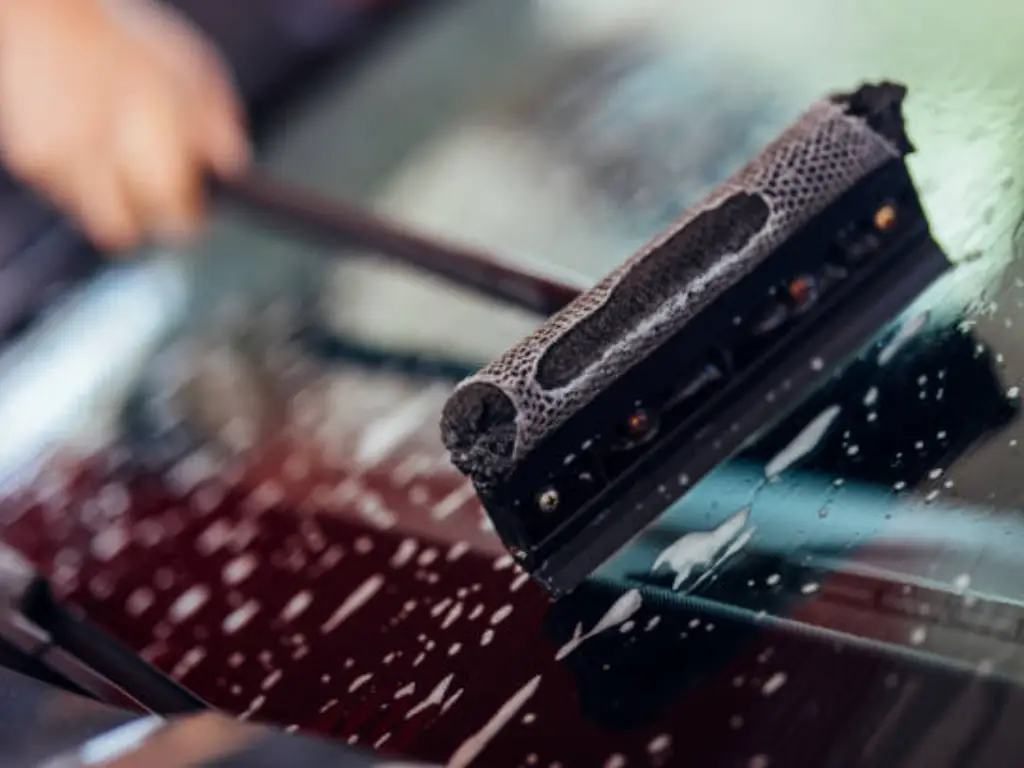
This is the most important part of this guide, and it entails a disastrous risk which most low-end tint shops will not inform you about.
The tinting of windows involves a lot of “slip solution” – a blend of water and baby shampoo which enables the technician to slide the film and squeegee the liquid out. This water drips down the door panels (which is not very dangerous when wiped off) when tinting the side windows.
But in tinting the huge front windshield of a Model 3 or a Model Y, the weight of the gallons of this soapy water causes it to flow down the glass and directly into the thin gap between the windshield and the dashboard.
The Danger: Under that dashboard crevice, entirely uncovered and unprotected, is the Tesla Autopilot Computer and other important Body Control Modules (BCMs).
When the soapy water enters this part, it will short the computer. The vehicle will spew out a torrent of error codes, the screen will turn black, the car will not change to drive, and the Autopilot system will melt. Tesla Service will instantly identify this as liquid damage as a result of aftermarket tinting, which will nullify your warranty. These computers can be replaced at a cost that is well above $2000 to $3000.
How to Protect Your Vehicle
You should enquire of any tint shop before giving them your key card on how they secure the electronics when installing a windshield. Two important techniques will be used in a professional, Tesla-experienced shop:
- Soak Ropes (Dash Ropes): These are very thick and highly absorbent microfiber braided ropes that the technician carefully wedges deep into the space between the glass and the dashboard. They serve as a dam and all the slip solution is absorbed before dripping down into the electronics.
- Dash Towels and Electronic Covers: Waterproof covers should be heavyweight and should be thrown over the whole dashboard and steering wheel column.
If a shop looks at you with confusion when you ask about “soak ropes” or the “Autopilot computer risk,” walk away immediately. Your car is not worth their learning curve.
Real Heat Rejection: Does Ceramic Tint Improve Tesla Range?
It is a bold claim, but it is rooted in basic EV thermodynamics: Yes, installing premium ceramic tint can tangibly improve your Tesla’s real-world driving range during the summer months.
You need to look at the way Teslas control internal temperatures to know why. Teslas have a feature known as Cabin Overheat Protection (COP). The large glass area when parked in the sun enables the interior to heat up to temperatures of over 140°F within a short period of time. The car will automatically start up and turn on the air conditioning compressor to cool the cabin to less than 105°F (or a temperature you choose) to protect the massive center touchscreen and interior materials.
To operate the AC compressor, a lot of energy is required which is directly supplied by the main high-voltage battery pack. When your car spends 8 hours in a hot parking lot during your work day, Cabin Overheat Protection will switch on and off every minute, and it will run down 2% – 5% of your overall battery capacity before you even get home.
By putting a good ceramic film in place, you are stopping the infrared heat that is causing that sudden temperature rise.
- The Result: A cabin that would otherwise get to 140° F may only get to 105°F to 110°F. The Cabin Overheat Protection is activated much less often (or not at all).
- While Driving: In addition, when you are actually driving, the AC compressor does not need to work so hard to keep the temperature at a comfortable 70°F. Since the AC system is among the biggest auxiliary power loads in an EV, decreasing its load directly corresponds to a lower number of kilowatt-hours per mile. Ceramic tint is not only comfortable in peak summer, but it is an efficiency upgrade.
How to Avoid the “Tesla Tax” at Tint Shops
Knowledge is your ultimate defense against being overcharged. Having known the materials, the work, and the peculiarities of Tesla glass, you can now go to local stores with complete confidence. To get a fair price and a professional risk-free installation, make your first phone call an interview.
Here are the five essential questions you must ask to bypass the unjustified “Tesla Tax” and weed out amateur installers:
- “Do you use a computer plotter for pre-cut films, or do you hand-cut on the glass?”
- What you want to hear: “We use advanced 3D pre-cut templates, like those from FlexiPPF, to ensure absolute precision.”
- Why it matters: Direct cutting on the car presents an enormous chance of a technician accidentally cutting through the costly factory glass of your Tesla or cutting rubber weather stripping with a razor blade. Pre-cut films will remove this risk completely and save labor hours, which should logically decrease your final quote.
- “What exact steps do you take to protect the dashboard computer when tinting a Model 3 or Model Y windshield?”
- What you want to hear: “We use heavy-duty soak ropes wedged deep into the dash gap, combined with waterproof microfiber covers over the entire console.”
- Why it matters: Liquid damage to the Autopilot computer is a warranty-destroying error. Do not believe that “we are responsible and only use less water” as a safety measure.
- “Can you install the Model 3 rear windshield tint in one single piece?”
- What you want to hear: “Yes, we stock oversized 60-inch rolls specifically for the Model 3’s rear glass.”
- Why it matters: Because of the extreme size of the glass, amateur installers will try to splice two smaller pieces of film together. This leaves an ugly, highly visible horizontal seam directly in your rearview mirror’s line of sight.
- “What specific brand and type of film are you quoting me for?”
- What you want to hear: Explicit confirmation of a “Nano-Ceramic” film.
- Why it matters: Unethical shops will charge you ceramic prices for cheap dyed or carbon films. Always ask to see the manufacturer’s spec sheet to verify that the Infrared (IR) rejection percentage is well above 70%.
- “What does the warranty cover, and how long does it last?”
- What you want to hear: “It comes with a 10-year or lifetime manufacturer warranty covering bubbling, peeling, cracking, and fading.”
- Why it matters: The best ceramic films are designed to be durable and the manufacturers who have a good reputation will guarantee the durability of their material over a period of 10 years or more. When a shop is selling a 1-year or 3-year warranty, it is a good sign that they are dealing with low quality, easily degradable materials that will not withstand the heat of the sun.
These targeted questions will immediately give the shop an indication that you are an educated consumer. You will avoid the expensive tourist traps with ease and get a master installer who will handle your Tesla with the accuracy and attention it warrants.
 English
  Spanish
  Dutch
Dutch  Japanese
  Russian
  Arabic