
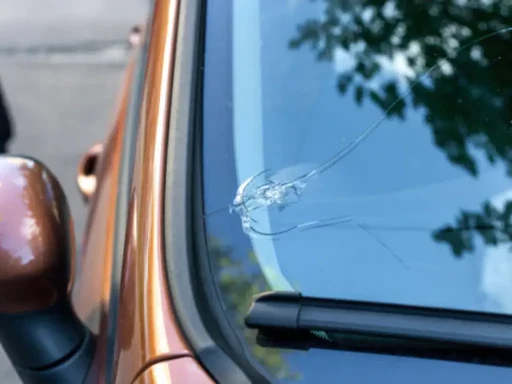
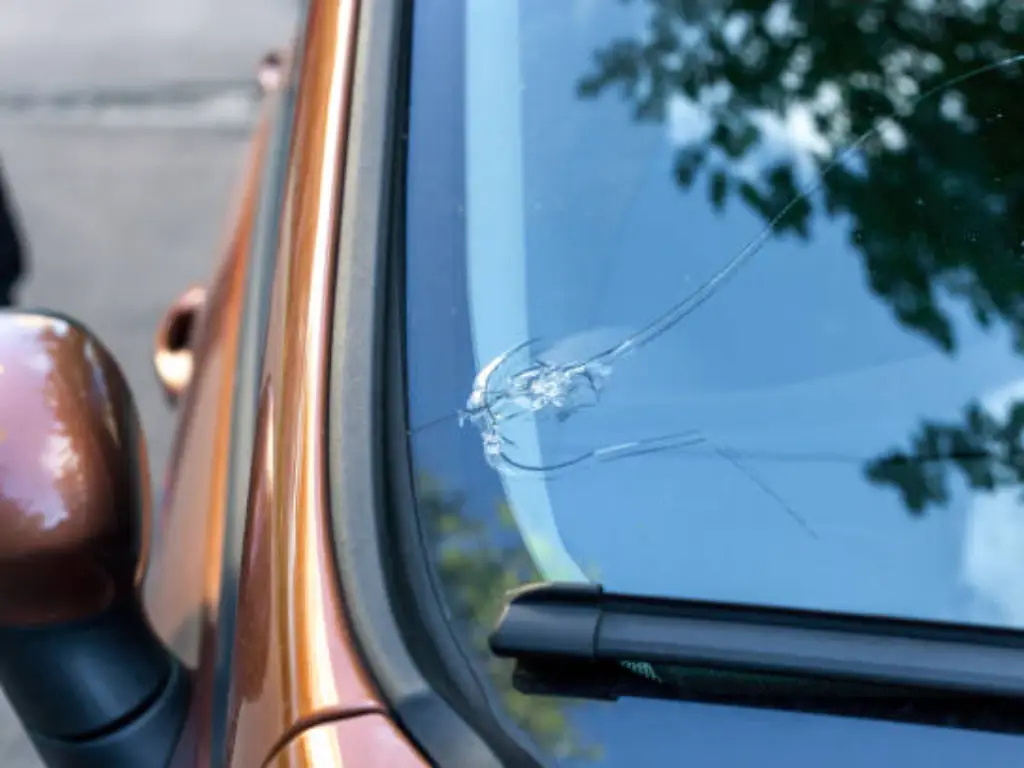
It is a sound every driver dreads: the sharp crack of a pebble hitting your windshield at highway speeds. In an instant, what was a pristine piece of glass becomes a source of anxiety. You find yourself squinting at the damage, wondering: “Can I ignore this? Can it be fixed? Or am I looking at a $1,000 windshield replacement bill?”
In 2026, this decision is more complex than ever. With the integration of Advanced Driver Assistance Systems (ADAS) and the rising costs of specialized auto glass, making the wrong choice doesn’t just hurt your wallet—it can compromise the sophisticated safety network your vehicle relies on. This guide will walk you through the technical, financial, and safety considerations of windshield repair, helping you navigate the “repair vs. replace” dilemma with confidence.
Size and Location: Is Your Windshield Damage Actually Repairable?
Before you panic, the first step is understanding the physical limitations of glass restoration. Auto glass repair essentially involves injecting a clear, curable resin into the glass’s outer layer. While it’s an impressive process, it isn’t magic; it has real structural and optical boundaries.
The business tends to operate under the “Coin or Dollar Bill Rule.” The majority of chips, be it a bullseye break, star breaks, or half-moons, can be repaired provided that they are less than a quarter (approximately 1 inch). When it comes to a crack, the technicians can normally fill it effectively provided that it is not longer than the width of a standard dollar bill (6 inches). Anything more of that is likely to compromise the glass’s structural integrity, i.e. your only safe bet is a complete auto glass replacement.
However, location matters just as much as size. There are specific “No-Repair Zones” every owner should watch out for:
- The Driver’s Critical Vision Area: This is a rectangle roughly 8.5 by 11 inches directly in front of the steering wheel. Even a flawless repair can leave a tiny blur or “pitting” effect within the driver’s view. Since this is in the driver’s direct line, any minor distortion can turn into a dangerous glare under the right light—like a low sunset or bright oncoming headlights at night.
- The Edge of the Windshield: If a crack reaches within the outer 2 inches of the glass, it has likely compromised the seal between the glass and the vehicle frame. Repairs near the edge are notorious for failing because this is where the glass handles the most vibration and structural stress.
The Microscopic Battle: Debris and Oxidation
A factor that DIY enthusiasts often miss is oxidation. The second a rock chips your glass, the PVB inner layer is exposed to the air. Over time, moisture, washer fluid, and road salt crawl into that break. If you leave it untreated, these contaminants oxidize the plastic interlayer, turning it milky or yellow. A professional repair doesn’t just “fill a hole”; it uses a specialized resin to chemically seal that interlayer back up. This is why “Temperature Shock” is so risky—it physically forces those contaminants deeper into the glass.
Temperature Shock: Why Small Chips Spread in Extreme Weather
By 2026, climate anomalies have become the new normal—ranging from record-breaking heatwaves to sudden “polar vortex” freezes. These wild temperature swings are exactly why a tiny “nick” can transform into a foot-long crack overnight. It all comes down to the physics of thermal expansion and contraction.
In the heat of mid-July, your windshield actually swells as it bakes in the sun. If you hop in and immediately blast the AC to escape the heat, the glass undergoes “thermal shock.” It tries to contract far too rapidly, and the weakest point—that tiny rock chip—becomes the fracture point. We see the exact same thing in reverse during the winter when drivers apply high-heat defrosting to a frozen windshield.
Prevention Tips for 2026 Drivers:
- Ease Into It: If you have a chip, never blast the AC or Heat directly at the glass. Use the floor vents first to let the cabin temperature stabilize gradually.
- Park Smart: During heatwaves, garages or shaded spots are your best friend to keep the glass temperature steady.
- The Tape Trick: If you get a chip, cover it with a small piece of clear packing tape immediately. It won’t stop a crack from forming, but it keeps dirt and gunk out. This makes the eventual professional chip repair much cleaner—and nearly invisible.
Why ADAS Calibration Is Now Essential for Windshield Repair
Ten years ago, a windshield was a sheet of glass. It is a high-tech car-car housing today. Advanced Driver Assistance Systems (ADAS) are fitted to most modern vehicles, and they consist of cameras and sensors directly behind the rearview mirror, looking through the windshield.
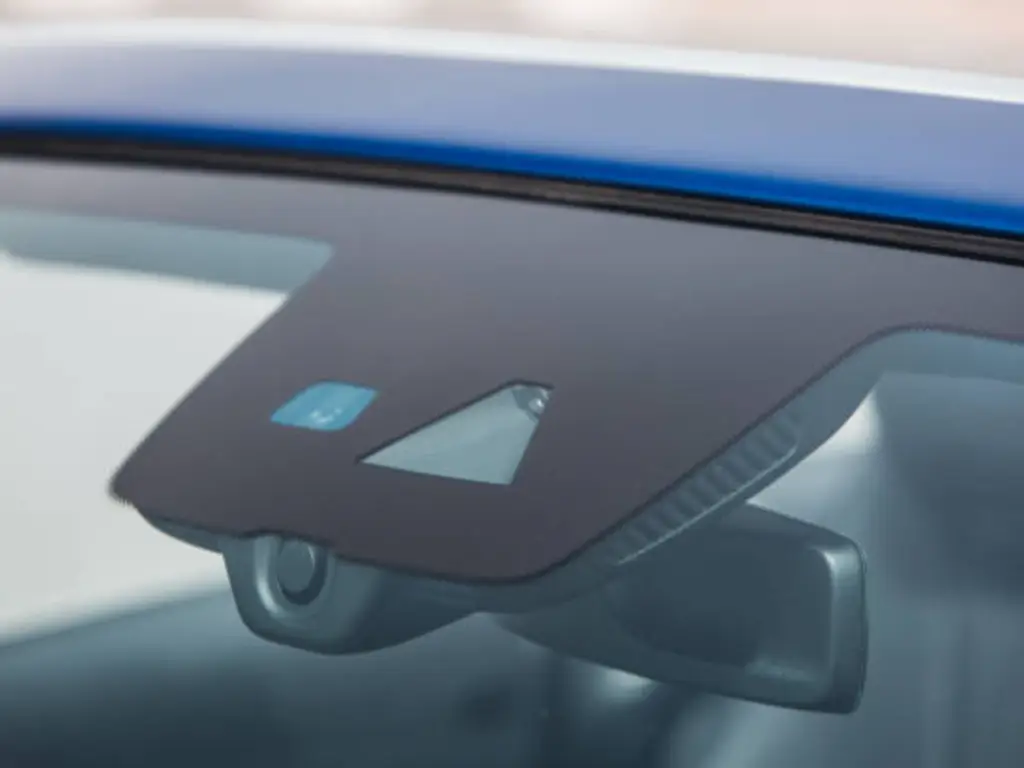
These sensors control critical functions:
- Automatic Emergency Braking (AEB)
- Lane Departure Warning (LDW)
- Adaptive Cruise Control (ACC)
- Traffic Sign Recognition
These cameras are transferred when a windshield is changed. Even a shift of one millimeter can cause the system to “see” the road incorrectly. The safety system will not interfere if the camera believes that the car is at the middle of the lane when it is actually drifting. This is the reason why calibration is not an option anymore, but a safety requirement.
The “Hidden Cost” of Calibration
It is a shock to many drivers to discover that the glass may cost them as little as $300 but the end result is more like $800 or $900. The discrepancy lies in the calibration labor.
| Feature | Legacy/Entry-Level Vehicles | High-Tech/Premium Vehicles (e.g., Tesla, Lucid) |
| Calibration Type | Often “Static” (using targets in a shop) | Often “Dynamic” (requires specific road speeds) |
| Logic Complexity | Single-camera systems | Multi-sensor fusion (Camera + LiDAR/Radar) |
| Glass Type | Standard tempered/laminated | Acoustic-glass with HUD (Head-Up Display) film |
| Typical Cost | $250 – $400 | $500 – $900+ |
An example is Tesla, which has a “Triple Camera” setup. Their logic of calibration is embedded in the software of the car. Instead of simply popping the glass in the car and driving away, as is the case with a traditional 2015 sedan, a 2026 EV will require the technician to conduct a software-guided “handshake” between the new glass and the autopilot computer. It is this “invisible consumption” of time and specialized tools that makes the price go up and makes repair (which does not involve removing the camera) far more appealing than replacement.
Why Consumer-Grade DIY Kits Often Fail Long-Term
It’s tempting to grab a $15 repair kit from a local big-box store. These kits usually consist of a plastic bridge, a syringe of resin, and a curing strip. While they might make a chip look better temporarily, they rarely provide a permanent fix.
The primary difference between a DIY kit and a professional service is the vacuum-pressure cycle.
- The Vacuum Phase: High-grade vacuum pumps are applied by professionals to remove all the microscopic air bubbles in the crack. DIY kits rely on a manual syringe, which often leaves air trapped inside. The resin is not bonded to the glass completely due to trapped air, which implies that the crack may continue to propagate.
- The Resin Quality: Professional resins are of “high index,” that is, they are designed to possess the same light-refraction characteristics as automotive glass. Cheap DIY resins often have a different refractive index, leading to a “ghost” image or a blurry spot.
- UV Curing Standards: Professional UV lamps use specific wavelengths to harden the resin in seconds, ensuring a rock-solid bond. DIY kits often rely on natural sunlight, which is inconsistent. Unless the resin cures flawlessly, it will eventually turn yellow and shrink, and you will be back to the drawing board, but with a “scab” that a professional can no longer cure.
A low-end kit can cause permanent visual distortion, robbing you of a clear view—which is especially distracting when driving at night when the light passes through the area of the repair and scatters.
Chemical Cross-Linking vs. Simple Adhesion
The resins that are used in 2026 are not merely “glue,” but professional resins. They are cross-linked anaerobic polymers that are subjected to cross-linking process when subjected to certain UV wavelengths. This creates a molecular chain that tethers the two sides of the crack together. Cheap retail kits often use simple acrylic adhesives that sit on top of the crack rather than becoming part of the glass. These simple adhesives break down under the vibration of high-speed driving and the repair fails when you need it the most.
How to Fix Your Windshield for Zero Out-of-Pocket Cost
The secret of the automotive world is that the windshield repair is usually free. The financial incentive to promote repair instead of replacement is enormous to insurance companies. A repair will cost the insurer between $60 and $120; a complete replacement with ADAS built-in may cost the insurer $1500.
Due to this, the majority of insurance companies will cover your deductible in case of glass repair in case you have comprehensive coverage. This implies that you can get a professional technician to visit your house, repair the chip and you pay nothing. It doesn’t count as a “negative claim” in many states, meaning your premiums won’t necessarily rise.
The ESG Perspective: A Responsible Consumer Choice
In 2026, being a responsible vehicle owner also means considering your environmental footprint. Windshields are notoriously difficult to recycle. They are not just glass; they are a “sandwich” of two glass sheets with a Polyvinyl Butyral (PVB) plastic interlayer. Separating these materials is energy-intensive, and millions of windshields end up in landfills every year.
By choosing to repair rather than replace, you are:
- Reducing Waste: Saving a few pounds of glass and plastic in the landfill.
- Preserving the “Factory Seal”: The connection formed by the robots in the factory is nearly always better than a hand-stamped seal. By having your Original Equipment Manufacturer (OEM) glass, you will be able to retain the original cabin quietness (Acoustic Rating) and humidity control of your car.
Owners of high-end cars nowadays consider the retention of the OEM glass as a status symbol- it demonstrates that the car has been kept in a manner that emphasizes originality and not low-cost aftermarket replacements.
The Energy Intensity of New Glass
To place the ESG decision in perspective: the process of melting raw silica into automotive glass takes temperatures of over 1,500°C (2,700°F), which is normally fueled by natural gas. The energy used to replace a windshield is approximately the same as that used to power a household refrigerator in one year. By choosing a professional resin repair, you are opting for a “cold” fix that uses virtually zero industrial energy, aligning your vehicle maintenance with a low-carbon lifestyle.
The Step-by-Step Process of a Professional Resin Repair
In order to make you see what you are paying, we will draw the curtain of the professional repair process handled by expert technicians. A good repair will take approximately 30-45 minutes and will be done in accordance with a strict technical procedure:
- Inspection and Cleaning: The technician uses a “scribe” (a sharp tool) to remove loose glass shards from the impact point. Then they wipe the place with special volatile cleaners to make sure that there is no moisture or oil left inside.
- The Vacuum Stage: This is a professional injector mounted on the chip. The technician uses a vacuum pump to remove the air in the “legs” of the crack. This is the most important step, without a vacuum, the resin will not penetrate deep enough.
- Resin Injection: Resin is injected into the void at high pressure in industrial grade. It is actually possible to see the crack “disappear” as the resin fills the gap and reinstates optical continuity in the glass.
- UV Curing: A high-intensity UV light is placed over the repair. In 2026, most pros use LED-UV arrays that cure the resin in under 60 seconds, creating a molecular bond with the surrounding glass.
- Pit Filling and Polishing: The technician applies a thicker “pit resin” to the surface where the rock originally hit. Once cured, they scrape it flush with a razor blade and polish it to a high shine.
Mobile Service vs. In-Shop Repair: Choosing the Best Option
The ease of “Mobile Service,” in which a van is delivered to your office or driveway, is a standard of the industry. But it is not always the most appropriate option in all situations.
When to Choose Mobile Service:
- Emergency Prevention: You have a small chip and you do not want to take a chance and drive and hit a pothole that will turn the chip into a crack.
- Mild Weather: When it is a clear day, 70 degrees, a mobile repair will be as good as a shop repair.
When to Choose an In-Shop Repair:
- Extreme Temperatures: If it’s 100°F outside, the technician cannot cool the glass down effectively on your driveway. A temperature controlled store is used to make sure the resin bonds properly.
- High Humidity or Rain: Moisture is the enemy of resin. If there is even a hint of rain, an indoor environment is mandatory.
- ADAS Calibration: The vast majority of high-level “Static Calibration” assumes a perfectly flat floor and controlled lighting, which you can not possibly have in a grocery store parking lot. When you are changing glass on a new car, visit the store.
The Structural Danger of Driving With a Cracked Windshield
A windshield is not just a window; it is a structural component of the vehicle’s safety cage. The windshield of a modern car offers up to 45% of the structural integrity of the cabin during a rollover accident. It serves as a support that will not allow the roof to collapse on the passengers.
Moreover, the passenger-side airbag depends on the windshield. Once the airbag is deployed, it propels upwards and hits the glass against the passenger. In case the windshield is broken or the seal is loose, the airbag force may in fact blow the glass out of the frame, and the airbag will deploy in front of the car rather than cushioning the passenger.
Legal Consequences:
In most jurisdictions, any driving with a crack more than 1 inch or which blocks the view of the driver is a “fix-it ticket” offense. By 2026, when automated traffic enforcement and safety checks become a reality, a broken windshield may result in unsuccessful registration or a huge fine. It is a safety liability that the law enforcement takes seriously since it undermines the “crashworthiness” of the vehicle.
Beyond Repair: How to Stop Future Rocks with FlexiPPF Technology
Although it is crucial to understand how to fix a windshield, the end-game of any car lover or a high-value car owner in 2026 is prevention. This is where FlexiPPF has re-invented the industry. Instead of waiting for the inevitable rock chip to ruin your day and your ADAS calibration, you can install a proactive shield.
FlexiPPF Windshield Protection Film is a multi-layered TPU (Thermoplastic Polyurethane) barrier that is a high-performance barrier that is specifically used on the exterior of the glass. FlexiPPF is a shock absorber, unlike the glass itself, which is hard and easily breaks.
Why FlexiPPF is the Superior Choice for 2026:
- Shock Absorption & Impact Resistance: Leveraging advanced German BASF polyester base materials, FlexiPPF provides unmatched tensile strength. When a rock hits, the film absorbs and dissipates the energy, preventing the glass underneath from ever chipping.
- Self-Healing Properties: Minor scuffs and scratches from windshield wipers or road debris don’t stay on the film. FlexiPPF has a thermoplastic nature, which allows it to self-heal when subjected to heat (the sun or warm water), and it will have a perfect finish in years.
- Advanced UV & Heat Control: Our films feature a Nano Ceramic Coating that blocks 99% of harmful UV rays (UV400) and rejects over 70% of infrared heat. This does not only save your skin, but also your dashboard will not crack and your cabin will be much cooler in those 2026 summer heatwaves.
- Optical Clarity: Using German Leybold production lines and SLOT DIE coating equipment, we ensure a distortion-free view. You get the protection of a shield with the clarity of bare glass.
- Industry-Leading Longevity: While many films yellow after a year, FlexiPPF is engineered with anti-yellowing and corrosion-resistant properties, backed by a 10-year warranty. Whether you are in the freezing temperatures of Canada or the scorching sun of Italy, our films are tested to withstand 5,000 hours of UV exposure without losing their vibrancy.
- Precision and Customization: Through our 3D scanning and pre-cutting process, FlexiPPF offers a perfect fit for every car model, from the latest Tesla to classic luxury sedans. This ensures a seamless edge-to-edge application that is virtually invisible.
Ready to stop reacting to road damage and start preserving your vehicle’s factory integrity? Explore the full FlexiPPF protection lineup and find your precision-fit solution at www.flexippf.com today.
Final Checklist: What to Ask Your Technician Before Service
Before you hand over your keys to a glass technician, use this checklist to ensure you are getting professional-grade service:
- “Are you using high-index resin?” Ensure the resin matches your glass’s refractive index for maximum clarity.
- “Do you provide an ADAS calibration report?” In case they change the glass, they will have to give a digital printout that the cameras are set to factory specifications.
- “Is there a warranty against the crack spreading?” Repairs done by professionals should be guaranteed to last a lifetime. In case it spreads, the repair cost must be charged to a replacement.
- “Is the resin UV-cured or sunlight-cured?” Only accept professional UV-lamp curing.
- “Do you use Ashland adhesives for replacements?” High-quality bonding agents like Ashland ensure the glass stays put during a collision.
- “Can you install a protection film like FlexiPPF after the repair?” After the glass is structurally sound once more, the next logical thing to do is to protect the glass so that this is the last time you will have to deal with a windshield chip.
One of the most laborious components of your car is a windshield. It shields you against the weather, secures you during an accident, and carries the technology that avoids accidents before they occur. Treat it with the expertise it deserves—and consider protecting it before the next rock flies.
 English
  Spanish
  Dutch
Dutch  Japanese
  Russian
  Arabic