
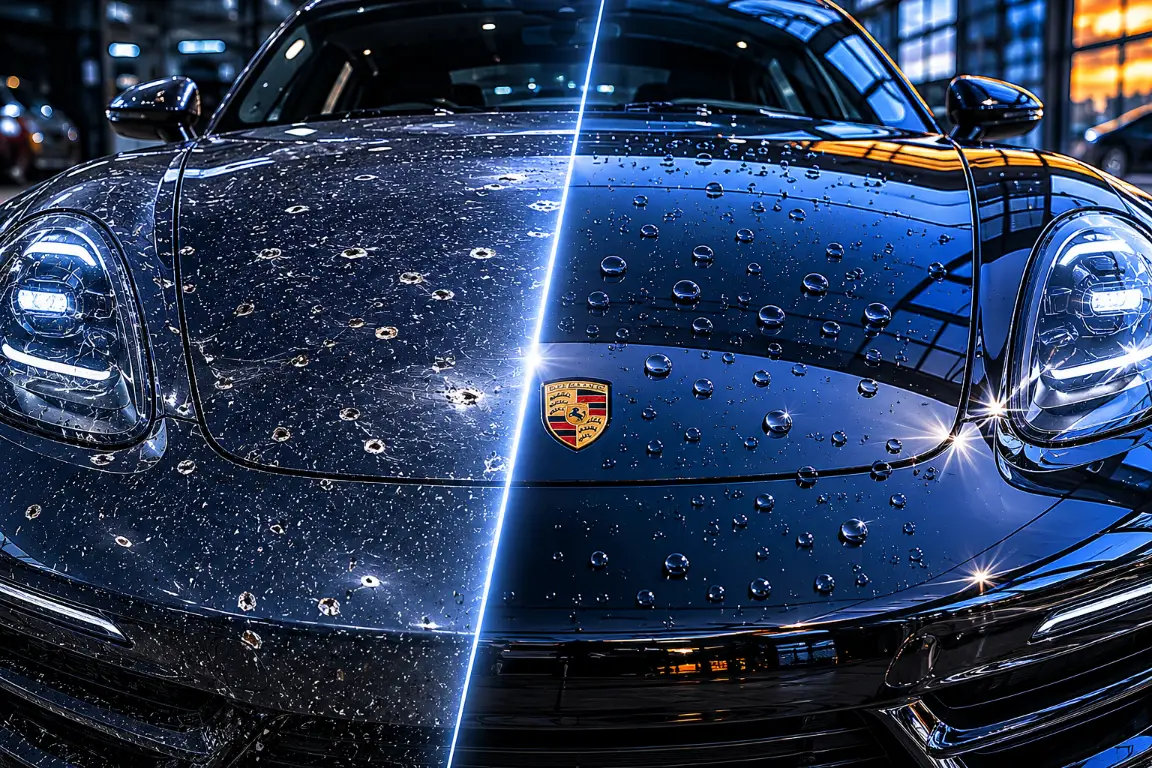
An objective, data-driven analysis of Paint Protection Film costs, hidden risks, and long-term asset value.
You just drove your new $60,000+ vehicle off the lot. The paint is flawless, the gloss is intoxicating, and then—on your first highway commute—you hear it: the sharp, unmistakable crack of a rock hitting your front bumper. That single moment is exactly why the global Paint Protection Film (PPF) market is surging. But with installation costs ranging from $1,500 to over $6,000, a critical question remains: Is PPF actually worth the money, or is it just an overpriced luxury?
As industry auditors, we are bypassing the usual sales pitches. In this comprehensive guide, we will break down the real mathematics of PPF, expose the hidden installation nightmares that could ruin your OEM paint, and give you the exact framework to determine if PPF is a smart investment or a total waste of money for your specific situation.
Is Paint Protection Film (PPF) Worth It? The 2026 ROI Reality Check
Let’s address the elephant in the room: PPF is not a magic forcefield, nor is it a simple cosmetic upgrade. In 2026, premium PPF should be viewed strictly through the lens of asset protection and depreciation management.
According to automotive valuation authorities like Kelley Blue Book (KBB) and Edmunds, the condition of a vehicle’s exterior is one of the top three factors influencing resale or trade-in value. A car with pristine, factory-original paint (OEM clear coat) will universally command a higher premium than one riddled with rock chips, swirl marks, or panels that have been repainted. PPF acts as a sacrificial layer. You aren’t paying to protect the plastic film; you are paying to lock in the future resale value of the metal underneath.
Most modern top-tier PPF materials are constructed from thermoplastic polyurethane (TPU) measuring roughly 8 mils in thickness. To put that in perspective, standard automotive clear coat is often just 1.5 to 2 mils thick. When an 80 mph rock strikes, that 8-mil polyurethane armor absorbs and disperses the kinetic energy, preventing it from fracturing the brittle clear coat below.
The Real Cost Breakdown: Coverage Options vs. Repainting
The biggest psychological hurdle for buyers is the upfront cost. However, treating PPF as an “all-or-nothing” expense is a mistake. Let’s dissect the numbers using a strategic coverage matrix.
Coverage Options Matrix: Full Body vs. Partial Front
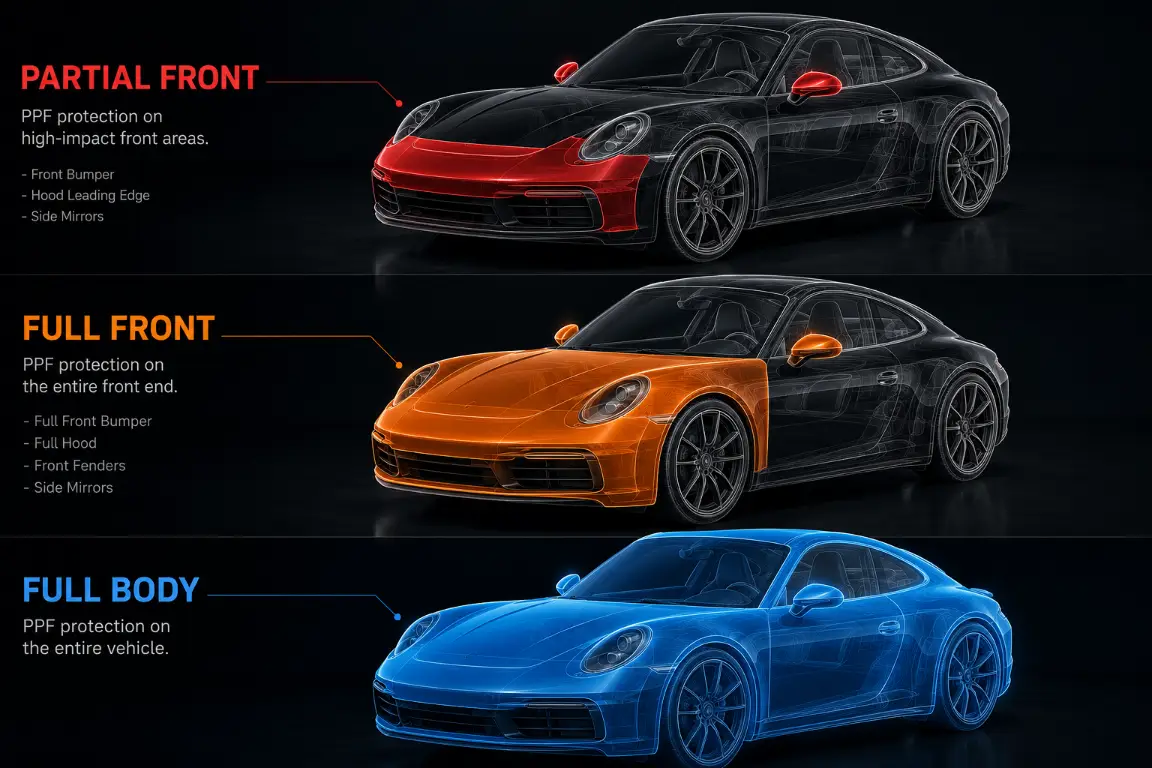
| Coverage Type | Avg. Cost (Est.) | Target Protection Area | Best For (Target Audience) |
|---|---|---|---|
| Full Body | $4,000 – $7,000+ | Every painted exterior panel. | Exotic cars, matte paint finishes, long-term keepers, and track enthusiasts. |
| Full Front (High ROI) | $1,500 – $2,500 | Full hood, front bumper, fenders, and side mirrors. | Daily highway commuters. This covers 95% of high-impact zones at a fraction of the cost. |
| Partial Front / Clear Bra | $800 – $1,200 | Front bumper and the first 18-24 inches of the hood/fenders. | Budget-conscious buyers, though the visible seam line on the hood can be an eyesore. |
The Hidden Cost of Bare Paint: PPF vs. Repainting
Many owners assume that if the front bumper gets heavily chipped, they can just repaint it in 5 years for $1,200. This logic ignores a massive hidden penalty: diminished value.
Let’s run a conservative 5-year simulation on a luxury sedan:
- Scenario A (Bare Paint): After 5 years of commuting, the hood and bumper are peppered with chips. You spend $1,200 on a professional repaint. However, when trading the car in, the dealer uses a paint thickness gauge. They detect the non-original paint and flag the car for potential undisclosed collision damage. Your trade-in offer is slashed by $2,000. Total loss: $3,200.
- Scenario B (Full Front PPF): You invest $1,800 upfront. After 5 years, you remove the film. The OEM paint underneath is literally showroom new. The paint meter reads perfectly factory. Total cost: $1,800 (with maximum resale value secured).
When you do the math, a Full Front PPF package often pays for itself the moment you decide to sell.
Beyond the Hype: The Hard Truth About “Self-Healing”
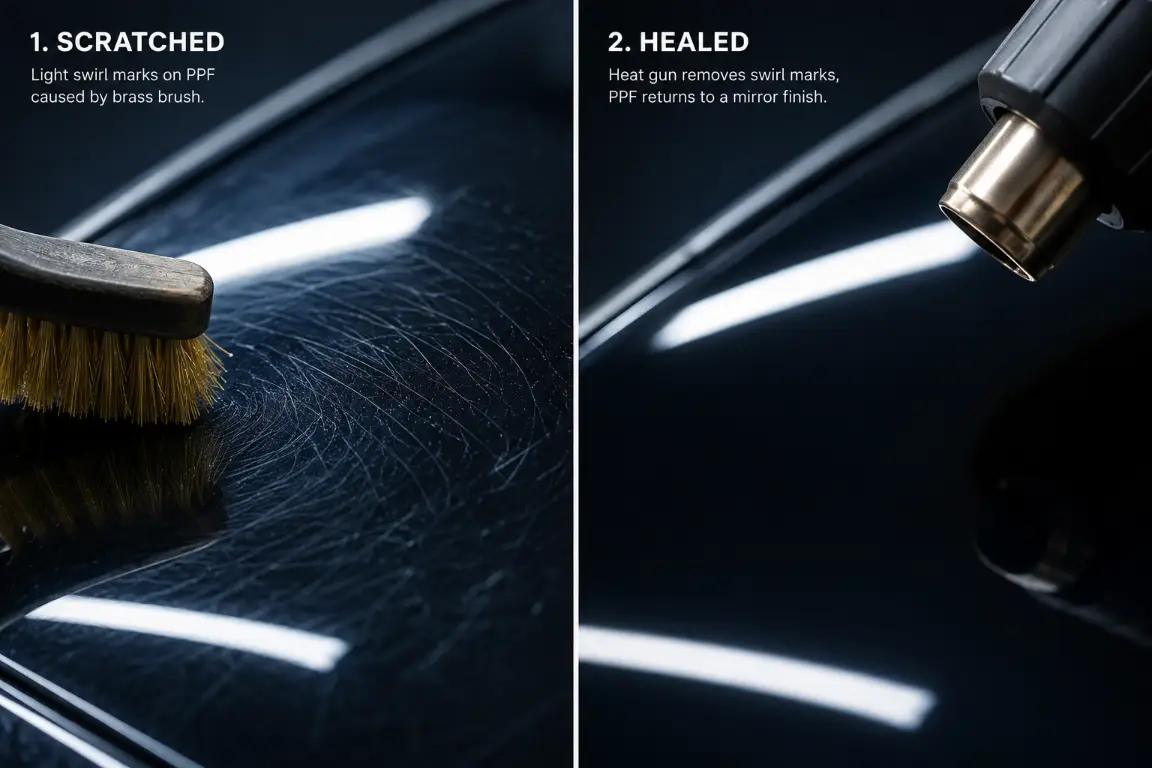
Marketing brochures love to promote PPF’s “self-healing” capabilities, sometimes implying it’s indestructible. It’s time for a reality check on the physics involved.
Premium PPF features a top clear-coat layer (about 0.5 mil thick) made of elastomeric polymers. At room temperature—or when exposed to the sun or hot water—these molecules naturally want to return to their original, uniform state. If you get fine swirl marks from poor washing techniques or light brush scratches from a hedge, applying heat will cause the film to “melt” back together, erasing the micro-scratches.
The Physical Limit: Self-healing only works if the damage is confined to the microscopic top layer. If a piece of debris physically punctures through the top coat into the main polyurethane body—or tears the film—it will not heal. PPF is a sacrificial lamb; it takes the fatal wound so your paint doesn’t have to.
The Dark Side of PPF: Yellowing, Peeling, and Damaged Paint
If PPF is so great, why do automotive forums feature horror stories of ruined paint and hideous, yellowed cars? Because in the PPF industry, the quality of the raw material and the skill of the installer dictate everything.
Why PPF Turns Yellow and How to Avoid It
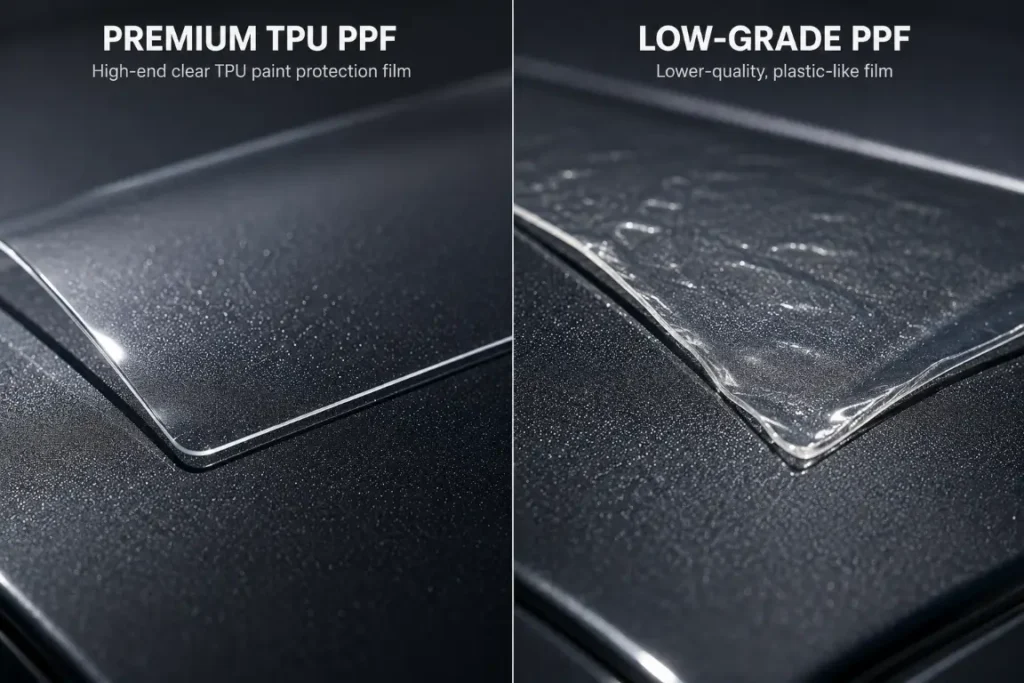
Historically, early “clear bras” were made of PVC, a rigid plastic that oxidized and turned a brittle, ugly yellow under UV light within two years. Today’s standard requires Aliphatic TPU (Thermoplastic Polyurethane), which is chemically stable and highly resistant to yellowing.
However, even some modern films use cheap adhesives that degrade under the sun. To avoid this, you must demand hard manufacturing data. For instance, top-tier global manufacturers like FlexiPPF utilize advanced German Brückner polyester film production lines and specialized magnetic sputtering equipment. Their strict ISO-certified manufacturing process ensures the film withstands 5,000 hours of intense UV exposure and 80°C high temperatures without yellowing, effectively blocking 98% of harmful UV rays. When a factory has a 60,000m² footprint and backs their product with rigorous testing, you eliminate the risk of chemical degradation.
Installation Nightmares: Pre-cut vs. Custom Rolled Edges
The installation method is arguably more critical than the film itself. There are generally two approaches:
- Custom Bulk Installation (Hand Cut): The installer lays a large sheet of film over the panel and trims the edges by hand. A master technician will flawlessly wrap the edges (Custom Rolled Edges) so the film is invisible. However, an inexperienced installer applying too much blade pressure will score the clear coat—slicing directly into your factory paint. You won’t notice this until years later when you remove the film and the paint peels off with it.
- Precise Pre-Cutting (Plotter Cut): The film is cut by a machine using a digital template specific to your VIN. The advantage? No blades ever touch your car’s paint. Leading suppliers ensure perfect fits for every make and model, removing the catastrophic risk of human error during trimming.
PPF vs. Ceramic Coating: Which Do You Actually Need?
This is the most common dilemma for new car owners. The confusion stems from a misunderstanding of their fundamental purposes. Let’s use a simple analogy: PPF is a bulletproof vest; Ceramic Coating is a high-tech raincoat.
| Feature | Paint Protection Film (PPF) | Ceramic Coating |
|---|---|---|
| Thickness | 150 – 200 microns (8 mils) | 1 – 2 microns |
| Rock Chip Defense | High. Absorbs severe kinetic impact. | Zero. Will not stop a rock chip. |
| Hydrophobicity (Cleaning) | Good (Many modern PPFs are infused). | Extreme. Water and mud slide right off. |
| Chemical Defense (Bird poop) | Excellent. Prevents acid etching. | Excellent. Forms a quartz-like barrier. |
The Ultimate Verdict: You do not have to choose just one. The industry-standard “gold package” for a daily driver is a Full Front PPF to stop physical damage on the impact zones, followed by a Full Body Ceramic Coating (applied over the paint and the PPF) to make the entire vehicle incredibly easy to wash and deeply glossy.
The Compatibility Test: When is PPF a Terrible Investment?
A trustworthy professional will tell you when not to buy their product. Do not invest in PPF if you fall into these categories:
- The 3-Year Lessee: If you are leasing a vehicle and handing the keys back in 36 months, PPF is a charitable donation to the dealership. They will not increase your residual value for having it.
- The High-Mileage Beater: Spending $2,000 to protect the paint on a $12,000 commuter car makes zero financial sense. Allocate those funds to mechanical maintenance instead.
- Pre-Existing Heavy Damage: If your bumper is already severely sandblasted and chipped, PPF will only magnify the defects. The surface must be corrected (or repainted) before film application.
The Lifespan Myth: How Long Does PPF Really Last?
While top-tier films boast a 10-year warranty, PPF is not a “set it and forget it” forcefield. It requires specific maintenance to reach that decade milestone.
The number one killer of PPF longevity is improper washing. If you or your detailer take a high-pressure washer and blast the edges of the film at point-blank range, the pressurized water will eventually get under the adhesive, causing lifting and peeling. The Golden Rule: Always keep the pressure washer nozzle at least 12 to 18 inches away from any panel edges or seams.
Additionally, if the car lives outside 24/7 in extreme sun without regular washes to remove acidic contaminants, the environmental toll will shorten the film’s lifespan, regardless of brand.
The Ultimate Checklist: How to Choose a Premium PPF Brand & Installer
The old industry adage holds true: “It’s 30% the film, and 70% the installer.” However, if the supply chain fails, even the world’s best installer will face angry customers returning with bubbling or yellowing cars. Whether you are an enthusiast protecting a hypercar, or a restyling shop owner looking for a bulletproof supply chain, you must demand these non-negotiable standards:
- Does the manufacturer offer end-to-end quality control?
- Do they provide precise pre-cutting services to eliminate razor blades on paint?
- Is there a genuine, factory-backed 10-year warranty?
Scale Your Film Business with Confidence
Partner with FlexiPPF. Upgrade your supply chain with premium, defect-free films designed for flawless installation and maximum profit margins.
 English
  Spanish
  Dutch
Dutch  Japanese
  Russian
  Arabic