
The Core Physics of Window Tinting
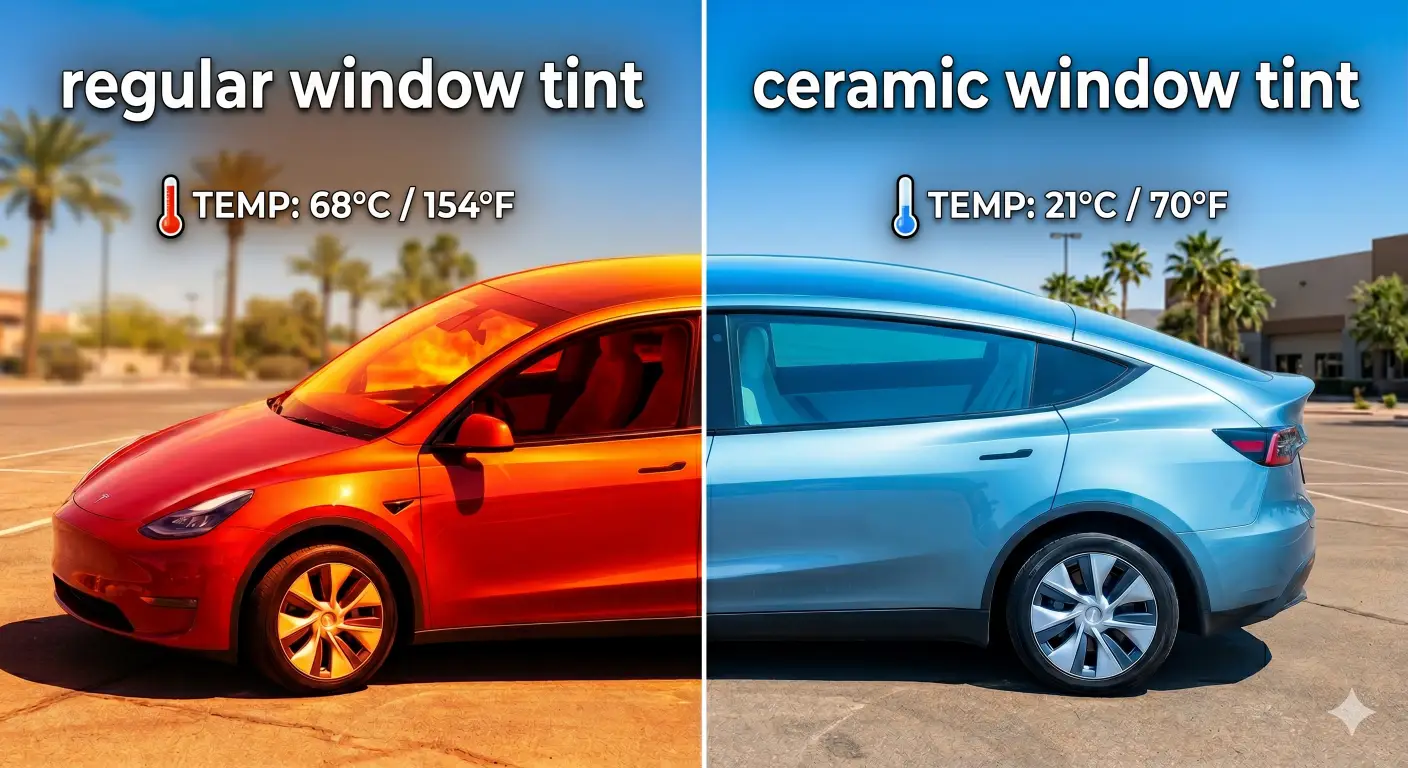
The window tinting industry has long thrived on a pervasive myth: the darker the film, the cooler the car. This fundamental misunderstanding leads countless drivers to make decisions based purely on aesthetics rather than thermodynamics. To understand the true battle between ceramic tint and regular tint, we must look beyond the shade and examine the core physics of heat transfer: Absorption vs. Rejection.
Regular window tint (often referred to as dyed tint) operates on the principle of heat absorption. It features a layer of dye applied to a standard polyethylene terephthalate (PET) film. Imagine wearing a thick, black cotton T-shirt under the blazing midday sun. The fabric absorbs the solar energy, making you feel the heat intensely against your skin. Similarly, dyed film acts as a thermal sponge. It absorbs the sun's heat, but once saturated, it begins to radiate that stored thermal energy directly into the vehicle's cabin—a process known as secondary heat transfer.
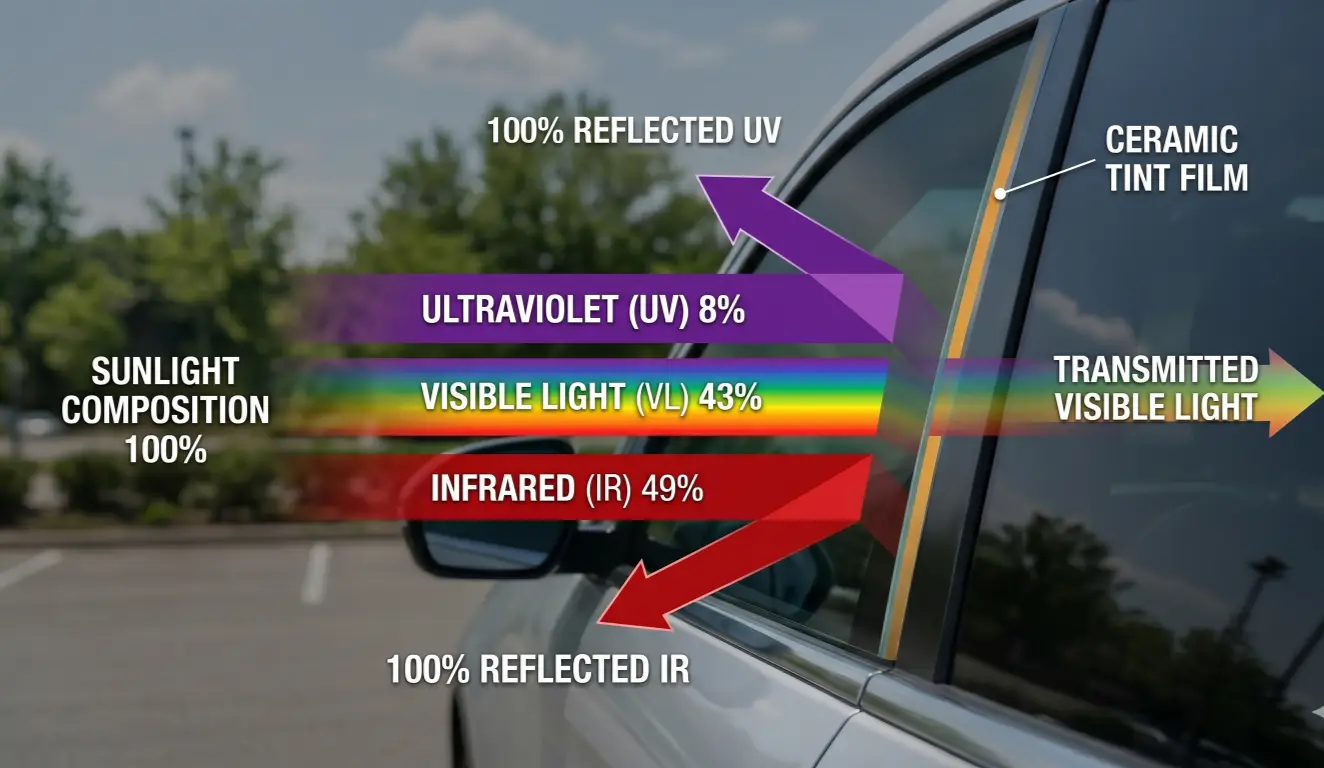
Nano-ceramic tint, on the other hand, utilizes non-conductive microscopic ceramic particles (such as titanium nitride or tungsten oxide) embedded within the film. Instead of a black cotton shirt, imagine wearing a highly advanced, silver-coated space suit designed to reflect thermal radiation. Ceramic tint does not merely absorb heat; it actively repels and reflects infrared and ultraviolet rays away from the glass. It acts as an invisible, impenetrable thermal shield, keeping the interior drastically cooler regardless of the film's shade.
Technical Performance and Protection Metrics
When evaluating window films, subjective feelings of "coolness" are insufficient. The true value of a tint is measured through rigorous industrial parameters. Let's break down the technical metrics that justify the price disparity between the two technologies.
Infrared Rejection (IR) and Total Solar Energy Rejected (TSER)
Many dealerships will attempt to sell you on a film by holding an infrared heat lamp behind it, touting its "99% IR Rejection." While impressive, this is essentially a rigged test. Solar energy is composed of three elements: 49% Infrared Light (felt as heat), 43% Visible Light, and 8% Ultraviolet Light. Measuring only IR ignores more than half of the equation.
The only unassailable metric in the industry is TSER (Total Solar Energy Rejected), which accounts for all three components across the entire solar spectrum.
| Performance Metric | Regular Tint (Dyed) | Nano-Ceramic Tint | The Real-World Impact |
|---|---|---|---|
| Infrared (IR) Rejection | 10% - 20% | 80% - 98%+ | Ceramic instantly blocks the burning sensation on your skin. |
| UV Rejection | Fades over 1-2 years | 99.9% (Permanent) | Ceramic offers lifetime interior and skin protection. |
| TSER (Total Energy Rejected) | Approx. 25% - 30% | Up to 65%+ | Ceramic drastically lowers cabin temperatures under direct sun. |
UV Protection and Material Degradation
Beyond heat, the silent destroyer of your vehicle's interior is Ultraviolet (UV) radiation. Regular tinted films utilize a UV inhibitor coating that gradually breaks down through a process called photodegradation. Within a year or two of intense sun exposure, this protective barrier evaporates.
In stark contrast, advanced ceramic films offer permanent UV protection, blocking over 99% of harmful UV rays (UV400). This level of shielding is equivalent to wearing SPF 1000+ sunscreen permanently. High-quality window films act as an effective deterrent against skin damage during daily commutes. Furthermore, from a financial perspective, this UV blockade preserves the structural integrity of pure white leather seats and prevents dashboards from cracking—saving thousands in potential restoration costs.
Visual Clarity and Night Driving Safety
Historically, achieving meaningful heat reduction meant opting for a 5% VLT (Visible Light Transmission) "limousine tint." While this blocked out the sun, it created a severe safety hazard during night driving or heavy rain, practically rendering side mirrors useless and forcing drivers to roll down their windows at intersections.
Ceramic tint completely decouples heat rejection from visual darkness. The microscopic nature of the ceramic particles ensures a "Low Haze" optical property. You can install a virtually transparent 70% VLT ceramic film on your front windshield that rejects significantly more heat than a pitch-black 5% regular dyed film. This optical clarity reduces dangerous headlight glare by up to 55%, ensuring a safer, more focused driving experience without compromising on thermal comfort.
Signal Clarity and Connectivity
To combat the heat absorption issues of dyed films, the industry introduced metallic tints. While they reflect heat effectively, they introduce a modern nightmare: the Faraday cage effect. Metallic layers interfere with electromagnetic waves, severely crippling GPS navigation, 5G cellular connectivity, RFID toll tags (ETC), and tire pressure monitoring systems (TPMS).
Ceramic tint is entirely non-conductive and metal-free. It guarantees zero signal interference, ensuring that your critical navigation tools and cellular calls remain 100% uninterrupted while cruising down the highway.
Durability and The Purple Bubble Phenomenon
Nothing ruins the aesthetic and resale value of a vehicle faster than rear windows covered in blistered, purple air bubbles. This is the hallmark of cheap, regular tint. The failure stems from two precise points: adhesive failure and dye degradation. Under constant thermal stress, low-grade glues release Volatile Organic Compounds (VOCs), causing the film to separate from the glass (bubbling), while the dye photochemically breaks down into an ugly purple hue.
To eliminate this risk entirely, premium solutions like FlexiPPF rely on a BASF polyester base sourced from Germany, offering exceptional durability, high tensile strength, and stable optical clarity. Combined with Ashland adhesive from the USA, it delivers strong bonding performance, low VOC emissions, and excellent heat resistance for long-term stability. This industrial-grade material foundation is precisely why top-tier films can confidently offer a 10-year warranty, securing your investment against fading, bubbling, and cracking for the long haul.
Impact on EV Range and Fuel Efficiency
For owners of modern Electric Vehicles (EVs) featuring expansive panoramic glass roofs, window tint is no longer just an automotive accessory; it is a critical energy-saving investment. EVs are highly susceptible to "cabin heat soak." When the interior turns into a greenhouse, the HVAC (Heating, Ventilation, and Air Conditioning) compressor must run at maximum capacity to cool the cabin.
In a 35°C (95°F) summer environment, an overworked AC unit can drain 15% to 20% of an EV's total battery range. By applying a high-TSER ceramic film, the cabin reaches a comfortable temperature 40% faster, allowing the AC system to operate in a low-draw maintenance mode. This translates directly into reclaiming 20 to 30 miles of real-world driving range per charge.
The Ten-Year Total Cost of Ownership (TCO) Analysis
The upfront price tag is the most deceptive aspect of window tinting. To make a financially sound decision, B2B procurement and smart consumers rely on the Total Cost of Ownership (TCO) model over a standard 5-to-10-year vehicle retention period.
Upfront Installation Costs vs. Removal Fees & Installation Risks
A standard dyed tint installation might cost between $150 and $250, while a full ceramic installation ranges from $400 to $800. However, when the cheap film inevitably bubbles in year three, you are hit with a Tint Removal Labor Fee (averaging $150-$250). Worse, aggressive manual glue removal frequently severs the delicate defroster lines on the rear windshield, leading to catastrophic glass replacement costs.
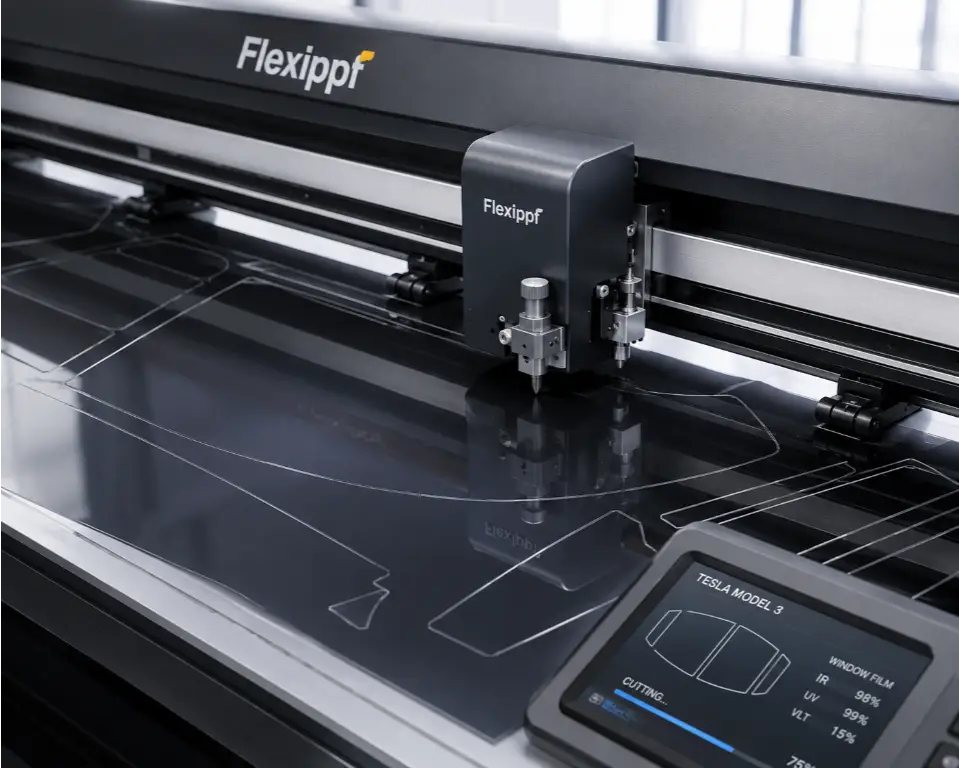
Modern premium installers mitigate this risk entirely through technology. FlexiPPF provides a precise pre-cutting service, utilizing advanced software to ensure a perfect fit for every car and every installation. This eliminates the need to cut film directly on your vehicle's glass, ensuring flawless results, saving installation time, and completely removing the risk of blade scratches. Buy cheap, and you buy twice; invest in precision, and you pay once.
Long-Term ROI on Interior Preservation and Energy
When it is time to sell or trade in your vehicle five years down the line, a pristine interior becomes a powerful negotiation asset. A cabin shielded by an advanced ceramic coating prevents upholstery discoloration and dashboard cracking. That zero-fade interior can easily boost your vehicle's resale appraisal by $500 to $1,000, effectively paying for the initial premium tint installation, while you enjoyed years of superior thermal comfort.
How to Spot Fake Ceramic Tint at the Dealership
The market is flooded with deceptive marketing. To ensure you are receiving authentic nano-ceramic technology rather than a clever "ceramic-infused" imitation, use these three professional verification steps:
- Verify the Roll Number: Always ask the installer to show you the Manufacturer Roll Number printed on the core of the film box. Legitimate brands track every inch of their product.
- Demand the Heat Box Test: Never rely on a flashlight beam to judge a film. A reputable shop will have a BTU meter or an infrared heat box. Place your hand behind the regular film, then the ceramic film. The difference between "burning hot" and "mildly warm" should be instantaneous and undeniable.
- Check the Warranty Terms: True ceramic films back their chemical stability. If the warranty does not explicitly cover color fading and adhesive bubbling for an extended period, walk away.
Ready to Protect Your Investment?
Whether you are an installer looking to elevate your service offerings or a driver seeking the ultimate cabin comfort, making the right choice is crucial. We offer expert product recommendations tailored to your specific needs, considering factors like your geographic location, local climate, and sun exposure to provide personalized suggestions.
Get Your Custom Tint Recommendation
 English
  Spanish
  Dutch
Dutch  Japanese
  Russian
  Arabic