
Everyday driving is a battlefield for your vehicle’s paint. From highway rock chips to parking lot scratches, the anxiety of preserving that flawless showroom shine is real. You know Paint Protection Film (PPF) is the definitive armor, but navigating the wild west of PPF pricing—ranging from a few hundred to several thousand dollars—feels overwhelming. Are you paying for genuine protection or just a hefty markup? As industry insiders, we’re tearing down the pricing veil. We will equip you with the precise cost breakdowns, material secrets, and ROI calculations you need to make an airtight investment.
Paint Protection Film Pricing Tiers and Coverage Options
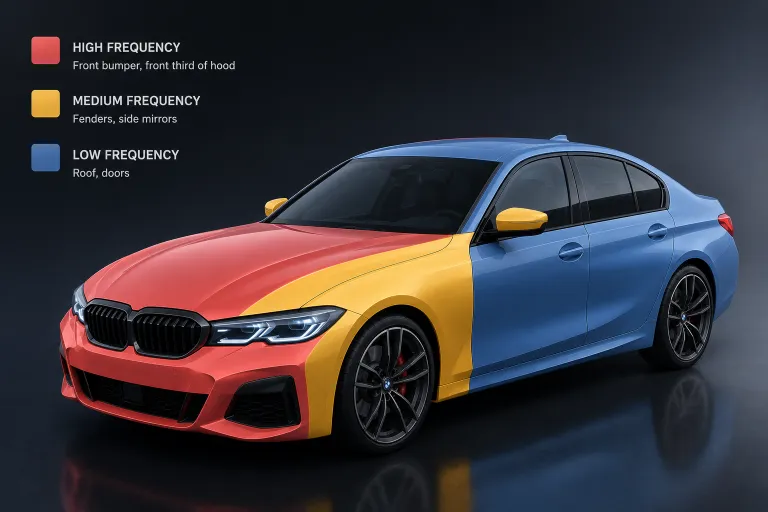
Partial vs. Full Front Protection Costs
When it comes to automotive defense, your budget dictates your shield’s size. Let’s break down the industry-average pricing matrix for 2026.
| Protection Level | Coverage Areas | Est. Cost | Best For |
|---|---|---|---|
| Partial Front | 1/3 Hood, Fenders, Bumper, Mirrors | $800 – $1,500 | City Commuters |
| Full Front | Full Hood, Fenders, Bumper, Mirrors | $1,800 – $2,500 | Highway Drivers |
| Full Car Wrap | Entire Exterior Painted Surfaces | $4,000 – $8,000+ | Luxury/Exotic Owners |
Expert Insight: While a Partial Front package is budget-friendly, be aware of the “seam line” stretching across your hood. Over time, dirt can accumulate here, making the line visible. If aesthetics are non-negotiable, Full Front is your true entry point.
Full Car Wrap and Track Package Investments
For exotic vehicle owners and weekend racers, standard coverage isn’t enough. A Track Package focuses heavily on high-impact zones like lower rocker panels and rear wheel arches, often utilizing thicker films to absorb high-velocity debris. Upgrading to a full car wrap ensures uniform gloss and zero exposed edges, though the investment climbs upwards of $6,000. It’s a calculated expense: paying a premium upfront to absolutely guarantee the factory paint remains untouched under extreme conditions.
Deconstructing the Invoice: Labor, Material, and Margins
Why does wrapping a car cost as much as a designer watch? Let’s dissect the actual invoice. According to international certification centers, the final price is fundamentally a balance of raw materials, operational overhead, and highly specialized labor.
The Hidden Truth About Labor Costs
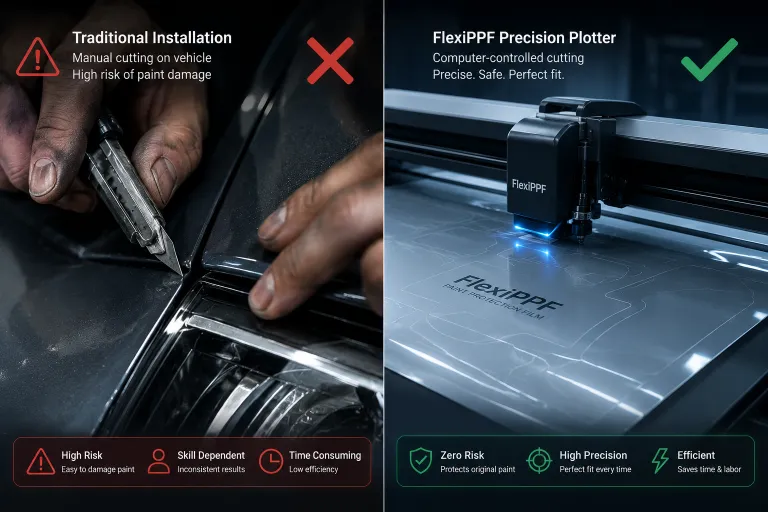
Labor typically accounts for 60% or more of your total bill. The process is grueling: exhaustive paint correction, meticulous surface prep, application, and heat-sealing edges. Traditionally, “bulk installation” meant installers cut the film directly on your car—a risky, labor-intensive process. Today, elite suppliers like FlexiPPF utilize advanced 3D scanning technology to pre-cut automotive films, significantly improving installation efficiency and precision. FlexiPPF’s pre-cutting service facilitates a seamless application process, precisely designed for easy installation, saving time and ensuring flawless results. When getting a quote, always ask if your installer uses advanced pre-cut software; it reduces both human error and bloated labor hours.
Material Base Costs and Markup Realities
A premium roll of TPU film isn’t cheap—costing the shop around $800 to $1,200. However, the markup covers inevitable waste from shrinkage during complex stretches and the maintenance of a pristine, climate-controlled cleanroom. More importantly, that markup funds your safety net: a legitimate 10-year warranty against bubbling and peeling.
The Material Science of PPF: Aliphatic TPU vs. Cheap Alternatives
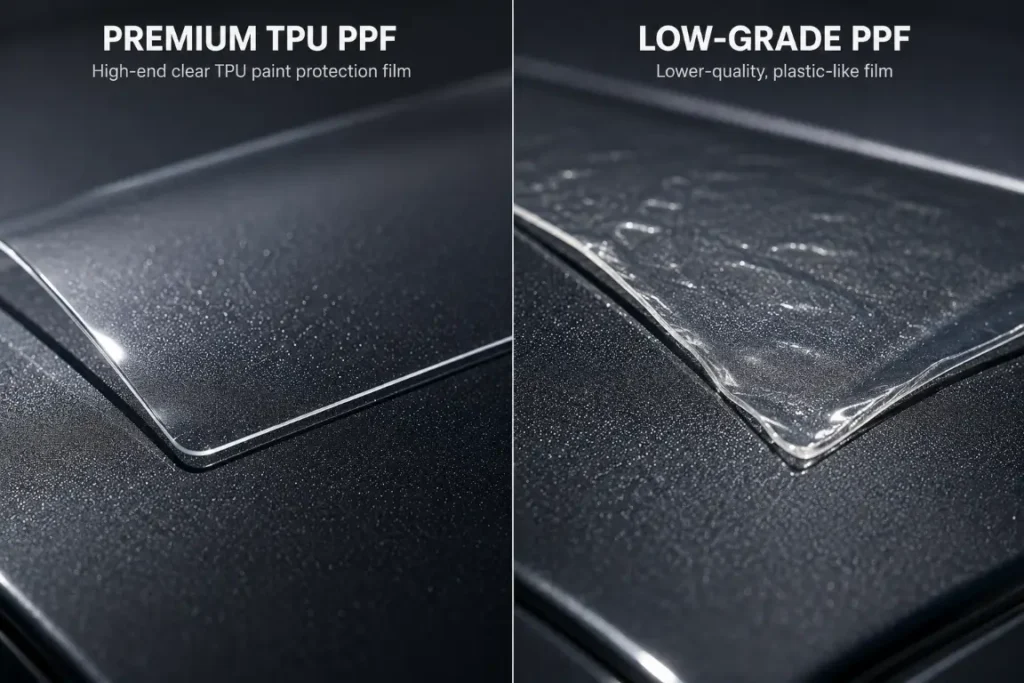
Not all clear bras are created equal. The market is flooded with cheap PVC or TPH films masked as premium products. To avoid yellowing cracked film a year down the road, you need to understand the supply chain chemistry.
Aliphatic TPU: The Gold Standard Premium
True investment-grade PPF utilizes Aliphatic Thermoplastic Polyurethane (TPU). This stable molecular structure physically rejects UV radiation, preventing the dreaded yellowing effect.
| Material Type | Anti-Yellowing | Self-Healing | Durability |
|---|---|---|---|
| PVC | Poor | None | 1-2 Years |
| TPH | Fair | Weak | 2-3 Years |
| Aliphatic TPU | Excellent | Advanced Thermal | 10+ Years |
When evaluating a quote, demand to know the origins of the materials. Top-tier films, such as those engineered by FlexiPPF, utilize a BASF polyester base from Germany, offering exceptional durability, high tensile strength, and stable optical clarity. Furthermore, FlexiPPF relies on Ashland adhesive from the USA, which delivers strong bonding performance, low VOC emissions, and excellent heat resistance for long-term stability. This caliber of material can withstand 5,000 hours of UV exposure while remaining vibrant, effectively blocking 98% to 99% of UV rays.
Thickness Options: 8 Mil vs. 10 Mil Dynamics
Sales reps might push thicker films for higher margins, but let’s be logical. A standard 8 mil film provides immense impact resistance, perfect for 90% of daily driving conditions. While 10 mil options offer enhanced defense against heavy track debris, they are notoriously difficult to stretch over complex curves, increasing the risk of the film lifting at the edges. Stick to 8 mil for daily drivers, and reserve 10 mil for track toys or heavy off-roaders.
Vehicle Geometry and Installation Methods Impacting Your Quote
If you and your neighbor both request a full front PPF, why is your quote $500 higher? Vehicle geometry plays a massive role in dictating labor intensity:
- Complex Aerodynamics: Deep front bumper intakes and sharp aggressive body lines require extreme film stretching and multiple relief cuts.
- Large Clamshell Hoods: Massive single-piece panels increase the risk of over-stretching and generate higher material waste.
- Intricate Trim: Vehicles with extensive piano black trim or complex grilles demand meticulous, time-consuming detail work.
Financial Showdown: PPF vs. Ceramic Coating
The most common dilemma: Should you just get a ceramic coating instead to save money? Let’s dispel the myths.
Protection Scope and Physical Defenses
Comparing the two is like comparing premium sunscreen to a bulletproof vest. A ceramic coating is an incredible liquid polymer measuring just 1-2 microns thick; it repels water and prevents chemical etching from bird droppings. However, it cannot stop a rock traveling at 70 mph. PPF, at roughly 200 microns (8 mil), physically absorbs the kinetic energy of road debris, saving the paint beneath.
Total Cost of Ownership over 5 Years
A $1,000 ceramic coating seems cheaper than a $2,000 partial PPF. But coatings degrade. Over 5 years, you’ll likely need re-applications, annual maintenance washes, and you’ll still have to pay out of pocket to repair rock chips. A quality PPF is a one-and-done physical barrier that actively prevents those costly touch-ups.
The Actuary’s ROI Calculation: When PPF Actually Pays Off
Let’s shift from cost to return on investment. The sting of the initial invoice fades quickly when you look at the long-term financial mechanics of auto ownership.
Paint Repair Costs vs. PPF Protection
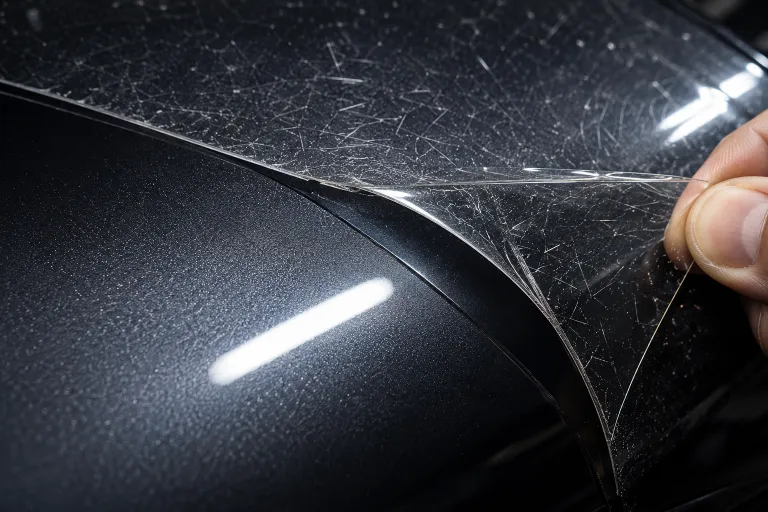
Consider a modern multi-coat metallic or pearl factory paint job. Respraying a heavily chipped bumper can easily exceed $1,200, and matching the exact factory depth is nearly impossible. If a rock gouges your PPF, the film takes the hit. You simply peel off that section and replace it for a fraction of the cost, keeping the pristine factory paint perfectly intact.
Depreciation and Resale Value Retention
In the used car market, “original factory paint” is king. Vehicles with repainted panels are immediately flagged for diminished value, often losing 10% to 15% of their resale price. By investing $4,500 in a full-body PPF, you aren’t just buying plastic; you are locking in your vehicle’s depreciation curve. When it’s time to sell, peeling off the film reveals a brand-new car, easily recouping your initial investment through a higher trade-in value.
Customizations and Add-Ons Affecting the Final Bill
Stealth and Matte Transformations
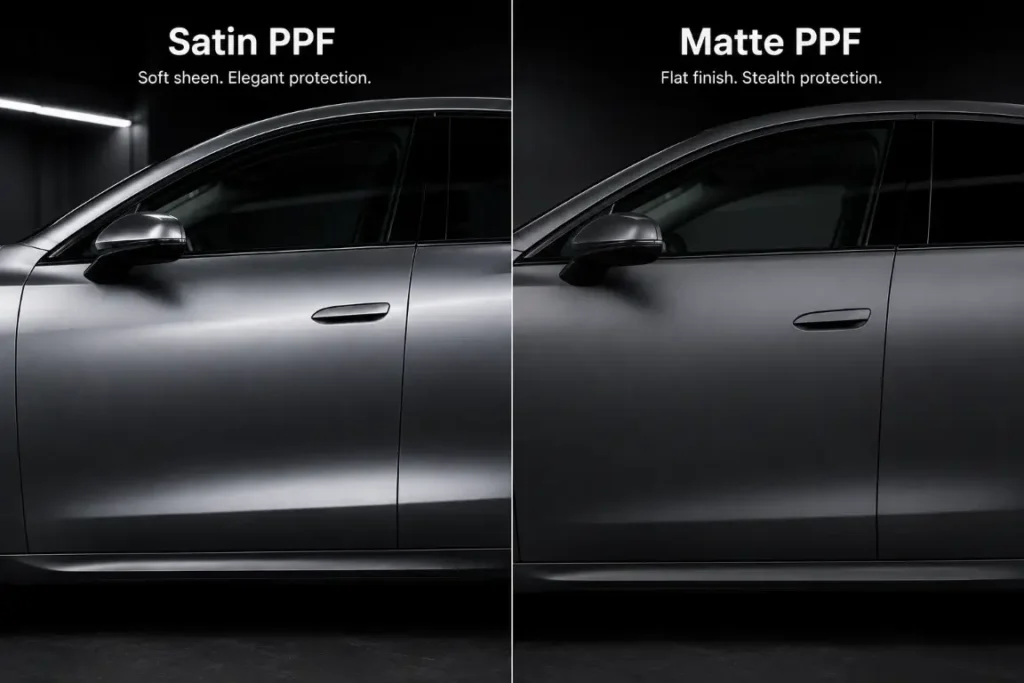
Stealth or satin PPF provides a dual benefit: it transforms your standard gloss paint into a highly sought-after matte finish while offering maximum protection. Factory matte paint is notoriously fragile and impossible to polish; stealth PPF gives you the aggressive look without the maintenance nightmare, typically adding 15% to 20% to your total bill.
Ceramic Infused Top-Coats
For the ultimate low-maintenance experience, some premium films come with a built-in ceramic-infused topcoat. This superhydrophobic layer mimics a traditional ceramic coating, repelling water and dirt effortlessly, resulting in an all-in-one armor.
The Buyer’s Defense: How to Spot Overpriced or Shoddy PPF Quotes
Before you hand over your keys and a large check, use this definitive checklist to audit your installer. If they hesitate on any of these, walk away.
- Is the material Aliphatic TPU? Demand proof. Refuse any TPH or PVC blends.
- What is the supply chain pedigree? Ask if the film uses high-grade foundations like the BASF polyester base and Ashland adhesive used by industry leaders like FlexiPPF.
- Do you use pre-cut software or bulk cut on the car? Ensure they utilize precise 3D scanning pre-cut technology to avoid knife marks on your paint.
- What are the warranty specifics? Ensure you receive a written 10-year warranty covering yellowing, bubbling, and cracking.
Your car is an investment. Armed with this knowledge, you can navigate the market not as a target, but as an informed buyer ready to secure the best protection available.
 English
  Spanish
  Dutch
Dutch  Japanese
  Russian
  Arabic