
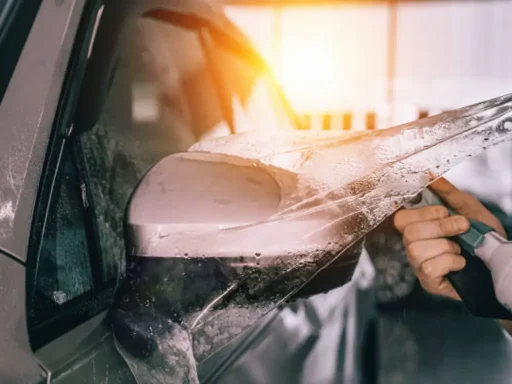
A price black box has been long plaguing the automotive aftermarket. When you are in the process of buying paint protection, you must have come across an irritating assortment of quotes. A local detailer is offering a lifetime coating at 600 dollars; a high end studio is offering the same car at 3000 dollars. In the meantime, there is a flood of online marketplaces with $40 bottles that purport to provide the same degree of protection.
The technology will be different in 2026, however, the question that the consumer will be facing will be the same: to what extent will science justify this cost, and to what extent will it be merely marketing theater? This guide will break down the ceramic coating price complexities. We are going to look at the work, the chemistry, and the manufacturing fact to make you see the difference between a high-value investment and a so-called premium service that only provides a temporary shine.
Average Ceramic Coating Cost: What to Expect in 2026
To understand the market, we must first categorize the services. In 2026, the distinction between “consumer-grade” and “industrial-grade” has widened, primarily due to the concentration of active polymers and the equipment required for a proper bond.
The following table reflects the current average pricing in the North American and European markets:
| Service Level | Price Range (USD) | Longevity | Best For |
| DIY Consumer Kits | $50 – $250 | 6 – 18 Months | Weekend hobbyists / Budget projects |
| Entry-Level Professional | $600 – $1,200 | 2 Years | New vehicles with minimal defects |
| Mid-Tier Professional | $1,500 – $2,200 | 5 Years | Daily drivers requiring durability |
| Premium/Manufacturer Grade | $2,500 – $4,000+ | 10 Years+ | Luxury, exotic, or long-term investments |
These figures represent a total package, typically including the wash, decontamination, and a basic level of paint prep. However, as we will explore, the “liquid in the bottle” is often the smallest fraction of the total invoice. The cost is a reflection of time, expertise, and the controlled environment required to apply these sophisticated liquid polymers.
Top 5 Factors Influencing Your Professional Quote
An installer is not merely examining the paint when he or she is assessing your vehicle; he or she is estimating a labor-hour risk assessment. The five variables that have the greatest influence on the final price are as follows:
1. Vehicle Surface Area and Geometry: A small sedan is a simple undertaking. On the other hand, larger vehicles like a full-size SUV or a car with complicated aerodynamic intakes and sharp body lines will raise the complexity and application time. The more surface area, the more product and the more hours under the lights.
2. The Paint Correction Requirement:This is the biggest factor in the final bill. Ceramic finishes are semi-permanent; they are meant to fix the existing state of the surface. In case of swirl marks, minor scratches, or oxidation in your paint, then these flaws must be machine-polished out before the ceramic coat is applied. The bill can be increased by a 2-step correction by up to $800 to $1,500.
3. Chemical Concentration and Grade: Professional grade coatings contain increased levels of Silicon Dioxide ($SiO 2 ) and special polymers which harden to a higher level (9H or higher). These products may need infrared (IR) curing lamps to achieve their full structural integrity, which a DIYer or a low-budget shop would not normally have.
4. Local Market Economics: As in any good trade, the rate of labor is pegged to the local cost of living. The overhead (rent, environmental compliance, insurance) of a shop in Los Angeles or London will be greater than that of a shop in a rural area.
5. Ancillary Surfaces: Protection is usually not limited to paint. The process of coating the wheel barrels, brake calipers, glass and plastic trim requires various chemical formulae and extra labour, which can soon add up to the overall project price.
DIY Kits vs. Professional Application: The Real Saving
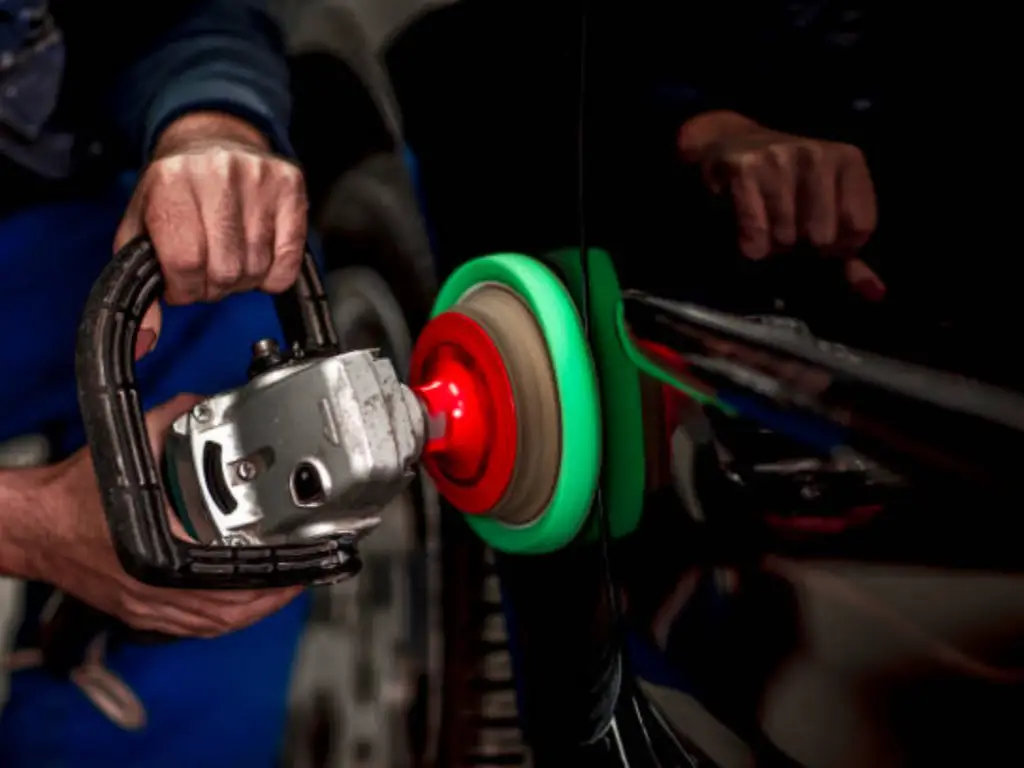
It is no wonder that the temptation to save 1,500 by applying a coating yourself is there. Nonetheless, the cost of failure should be factored in the rational analysis of real savings.
The DIY Reality:
A bottle of coating is not enough to do a job on a professional level. You require a dual-action polisher (150 and above), a set of polishing pads (60), high quality microfiber towels (50), clay bars, and iron removers (70). You are already spending around $400 on material. Moreover, an inexperienced person needs about 15 to 20 hours of concentrated work to have a proper application.
The Risk of “High Spots”:
The biggest expense of DIY is the possibility of a mistake. Unless the coating is smoothed out, it forms high spots, dark, oily-looking streaks which harden like glass. When they are cured, they cannot be washed off, they have to be sanded off or machine-polished off. When you destroy the paint on a $60,000 car, the savings of the DIY kit are immediately canceled by the price of professional repairs.
Hidden Costs: Maintenance and Total Cost of Ownership
The term permanent protection is one that is misinterpreted. Ceramic coating is a coating that is very thin and is made of polymer which is also durable, yet is also subject to physics and friction. The warranty and hydrophobic properties require the recurrent cost of ownership.
- Maintenance Washes: You are not allowed to use automated brush car washes. These will micro-etch the coating, and eventually, will be dulling the gloss. You must make a promise to wash your hands manually or use PH-neutral soaps which are touchless.
- Decontamination Cycles: Road film and industrial fallout can fill the pores of the coating after each 6 to 12 months. Hydrophobic effect should be re-initiated using professional decon wash or special maintenance spray.
- Annual Inspections: most 5 years or 10 years warranties require the installer to do an annual top-up service to make the warranty legal.
The Value Proposition: These expenses notwithstanding, ceramic coat is economical. The coating conserves both labor since it eliminates the practice of quarterly waxing and also a significant amount of time is saved in the process of washing the vehicle is offset by the fact that the resale value of the vehicle is not lost.
How FlexiPPF Factory-Direct Technology Optimizes Your Investment
FlexiPPF is the source of technology in an industry, where numerous brands are merely marketing labels, which outsource their chemistry. As a top manufacturer of ceramic coating, we concentrate on the raw science of surface protection as a way of reducing the barrier to entry to high-end results.
Why Buying From a Manufacturer Like FlexiPPF Costs Less
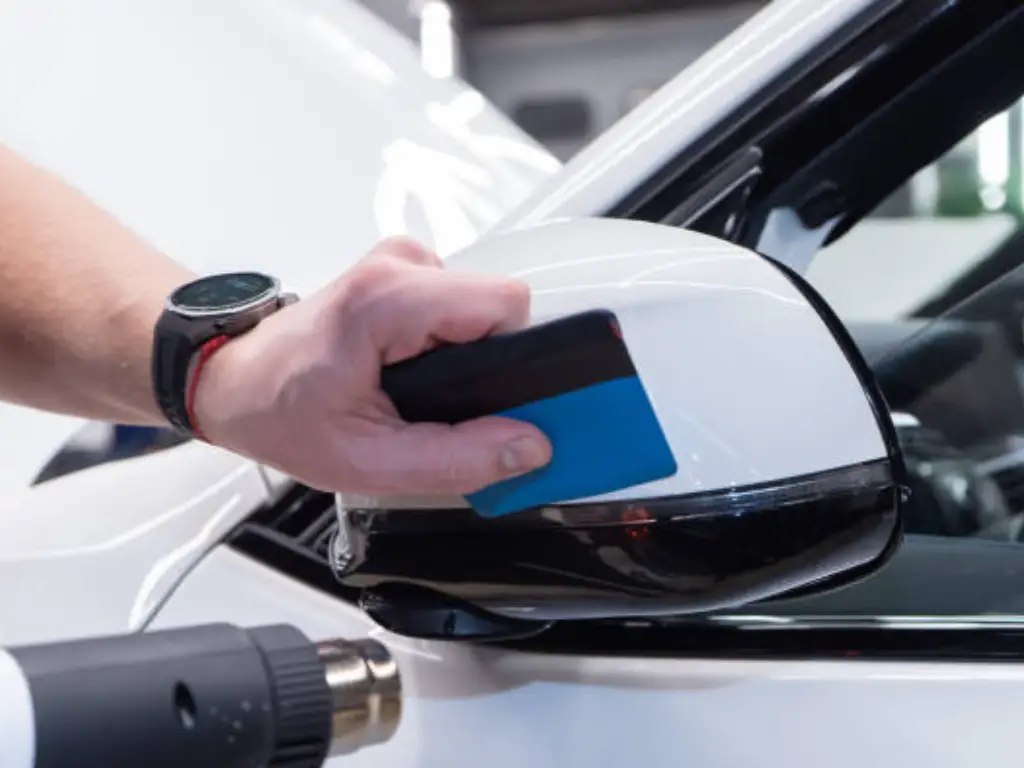
FlexiPPF has a huge 60,000m² manufacturing plant that has 13 Leybold magnetron sputtering lines and 8 precision coating machines. Since we are the source, we do away with the 30 percent to 50 percent markup that distributors and brand middlemen would usually charge. This enables us to offer an industrial grade of liquid polymer coating which adhesively sticks to the body surface in a perfect way absorbing the micro-impacts of daily driving and withstanding chemical contaminants at a better rate.
Professional-Grade Performance and Bespoke Solutions
We have made our coatings very durable- they are tested up to 80°C heat and 5000 hours under the sun without their clear colors fading. In addition to the product, we provide wide technical support and tailored brand solutions. Be it a large-scale detailing franchise in need of a unique formula under your own brand, or an individual in need of a 10-year warranty solution, our factory-direct business model means that you are not paying a flashy marketing campaign but due to the chemical performance (98% UV rejection).
Ceramic Coating vs. PPF: Which Is More Cost-Effective?
Since FlexiPPF manufactures more than 100 kinds of films, such as PPF (Paint Protection Film) and window tints, we will be able to present an objective cost-benefit analysis.
- Ceramic Coating: This is a polymer that is ultra-thin and is very effective in increasing gloss, chemical resistance and a hydrophobic surface. It is the cheapest method of making a car easier to wash and pop in appearance.
- PPF: This is a heavy, physical urethane shield. It is made to prevent rock chips and physical abrasions.
The Economic Balance:
A hybrid strategy is the most cost-effective ultimate protection for a daily driver. PF should be applied to high-impact zones (front bumper, hood) to prevent rock chips and a FlexiPPF ceramic coating should be applied to the rest of the panels to make the entire car easy to maintain and highly hydrophobic. This ensures maximum protection and the overall cost of the project is affordable.
Warning Signs of Overpriced or Low-Quality Services
The trick to the price of a black box is to know when a quote is out of touch with reality.
1. Unclear Warranty Conditions: When a shop promises a lifetime warranty, but cannot provide you with a digital record of the warranty issued by the manufacturer (such as the 10-year warranty offered by FlexiPPF), it is a likely marketing ploy that will disappear once the shop goes out of business.
2. None: To cure properly, a ceramic coating must be in a dust-free, temperature-controlled environment. When the studio is a dusty garage with the door open, the coating will pick up contaminants, resulting in a textured low-gloss finish.
3. The One-Hour Professional Coating: Quality liquid polymers take time to dry and cure. Any professional service that claims to get you in and out within an hour is probably applying a spray sealant – a product that costs 10 dollars and lasts 3 months – and is charging you a ceramic service.
4. Absence of Transparency: A reputable supplier must be capable of describing the particular chemical advantages, say the effect of the hydrophobic surface in avoiding water spotting or the manner in which the polymer layer takes up the chemical impact.
Final Verdict: Is Professional Coating Worth the Price?
A ceramic coating may be regarded as an insurance policy to the beauty and the financial future of your car.
- To the Fleet Owner or Brand: With the ability to go factory-direct, customized solutions with a manufacturer like FlexiPPF, you can scale protection over a diverse range of assets and control expenses and a 10-year lifecycle.
- To the Enthusiast: Since you like the showroom shine, and want to spend less time and effort on maintenance, the $1,500 -2,000 on a mid-range professional application is one of the few automotive upgrades which does not depreciate.
In 2026, manufacturers are uncovering the black box of pricing and are being transparent. Once you arrive at a solution that is founded on the best of manufacturing and a comprehensive understanding of the liquid polymer science, you will be certain that all the dollars you are spending will be directly converted into the safety of the most critical component of your vehicle: its finish.
 English
  Spanish
  Dutch
Dutch  Japanese
  Russian
  Arabic